{"title":"Utilizing machine learning to identify fall predictors in India's aging population: findings from the LASI.","authors":"Mrinmoy Pratim Bharadwaz, Jumi Kalita, Anandita Mitro, Aditi Aditi","doi":"10.1186/s12877-025-05813-z","DOIUrl":null,"url":null,"abstract":"<p><strong>Background: </strong>Depression has a detrimental effect on an individual's mental and musculoskeletal strength multiplying the risk of fall incidents. The current study aims to investigate the association between depression and falls in older adults using machine learning (ML) approach and identify its various predictors.</p><p><strong>Methods: </strong>Data for the study was derived from the Longitudinal Ageing Study in India, (LASI) conducted in 2017-18 for people aged 45-years and above. The study was carried out on 44,066 individuals. Depression was measured using the CIDI-SF scale. Bivariate cross-tabulations were used to study the prevalence of falls. And its association with depression and other independent factors were assessed using the novel ML, the Conditional inference trees (CIT) method.</p><p><strong>Results: </strong>Around 10.8 percent of older adults had fall incidents. CIT model predicted region to be a significant predisposing factor for an older adult to experience falls. Multimorbidity, depression, sleep problems, and gender were other prominent factors. The model predicted that, among depressed older adults, falls incidents were around 80 percent higher than non-depressed.</p><p><strong>Conclusions: </strong>An association between falls and depression was observed. Depressive symptoms were associated with an increased risk of falls, even after controlling for other co-factors. The CIT method leveraged us to select the most important variables to predict falls with great precision. To prevent and manage falls among the expanding and diverse older-aged population, a multilevel and cross-sectoral approach is required. Mental health, especially depression, should be dealt with greater precautions. Public health enthusiasts should focus on the physical as well as mental health of the country's older adult population.</p>","PeriodicalId":9056,"journal":{"name":"BMC Geriatrics","volume":"25 1","pages":"181"},"PeriodicalIF":3.8000,"publicationDate":"2025-03-17","publicationTypes":"Journal Article","fieldsOfStudy":null,"isOpenAccess":false,"openAccessPdf":"https://www.ncbi.nlm.nih.gov/pmc/articles/PMC11912680/pdf/","citationCount":"0","resultStr":null,"platform":"Semanticscholar","paperid":null,"PeriodicalName":"BMC Geriatrics","FirstCategoryId":"3","ListUrlMain":"https://doi.org/10.1186/s12877-025-05813-z","RegionNum":2,"RegionCategory":"医学","ArticlePicture":[],"TitleCN":null,"AbstractTextCN":null,"PMCID":null,"EPubDate":"","PubModel":"","JCR":"Q2","JCRName":"GERIATRICS & GERONTOLOGY","Score":null,"Total":0}
引用次数: 0
Abstract
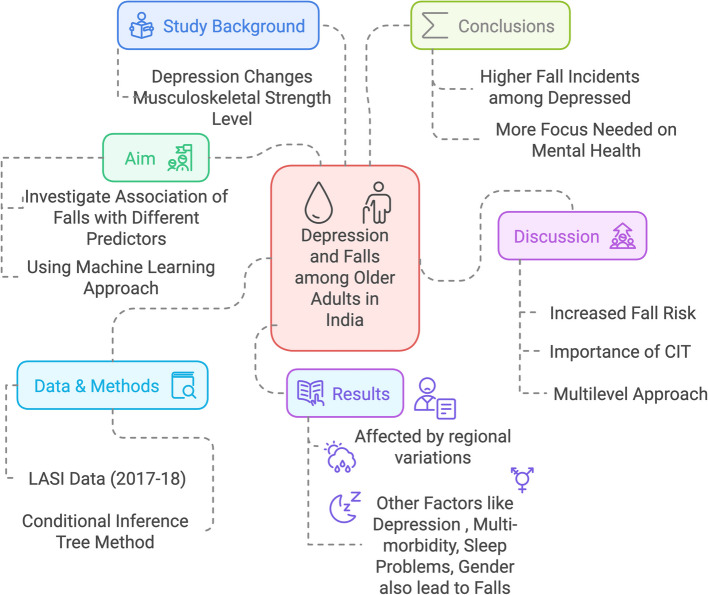
Background: Depression has a detrimental effect on an individual's mental and musculoskeletal strength multiplying the risk of fall incidents. The current study aims to investigate the association between depression and falls in older adults using machine learning (ML) approach and identify its various predictors.
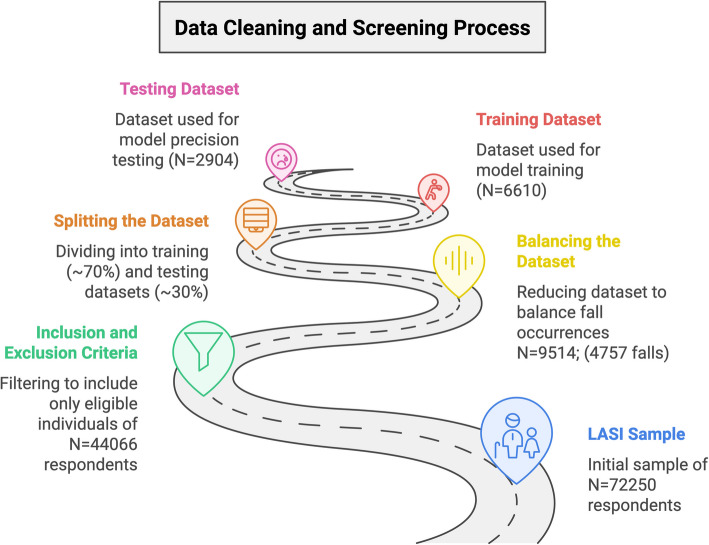
Methods: Data for the study was derived from the Longitudinal Ageing Study in India, (LASI) conducted in 2017-18 for people aged 45-years and above. The study was carried out on 44,066 individuals. Depression was measured using the CIDI-SF scale. Bivariate cross-tabulations were used to study the prevalence of falls. And its association with depression and other independent factors were assessed using the novel ML, the Conditional inference trees (CIT) method.
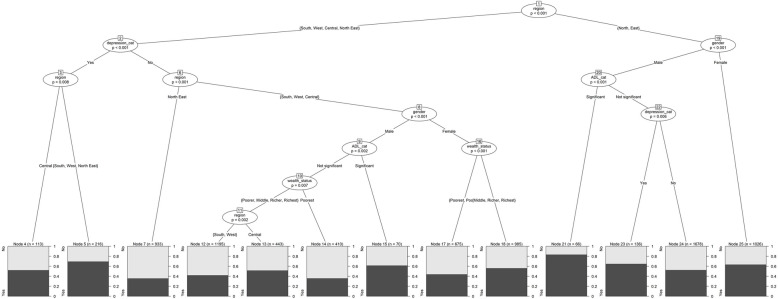
Results: Around 10.8 percent of older adults had fall incidents. CIT model predicted region to be a significant predisposing factor for an older adult to experience falls. Multimorbidity, depression, sleep problems, and gender were other prominent factors. The model predicted that, among depressed older adults, falls incidents were around 80 percent higher than non-depressed.
Conclusions: An association between falls and depression was observed. Depressive symptoms were associated with an increased risk of falls, even after controlling for other co-factors. The CIT method leveraged us to select the most important variables to predict falls with great precision. To prevent and manage falls among the expanding and diverse older-aged population, a multilevel and cross-sectoral approach is required. Mental health, especially depression, should be dealt with greater precautions. Public health enthusiasts should focus on the physical as well as mental health of the country's older adult population.
期刊介绍:
BMC Geriatrics is an open access journal publishing original peer-reviewed research articles in all aspects of the health and healthcare of older people, including the effects of healthcare systems and policies. The journal also welcomes research focused on the aging process, including cellular, genetic, and physiological processes and cognitive modifications.




 京公网安备 11010802042870号
京ICP备2023020795号-1
京公网安备 11010802042870号
京ICP备2023020795号-1

 分享
分享
 求助内容:
求助内容: 应助结果提醒方式:
 扫码关注我们
