From cell lines to animal models: "plant- derived chemotherapeutics unlocking new frontiers against oral squamous cell carcinoma"-a comprehensive systematic review.
{"title":"From cell lines to animal models: \"plant- derived chemotherapeutics unlocking new frontiers against oral squamous cell carcinoma\"-a comprehensive systematic review.","authors":"Saranya Ramsridhar, Chandini Rajkumar, Vishnu Priya Veeraraghavan, Arul Prakash Francis, Murali Balasubramaniam, Indu Bharkavi","doi":"10.1007/s12672-025-02057-6","DOIUrl":null,"url":null,"abstract":"<p><strong>Background and aim: </strong>Despite progress in traditional treatment methods, the overall survival rate for oral squamous cell carcinoma (OSCC) remains limited. Consequently, it is essential to investigate alternative therapeutic strategies to enhance patient outcomes. This review highlights the potential role of plant extracts as chemo preventive agents in oral cancer treatment.</p><p><strong>Methods: </strong>A systematic review was conducted following PRISMA guidelines, involving an extensive literature search from databases such as PubMed, Scopus, Embase, Web of science, Cochrane and CINAHL which included studies from 2010 to 2024 that explored the anticancer potential of medicinal plants for OSCC treatment. Data extraction focused on plant species, parts used, extract type, active components, dosage, and cancer cell lines or animal models used. Risk of bias was assessed using the OHAT tool for animal studies and the ROBINS-I tool for in vitro studies.</p><p><strong>Results: </strong>A total of 12 in vitro and animal studies were included, examining plants such as Allium sativum (garlic), Crocus sativus (saffron), Curcuma longa (turmeric), Scutellariabaicalensis (Baikal skullcap), etc., These studies demonstrated that bioactive components like allicin, curcumin, and baicalin significantly inhibited OSCC cell proliferation and induced apoptosis. However, there was substantial variability in the dose concentrations required, ranging from 1 µg/mL for garlic extract to 50 mg/mL for saffron nanoparticles. The risk of bias assessment indicated that four studies had a moderate risk, while one had a low risk of bias, indicating methodological rigor.</p><p><strong>Conclusion: </strong>Plant extracts such as Curcuma longa and Vitis vinifera present a promising, less toxic alternative for OSCC treatment, with the potential to be integrated into conventional chemotherapeutic regimens. While in-vitro and animal studies are encouraging, further clinical trials among humans are necessary to confirm their efficacy and safety in clinical settings.</p>","PeriodicalId":11148,"journal":{"name":"Discover. Oncology","volume":"16 1","pages":"340"},"PeriodicalIF":2.9000,"publicationDate":"2025-03-17","publicationTypes":"Journal Article","fieldsOfStudy":null,"isOpenAccess":false,"openAccessPdf":"https://www.ncbi.nlm.nih.gov/pmc/articles/PMC11914638/pdf/","citationCount":"0","resultStr":null,"platform":"Semanticscholar","paperid":null,"PeriodicalName":"Discover. Oncology","FirstCategoryId":"3","ListUrlMain":"https://doi.org/10.1007/s12672-025-02057-6","RegionNum":4,"RegionCategory":"医学","ArticlePicture":[],"TitleCN":null,"AbstractTextCN":null,"PMCID":null,"EPubDate":"","PubModel":"","JCR":"Q3","JCRName":"ENDOCRINOLOGY & METABOLISM","Score":null,"Total":0}
引用次数: 0
Abstract
Background and aim: Despite progress in traditional treatment methods, the overall survival rate for oral squamous cell carcinoma (OSCC) remains limited. Consequently, it is essential to investigate alternative therapeutic strategies to enhance patient outcomes. This review highlights the potential role of plant extracts as chemo preventive agents in oral cancer treatment.
Methods: A systematic review was conducted following PRISMA guidelines, involving an extensive literature search from databases such as PubMed, Scopus, Embase, Web of science, Cochrane and CINAHL which included studies from 2010 to 2024 that explored the anticancer potential of medicinal plants for OSCC treatment. Data extraction focused on plant species, parts used, extract type, active components, dosage, and cancer cell lines or animal models used. Risk of bias was assessed using the OHAT tool for animal studies and the ROBINS-I tool for in vitro studies.
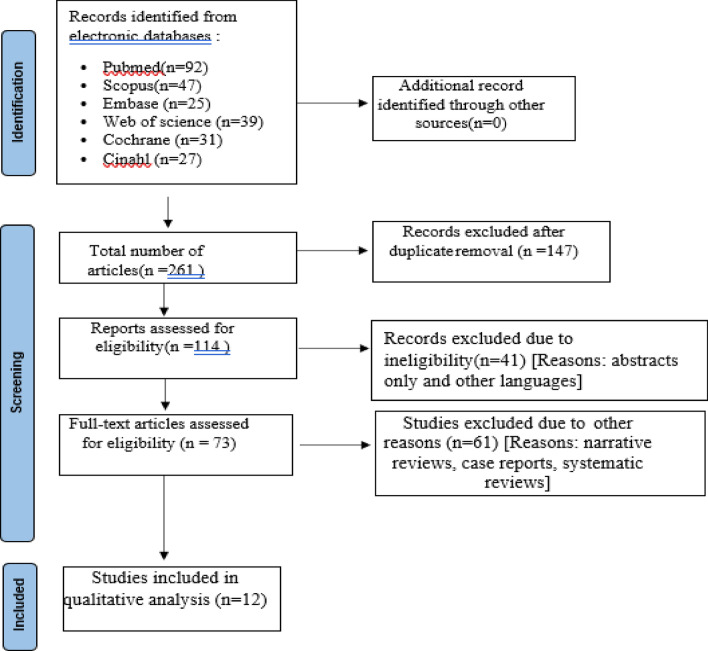
Results: A total of 12 in vitro and animal studies were included, examining plants such as Allium sativum (garlic), Crocus sativus (saffron), Curcuma longa (turmeric), Scutellariabaicalensis (Baikal skullcap), etc., These studies demonstrated that bioactive components like allicin, curcumin, and baicalin significantly inhibited OSCC cell proliferation and induced apoptosis. However, there was substantial variability in the dose concentrations required, ranging from 1 µg/mL for garlic extract to 50 mg/mL for saffron nanoparticles. The risk of bias assessment indicated that four studies had a moderate risk, while one had a low risk of bias, indicating methodological rigor.
Conclusion: Plant extracts such as Curcuma longa and Vitis vinifera present a promising, less toxic alternative for OSCC treatment, with the potential to be integrated into conventional chemotherapeutic regimens. While in-vitro and animal studies are encouraging, further clinical trials among humans are necessary to confirm their efficacy and safety in clinical settings.
背景与目的:尽管传统的治疗方法取得了进展,但口腔鳞状细胞癌(OSCC)的总生存率仍然有限。因此,有必要研究替代治疗策略,以提高患者的预后。本文综述了植物提取物作为化学预防剂在口腔癌治疗中的潜在作用。方法:根据PRISMA指南进行系统综述,检索PubMed、Scopus、Embase、Web of science、Cochrane和CINAHL等数据库,包括2010年至2024年探索药用植物治疗OSCC的抗癌潜力的研究。数据提取主要集中在植物种类、使用部位、提取物类型、有效成分、剂量和使用的癌细胞系或动物模型。使用OHAT工具(动物研究)和ROBINS-I工具(体外研究)评估偏倚风险。结果:共12项体外和动物实验,对大蒜、藏红花、姜黄、黄芩等植物进行了研究,结果表明,大蒜素、姜黄素、黄芩苷等生物活性成分可显著抑制OSCC细胞增殖,诱导细胞凋亡。然而,所需的剂量浓度有很大的差异,从大蒜提取物1微克/毫升到藏红花纳米颗粒50毫克/毫升不等。偏倚风险评估显示,四项研究具有中等偏倚风险,而一项研究具有低偏倚风险,表明方法的严谨性。结论:Curcuma longa和Vitis vinifera等植物提取物为OSCC治疗提供了一种前景光明、毒性较低的替代方案,有可能与常规化疗方案相结合。虽然体外和动物研究令人鼓舞,但还需要进一步的人体临床试验来证实它们在临床环境中的有效性和安全性。






 京公网安备 11010802042870号
京ICP备2023020795号-1
京公网安备 11010802042870号
京ICP备2023020795号-1

 分享
分享
 求助内容:
求助内容: 应助结果提醒方式:
 扫码关注我们
