"Good, Better, How" Educational Intervention: Potential Benefits of Utilizing Feedback in General Surgery; Sequential Mixed-Methods Study of an Educational Intervention.
Mark Guadagnoli, Whitney Elks, Kencie Ely, Abigail W Cheng, Kavita Batra, Charles Randolph St Hill
{"title":"\"Good, Better, How\" Educational Intervention: Potential Benefits of Utilizing Feedback in General Surgery; Sequential Mixed-Methods Study of an Educational Intervention.","authors":"Mark Guadagnoli, Whitney Elks, Kencie Ely, Abigail W Cheng, Kavita Batra, Charles Randolph St Hill","doi":"10.2147/AMEP.S487038","DOIUrl":null,"url":null,"abstract":"<p><strong>Background: </strong>Feedback is acknowledged as a necessity for effective learning and performance improvement. However, it has been shown to have variable effects on subsequent performance. This study introduces the \"Good, Better, How\" (GBH) framework for providing and receiving effective feedback in surgical training.</p><p><strong>Methods: </strong>Surgery residents, fellows and faculty at a single institution completed pre- and post-educational intervention surveys, attended a GBH educational intervention, and participated in focus groups. Survey results were analyzed quantitatively and qualitatively.</p><p><strong>Results: </strong>Survey analysis showed significant (p<0.05) positive changes from using the GBH method, and rated the GBH method very favorably (average score: 8.03/10), suggesting a positive paradigm shift from previous feedback methods used in surgical education. Dominant focus group themes included phrases such as \"positive culture\", \"systematic\", and \"useful\".</p><p><strong>Conclusion: </strong>Despite implementation challenges, the GBH feedback system shows promise for enhancing surgical education and may contribute to improved patient outcomes.</p>","PeriodicalId":47404,"journal":{"name":"Advances in Medical Education and Practice","volume":"16 ","pages":"381-398"},"PeriodicalIF":1.7000,"publicationDate":"2025-03-12","publicationTypes":"Journal Article","fieldsOfStudy":null,"isOpenAccess":false,"openAccessPdf":"https://www.ncbi.nlm.nih.gov/pmc/articles/PMC11910930/pdf/","citationCount":"0","resultStr":null,"platform":"Semanticscholar","paperid":null,"PeriodicalName":"Advances in Medical Education and Practice","FirstCategoryId":"1085","ListUrlMain":"https://doi.org/10.2147/AMEP.S487038","RegionNum":0,"RegionCategory":null,"ArticlePicture":[],"TitleCN":null,"AbstractTextCN":null,"PMCID":null,"EPubDate":"2025/1/1 0:00:00","PubModel":"eCollection","JCR":"Q2","JCRName":"EDUCATION, SCIENTIFIC DISCIPLINES","Score":null,"Total":0}
引用次数: 0
Abstract
Background: Feedback is acknowledged as a necessity for effective learning and performance improvement. However, it has been shown to have variable effects on subsequent performance. This study introduces the "Good, Better, How" (GBH) framework for providing and receiving effective feedback in surgical training.
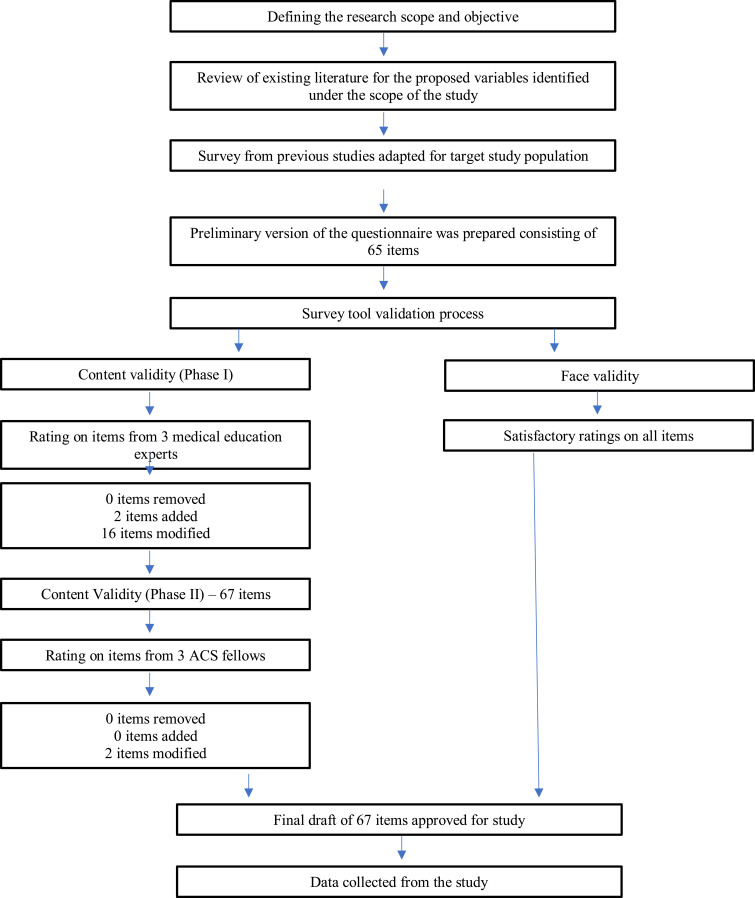
Methods: Surgery residents, fellows and faculty at a single institution completed pre- and post-educational intervention surveys, attended a GBH educational intervention, and participated in focus groups. Survey results were analyzed quantitatively and qualitatively.
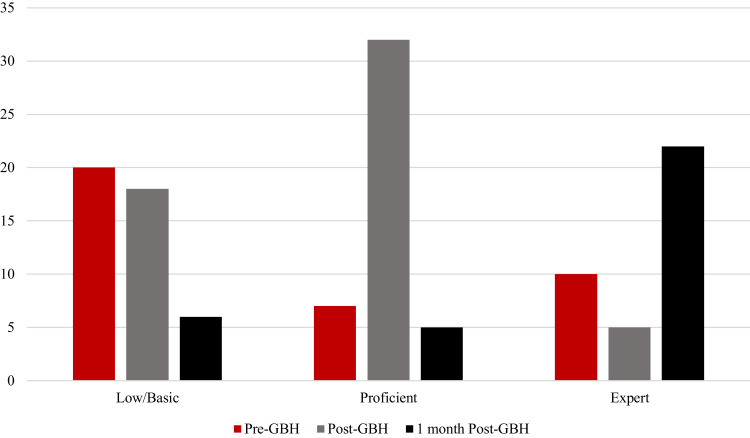
Results: Survey analysis showed significant (p<0.05) positive changes from using the GBH method, and rated the GBH method very favorably (average score: 8.03/10), suggesting a positive paradigm shift from previous feedback methods used in surgical education. Dominant focus group themes included phrases such as "positive culture", "systematic", and "useful".
Conclusion: Despite implementation challenges, the GBH feedback system shows promise for enhancing surgical education and may contribute to improved patient outcomes.






 京公网安备 11010802042870号
京ICP备2023020795号-1
京公网安备 11010802042870号
京ICP备2023020795号-1

 分享
分享
 求助内容:
求助内容: 应助结果提醒方式:
 扫码关注我们
