Daniel Marbach, Jurriaan Brouer-Visser, Laura Brennan, Sabine Wilson, Iakov I Davydov, Nicolas Staedler, José Duarte, Iris Martinez Quetglas, Eveline Nüesch, Marta Cañamero, Evelyne Chesné, George Au-Yeung, Erika Hamilton, Stephanie Lheureux, Debra L Richardson, Iben Spanggaard, Bruno Gomes, Izolda Franjkovic, Mark DeMario, Martin Kornacker, Katharina Lechner
{"title":"Immune modulation in solid tumors: a phase 1b study of RO6870810 (BET inhibitor) and atezolizumab (PD-L1 inhibitor).","authors":"Daniel Marbach, Jurriaan Brouer-Visser, Laura Brennan, Sabine Wilson, Iakov I Davydov, Nicolas Staedler, José Duarte, Iris Martinez Quetglas, Eveline Nüesch, Marta Cañamero, Evelyne Chesné, George Au-Yeung, Erika Hamilton, Stephanie Lheureux, Debra L Richardson, Iben Spanggaard, Bruno Gomes, Izolda Franjkovic, Mark DeMario, Martin Kornacker, Katharina Lechner","doi":"10.1186/s12885-025-13851-4","DOIUrl":null,"url":null,"abstract":"<p><strong>Purpose: </strong>Bromodomain and extra-terminal domain (BET) inhibitors (BETi) have demonstrated epigenetic modulation capabilities, specifically in transcriptional repression of oncogenic pathways. Preclinical assays suggest that BETi potentially attenuates the PD1/PD-L1 immune checkpoint axis, supporting its combination with immunomodulatory agents.</p><p><strong>Patients and methods: </strong>A Phase 1b clinical trial was conducted to elucidate the pharmacokinetic and pharmacodynamic profiles of the BET inhibitor RO6870810 as monotherapy and in combination with the PD-L1 antagonist atezolizumab in patients with advanced ovarian carcinomas and triple-negative breast cancer (TNBC). Endpoints included maximum tolerated dosages, adverse event profiling, pharmacokinetic evaluations, and antitumor activity. Pharmacodynamic and immunomodulatory effects were assessed in tumor tissue (by immunohistochemistry and RNA-seq) and in peripheral blood (by flow cytometry and cytokine analysis).</p><p><strong>Results: </strong>The study was terminated prematurely due to a pronounced incidence of immune-related adverse effects in patients receiving combination of RO6870810 and atezolizumab. Antitumor activity was limited to 2 patients (5.6%) showing partial response. Although target engagement was confirmed by established BETi pharmacodynamic markers in both blood and tumor samples, BETi failed to markedly decrease tumor PD-L1 expression and had a suppressive effect on antitumor immunity. Immune effector activation in tumor tissue was solely observed with the atezolizumab combination, aligning with this checkpoint inhibitor's recognized biological effects.</p><p><strong>Conclusions: </strong>The combination of BET inhibitor RO6870810 with the checkpoint inhibitor atezolizumab presents an unfavorable risk-benefit profile for ovarian cancer and TNBC (triple-negative breast cancer) patients due to the increased risk of augmented or exaggerated immune reactions, without evidence for synergistic antitumor effects.</p><p><strong>Trial registration: </strong>ClinicalTrials.gov ID NCT03292172; Registration Date: 2017-09-25.</p>","PeriodicalId":9131,"journal":{"name":"BMC Cancer","volume":"25 1","pages":"500"},"PeriodicalIF":3.4000,"publicationDate":"2025-03-18","publicationTypes":"Journal Article","fieldsOfStudy":null,"isOpenAccess":false,"openAccessPdf":"https://www.ncbi.nlm.nih.gov/pmc/articles/PMC11916277/pdf/","citationCount":"0","resultStr":null,"platform":"Semanticscholar","paperid":null,"PeriodicalName":"BMC Cancer","FirstCategoryId":"3","ListUrlMain":"https://doi.org/10.1186/s12885-025-13851-4","RegionNum":2,"RegionCategory":"医学","ArticlePicture":[],"TitleCN":null,"AbstractTextCN":null,"PMCID":null,"EPubDate":"","PubModel":"","JCR":"Q2","JCRName":"ONCOLOGY","Score":null,"Total":0}
引用次数: 0
Abstract
Purpose: Bromodomain and extra-terminal domain (BET) inhibitors (BETi) have demonstrated epigenetic modulation capabilities, specifically in transcriptional repression of oncogenic pathways. Preclinical assays suggest that BETi potentially attenuates the PD1/PD-L1 immune checkpoint axis, supporting its combination with immunomodulatory agents.
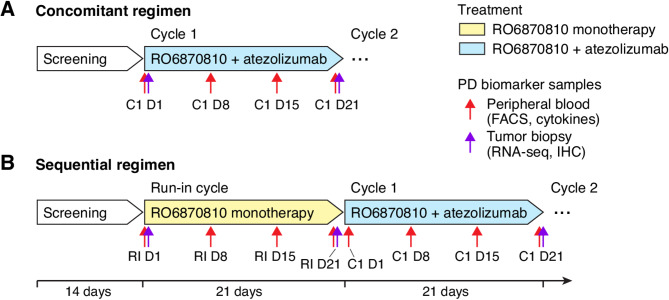
Patients and methods: A Phase 1b clinical trial was conducted to elucidate the pharmacokinetic and pharmacodynamic profiles of the BET inhibitor RO6870810 as monotherapy and in combination with the PD-L1 antagonist atezolizumab in patients with advanced ovarian carcinomas and triple-negative breast cancer (TNBC). Endpoints included maximum tolerated dosages, adverse event profiling, pharmacokinetic evaluations, and antitumor activity. Pharmacodynamic and immunomodulatory effects were assessed in tumor tissue (by immunohistochemistry and RNA-seq) and in peripheral blood (by flow cytometry and cytokine analysis).
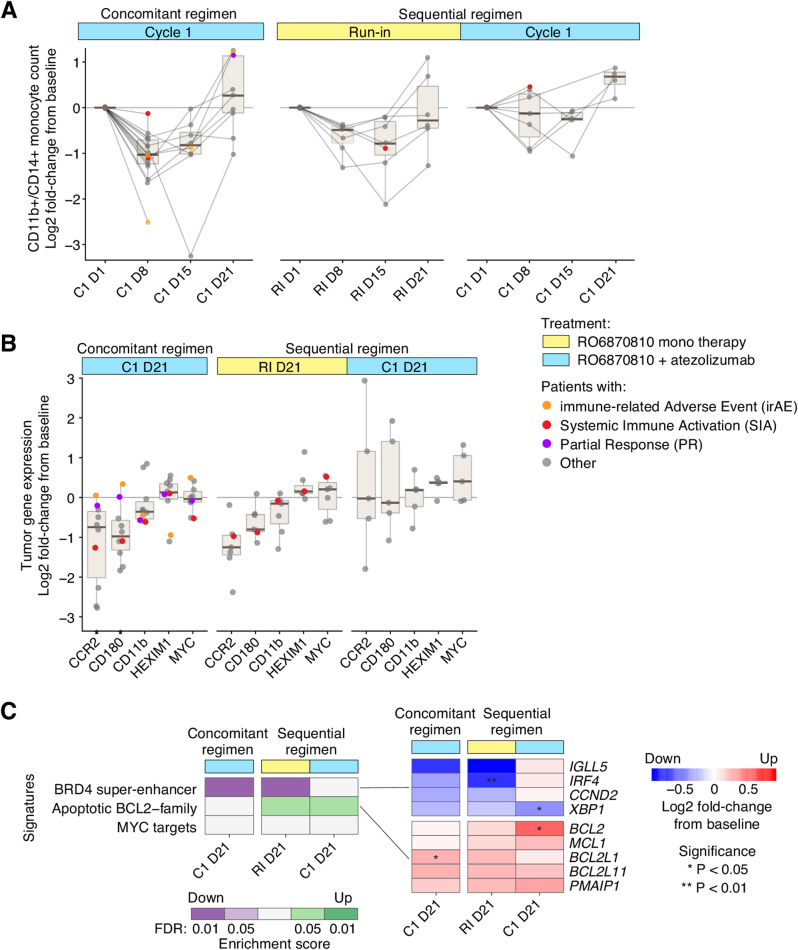
Results: The study was terminated prematurely due to a pronounced incidence of immune-related adverse effects in patients receiving combination of RO6870810 and atezolizumab. Antitumor activity was limited to 2 patients (5.6%) showing partial response. Although target engagement was confirmed by established BETi pharmacodynamic markers in both blood and tumor samples, BETi failed to markedly decrease tumor PD-L1 expression and had a suppressive effect on antitumor immunity. Immune effector activation in tumor tissue was solely observed with the atezolizumab combination, aligning with this checkpoint inhibitor's recognized biological effects.
Conclusions: The combination of BET inhibitor RO6870810 with the checkpoint inhibitor atezolizumab presents an unfavorable risk-benefit profile for ovarian cancer and TNBC (triple-negative breast cancer) patients due to the increased risk of augmented or exaggerated immune reactions, without evidence for synergistic antitumor effects.
Trial registration: ClinicalTrials.gov ID NCT03292172; Registration Date: 2017-09-25.
目的:溴结构域和外末端结构域(BETi)抑制剂(BETi)已被证明具有表观遗传调节能力,特别是在致癌途径的转录抑制中。临床前分析表明,BETi可能减弱PD1/PD-L1免疫检查点轴,支持其与免疫调节剂的联合。患者和方法:进行了1b期临床试验,以阐明BET抑制剂RO6870810作为单药治疗和与PD-L1拮抗剂atezolizumab联合治疗晚期卵巢癌和三阴性乳腺癌(TNBC)患者的药代动力学和药效学特征。终点包括最大耐受剂量、不良事件分析、药代动力学评估和抗肿瘤活性。在肿瘤组织(通过免疫组织化学和RNA-seq)和外周血(通过流式细胞术和细胞因子分析)中评估药效学和免疫调节作用。结果:由于接受RO6870810和atezolizumab联合治疗的患者出现明显的免疫相关不良反应,该研究被提前终止。抗肿瘤活性仅限于2例(5.6%)表现出部分反应。虽然在血液和肿瘤样本中建立的BETi药效学标记物证实了靶标作用,但BETi不能显著降低肿瘤PD-L1的表达,而且对抗肿瘤免疫有抑制作用。免疫效应在肿瘤组织中的激活仅由atezolizumab联合观察到,与该检查点抑制剂公认的生物学效应一致。结论:BET抑制剂RO6870810联合检查点抑制剂atezolizumab对卵巢癌和TNBC(三阴性乳腺癌)患者表现出不利的风险-收益特征,因为免疫反应增强或夸大的风险增加,没有证据表明具有协同抗肿瘤作用。试验注册:ClinicalTrials.gov ID NCT03292172;注册日期:2017-09-25。
期刊介绍:
BMC Cancer is an open access, peer-reviewed journal that considers articles on all aspects of cancer research, including the pathophysiology, prevention, diagnosis and treatment of cancers. The journal welcomes submissions concerning molecular and cellular biology, genetics, epidemiology, and clinical trials.




 京公网安备 11010802042870号
京ICP备2023020795号-1
京公网安备 11010802042870号
京ICP备2023020795号-1

 分享
分享
 求助内容:
求助内容: 应助结果提醒方式:
 扫码关注我们
