Julie Marie Haabeth Brox, Amela Tulek, Amer Sehic, Aida Mulic, Tor Paaske Utheim, Qalbi Khan
{"title":"Comparative analysis of the protective effects of fluoride compounds on dental erosion in mouse model.","authors":"Julie Marie Haabeth Brox, Amela Tulek, Amer Sehic, Aida Mulic, Tor Paaske Utheim, Qalbi Khan","doi":"10.1186/s12903-025-05767-z","DOIUrl":null,"url":null,"abstract":"<p><strong>Background: </strong>Dental erosion development is affected by various factors such as types and amounts of acids, drinking habits and lifestyle choices. To prevent the onset and progression, identification of early erosive lesions as well as increased knowledge of the preventive treatment possibilities is of the importance. The aim of this study is to compare the protective effects of various fluoride compounds against dental erosion utilizing an established mouse model.</p><p><strong>Methods: </strong>Three groups of ten young CD-1 mice were provided cola drink ad libitum during six weeks. Fluoride solutions containing metal components, TiF₄ (0.5 mol/l, pH 1.2, 9500 ppm F) and SnF₂ (0.5 mol/l, pH 2.6, 9500 ppm F), and a non-metal fluoride, NaF (0.5 mol/l, pH 8, 9500 ppm F) were applied to the molars under sedation twice a week. Additionally, one positive (acidic drink) and one negative (distilled water) control group were included. Mandibular molars were thereafter dissected and analyzed using scanning electron microscopy (SEM). The first molars were transversely ground, observed by SEM, and tooth height and dental hard tissue loss were measured. Further, pulp structure was described.</p><p><strong>Results: </strong>The application of metal fluorides, TiF₄ and SnF₂, resulted in the formation of a protective coating layer on the molars. The overall protective effects of fluoride compounds on the development of dental erosion were evident in increasing succession from NaF, TiF₄ to SnF₂. Molars applied NaF showed a 6% reduction in tooth tissue loss compared to the untreated positive control molars. TiF₄ and SnF₂ treated molars continued to display decreased tooth tissue loss by 37% and 67%, respectively.</p><p><strong>Conclusions: </strong>The metal fluorides offer superior protection against dental erosion compared to the traditional fluoride compound. The results particularly emphasize the protective effect of SnF₂, which was most effective in preserving enamel structure and minimizing dentin exposure. This suggests that SnF₂ could be an effective option for preventing dental erosions.</p>","PeriodicalId":9072,"journal":{"name":"BMC Oral Health","volume":"25 1","pages":"401"},"PeriodicalIF":3.1000,"publicationDate":"2025-03-18","publicationTypes":"Journal Article","fieldsOfStudy":null,"isOpenAccess":false,"openAccessPdf":"https://www.ncbi.nlm.nih.gov/pmc/articles/PMC11917062/pdf/","citationCount":"0","resultStr":null,"platform":"Semanticscholar","paperid":null,"PeriodicalName":"BMC Oral Health","FirstCategoryId":"3","ListUrlMain":"https://doi.org/10.1186/s12903-025-05767-z","RegionNum":2,"RegionCategory":"医学","ArticlePicture":[],"TitleCN":null,"AbstractTextCN":null,"PMCID":null,"EPubDate":"","PubModel":"","JCR":"Q1","JCRName":"DENTISTRY, ORAL SURGERY & MEDICINE","Score":null,"Total":0}
引用次数: 0
Abstract
Background: Dental erosion development is affected by various factors such as types and amounts of acids, drinking habits and lifestyle choices. To prevent the onset and progression, identification of early erosive lesions as well as increased knowledge of the preventive treatment possibilities is of the importance. The aim of this study is to compare the protective effects of various fluoride compounds against dental erosion utilizing an established mouse model.
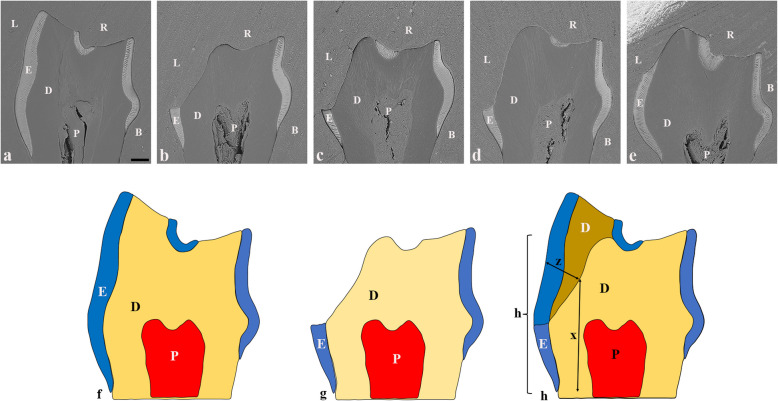
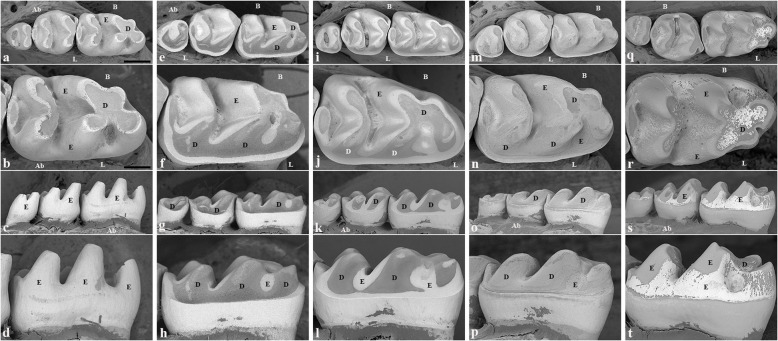
Methods: Three groups of ten young CD-1 mice were provided cola drink ad libitum during six weeks. Fluoride solutions containing metal components, TiF₄ (0.5 mol/l, pH 1.2, 9500 ppm F) and SnF₂ (0.5 mol/l, pH 2.6, 9500 ppm F), and a non-metal fluoride, NaF (0.5 mol/l, pH 8, 9500 ppm F) were applied to the molars under sedation twice a week. Additionally, one positive (acidic drink) and one negative (distilled water) control group were included. Mandibular molars were thereafter dissected and analyzed using scanning electron microscopy (SEM). The first molars were transversely ground, observed by SEM, and tooth height and dental hard tissue loss were measured. Further, pulp structure was described.
Results: The application of metal fluorides, TiF₄ and SnF₂, resulted in the formation of a protective coating layer on the molars. The overall protective effects of fluoride compounds on the development of dental erosion were evident in increasing succession from NaF, TiF₄ to SnF₂. Molars applied NaF showed a 6% reduction in tooth tissue loss compared to the untreated positive control molars. TiF₄ and SnF₂ treated molars continued to display decreased tooth tissue loss by 37% and 67%, respectively.
Conclusions: The metal fluorides offer superior protection against dental erosion compared to the traditional fluoride compound. The results particularly emphasize the protective effect of SnF₂, which was most effective in preserving enamel structure and minimizing dentin exposure. This suggests that SnF₂ could be an effective option for preventing dental erosions.
期刊介绍:
BMC Oral Health is an open access, peer-reviewed journal that considers articles on all aspects of the prevention, diagnosis and management of disorders of the mouth, teeth and gums, as well as related molecular genetics, pathophysiology, and epidemiology.




 京公网安备 11010802042870号
京ICP备2023020795号-1
京公网安备 11010802042870号
京ICP备2023020795号-1

 分享
分享
 求助内容:
求助内容: 应助结果提醒方式:
 扫码关注我们
