Abigail J Bokor, Nick Holford, Jacqueline A Hannam
{"title":"Imputation of missing clock times - application to procalcitonin concentration time course after birth.","authors":"Abigail J Bokor, Nick Holford, Jacqueline A Hannam","doi":"10.1007/s10928-025-09965-8","DOIUrl":null,"url":null,"abstract":"<p><p>The time course of biomarkers (e.g., acute phase proteins) are typically described using days relative to events of interest, such as surgery or birth, without specifying the sample time. This limits their use as they may change rapidly during a single day. We investigated strategies to impute missing clock times, using procalcitonin for population modelling as the motivating example. 1275 procalcitonin concentrations from 282 neonates were available with dates but not sample times (Scenario 0). Missing clock times were imputed using a random uniform distribution under three scenarios: (1) minimum sampling intervals (8-12 h); (2) procalcitonin concentrations increase for postnatal days 0-1 then decrease; (3) standard sampling practice at the study hospital. Unique datasets (n = 100) were created with scenario-specific imputed clock times. Procalcitonin was modelled for each scenario using the same non-linear mixed effects model using NONMEM. Scenarios were evaluated by the NONMEM objective function value compared to Scenario 0 (∆OFV) and with visual predictive checks. Scenario 3, based on standard sampling practice at the study hospital, was the best imputation procedure with an improved objective function value compared to Scenario 0 (∆OFV: -62.6). Scenario 3 showed a shorter lag time between the birth event and the procalcitonin concentration increase (average: 12.0 h, 95% interval: 9.7 to 14.3 h) compared to other scenarios (averages: 15.3 to 18.7 h). A methodology for selecting imputation strategies for clock times was developed. This may be applied to other problems where clock times are missing.</p>","PeriodicalId":16851,"journal":{"name":"Journal of Pharmacokinetics and Pharmacodynamics","volume":"52 2","pages":"20"},"PeriodicalIF":3.3000,"publicationDate":"2025-03-18","publicationTypes":"Journal Article","fieldsOfStudy":null,"isOpenAccess":false,"openAccessPdf":"https://www.ncbi.nlm.nih.gov/pmc/articles/PMC11920349/pdf/","citationCount":"0","resultStr":null,"platform":"Semanticscholar","paperid":null,"PeriodicalName":"Journal of Pharmacokinetics and Pharmacodynamics","FirstCategoryId":"3","ListUrlMain":"https://doi.org/10.1007/s10928-025-09965-8","RegionNum":4,"RegionCategory":"医学","ArticlePicture":[],"TitleCN":null,"AbstractTextCN":null,"PMCID":null,"EPubDate":"","PubModel":"","JCR":"Q3","JCRName":"PHARMACOLOGY & PHARMACY","Score":null,"Total":0}
引用次数: 0
Abstract
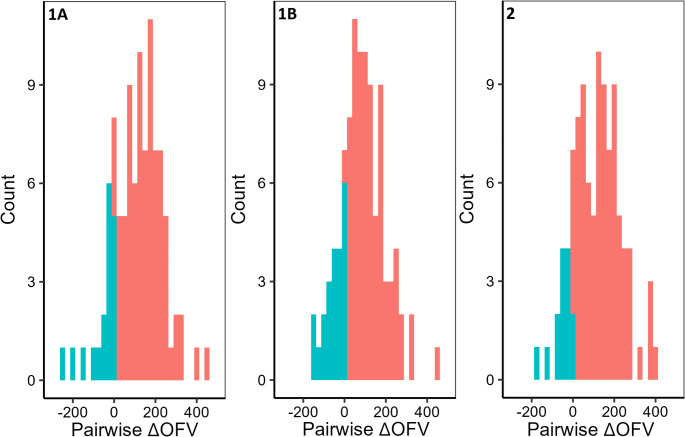
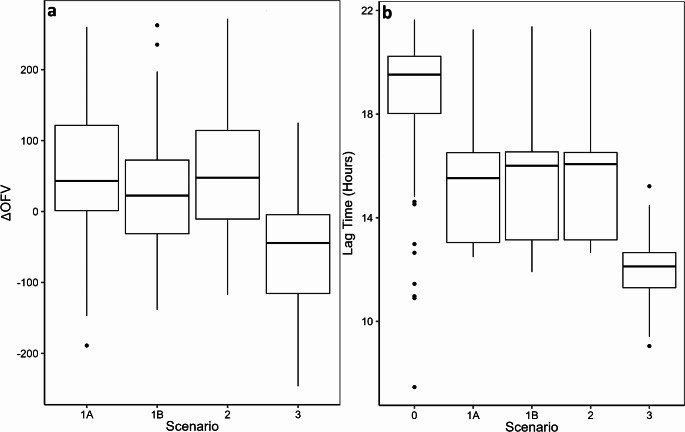
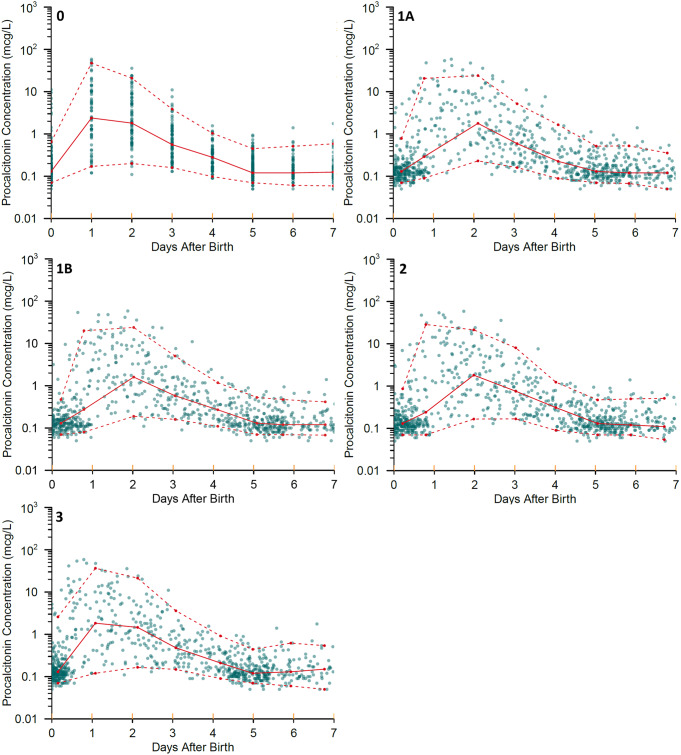
The time course of biomarkers (e.g., acute phase proteins) are typically described using days relative to events of interest, such as surgery or birth, without specifying the sample time. This limits their use as they may change rapidly during a single day. We investigated strategies to impute missing clock times, using procalcitonin for population modelling as the motivating example. 1275 procalcitonin concentrations from 282 neonates were available with dates but not sample times (Scenario 0). Missing clock times were imputed using a random uniform distribution under three scenarios: (1) minimum sampling intervals (8-12 h); (2) procalcitonin concentrations increase for postnatal days 0-1 then decrease; (3) standard sampling practice at the study hospital. Unique datasets (n = 100) were created with scenario-specific imputed clock times. Procalcitonin was modelled for each scenario using the same non-linear mixed effects model using NONMEM. Scenarios were evaluated by the NONMEM objective function value compared to Scenario 0 (∆OFV) and with visual predictive checks. Scenario 3, based on standard sampling practice at the study hospital, was the best imputation procedure with an improved objective function value compared to Scenario 0 (∆OFV: -62.6). Scenario 3 showed a shorter lag time between the birth event and the procalcitonin concentration increase (average: 12.0 h, 95% interval: 9.7 to 14.3 h) compared to other scenarios (averages: 15.3 to 18.7 h). A methodology for selecting imputation strategies for clock times was developed. This may be applied to other problems where clock times are missing.
期刊介绍:
Broadly speaking, the Journal of Pharmacokinetics and Pharmacodynamics covers the area of pharmacometrics. The journal is devoted to illustrating the importance of pharmacokinetics, pharmacodynamics, and pharmacometrics in drug development, clinical care, and the understanding of drug action. The journal publishes on a variety of topics related to pharmacometrics, including, but not limited to, clinical, experimental, and theoretical papers examining the kinetics of drug disposition and effects of drug action in humans, animals, in vitro, or in silico; modeling and simulation methodology, including optimal design; precision medicine; systems pharmacology; and mathematical pharmacology (including computational biology, bioengineering, and biophysics related to pharmacology, pharmacokinetics, orpharmacodynamics). Clinical papers that include population pharmacokinetic-pharmacodynamic relationships are welcome. The journal actively invites and promotes up-and-coming areas of pharmacometric research, such as real-world evidence, quality of life analyses, and artificial intelligence. The Journal of Pharmacokinetics and Pharmacodynamics is an official journal of the International Society of Pharmacometrics.




 京公网安备 11010802042870号
京ICP备2023020795号-1
京公网安备 11010802042870号
京ICP备2023020795号-1

 分享
分享
 求助内容:
求助内容: 应助结果提醒方式:
 扫码关注我们
