{"title":"Factors affecting Nile crocodile (Crocodylus niloticus) leather quality: a systematic review.","authors":"Ndzalo Khosa, Khetho Ratshilumela Nemutandani","doi":"10.1007/s11250-025-04376-w","DOIUrl":null,"url":null,"abstract":"<p><p>Leather from the Nile crocodile (Crocodylus niloticus) is highly valued in global markets due to its durability, distinct texture, and aesthetic appeal. Despite its economic importance, the crocodile industry faces substantial challenges in maintaining the leather quality due to a variety of influencing factors. This study systematically reviews the literature that investigated the genetic, environmental, and management factors that influence the leather quality of Nile crocodiles. A comprehensive search on Google Scholar, ResearchGate, PubMed, and ScienceDirect databases yielded twenty-four studies published between 1960 and 2023. The analysis shows that genetic diversity and selective breeding programs play an important role in improving skin quality by promoting desirable traits and disease resistance. Environmental factors such as water quality, temperature, and habitat conditions have a substantial impact on skin health, with poor water quality and extreme temperatures contributing to skin diseases and defects. Management practices in crocodile farms should emphasize ideal stocking densities, balanced diets, and regular health screenings, which are essential for minimizing stress, injuries, and infections that degrade leather quality. Comparative studies with other crocodilian species, such as saltwater crocodiles, caimans, and American alligators, revealed both similarities and differences in the factors that influence leather quality, providing useful insights for improving techniques across species. This review adds to the body of knowledge by integrating current studies and providing actionable recommendations for improving Nile crocodile leather quality through improved genetic, environmental, and management practices. Scarcity of studies on crocodile leather remain a challenge. However, future research are needed that will explore longitudinal studies and the establishment of advanced practices to promote sustainable crocodile farming and assure the improved leather quality and industry's profitability.</p>","PeriodicalId":23329,"journal":{"name":"Tropical animal health and production","volume":"57 3","pages":"126"},"PeriodicalIF":1.7000,"publicationDate":"2025-03-18","publicationTypes":"Journal Article","fieldsOfStudy":null,"isOpenAccess":false,"openAccessPdf":"https://www.ncbi.nlm.nih.gov/pmc/articles/PMC11919994/pdf/","citationCount":"0","resultStr":null,"platform":"Semanticscholar","paperid":null,"PeriodicalName":"Tropical animal health and production","FirstCategoryId":"97","ListUrlMain":"https://doi.org/10.1007/s11250-025-04376-w","RegionNum":3,"RegionCategory":"农林科学","ArticlePicture":[],"TitleCN":null,"AbstractTextCN":null,"PMCID":null,"EPubDate":"","PubModel":"","JCR":"Q2","JCRName":"AGRICULTURE, DAIRY & ANIMAL SCIENCE","Score":null,"Total":0}
引用次数: 0
Abstract
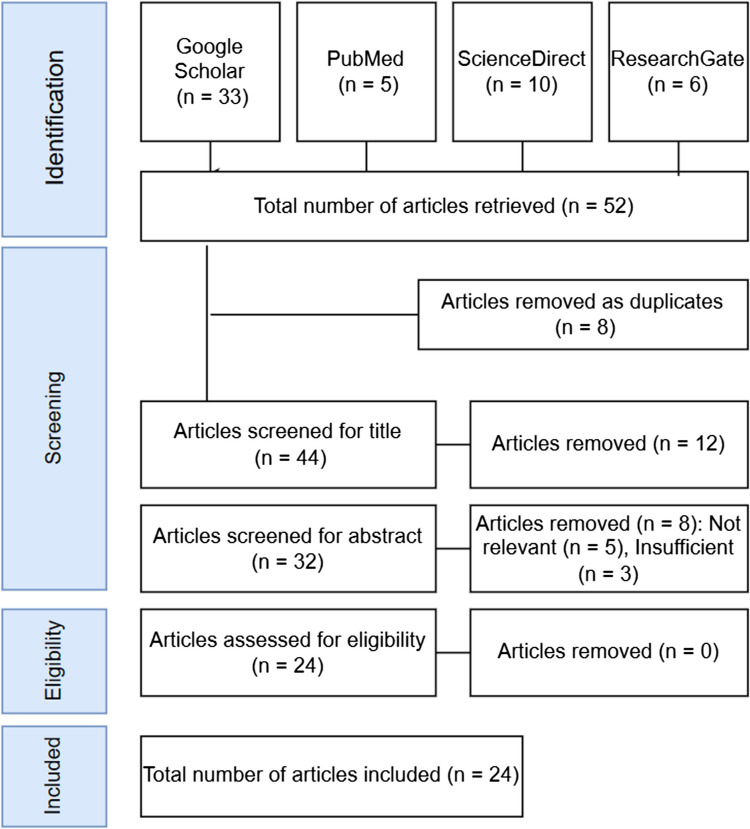
Leather from the Nile crocodile (Crocodylus niloticus) is highly valued in global markets due to its durability, distinct texture, and aesthetic appeal. Despite its economic importance, the crocodile industry faces substantial challenges in maintaining the leather quality due to a variety of influencing factors. This study systematically reviews the literature that investigated the genetic, environmental, and management factors that influence the leather quality of Nile crocodiles. A comprehensive search on Google Scholar, ResearchGate, PubMed, and ScienceDirect databases yielded twenty-four studies published between 1960 and 2023. The analysis shows that genetic diversity and selective breeding programs play an important role in improving skin quality by promoting desirable traits and disease resistance. Environmental factors such as water quality, temperature, and habitat conditions have a substantial impact on skin health, with poor water quality and extreme temperatures contributing to skin diseases and defects. Management practices in crocodile farms should emphasize ideal stocking densities, balanced diets, and regular health screenings, which are essential for minimizing stress, injuries, and infections that degrade leather quality. Comparative studies with other crocodilian species, such as saltwater crocodiles, caimans, and American alligators, revealed both similarities and differences in the factors that influence leather quality, providing useful insights for improving techniques across species. This review adds to the body of knowledge by integrating current studies and providing actionable recommendations for improving Nile crocodile leather quality through improved genetic, environmental, and management practices. Scarcity of studies on crocodile leather remain a challenge. However, future research are needed that will explore longitudinal studies and the establishment of advanced practices to promote sustainable crocodile farming and assure the improved leather quality and industry's profitability.
期刊介绍:
Tropical Animal Health and Production is an international journal publishing the results of original research in any field of animal health, welfare, and production with the aim of improving health and productivity of livestock, and better utilisation of animal resources, including wildlife in tropical, subtropical and similar agro-ecological environments.



 京公网安备 11010802042870号
京ICP备2023020795号-1
京公网安备 11010802042870号
京ICP备2023020795号-1

 分享
分享
 求助内容:
求助内容: 应助结果提醒方式:
 扫码关注我们
