{"title":"Unlocking the dual role of autophagy: A new strategy for treating lung cancer.","authors":"Fei Tang, Jing-Nan Zhang, Xiao-Lan Zhao, Li-Yue Xu, Hui Ao, Cheng Peng","doi":"10.1016/j.jpha.2024.101098","DOIUrl":null,"url":null,"abstract":"<p><p>Lung cancer exhibits the highest incidence and mortality rates among cancers globally, with a five-year overall survival rate alarmingly below 20%. Targeting autophagy, though a controversial therapeutic strategy, is extensively employed in clinical practice. Current research is actively pursuing various therapeutic strategies using small molecules to exploit the dual function of autophagy. Nevertheless, the pivotal question of enhancing or inhibiting autophagy in cancer therapy merits further attention. This review aims to provide a comprehensive overview of the mechanisms of autophagy in lung cancer. It also explores recent advances in targeting cytotoxic autophagy and inhibiting protective autophagy with small molecules to induce cell death in lung cancer cells. Notably, most autophagy-targeting drugs, primarily natural small molecules, have demonstrated that activating cytotoxic autophagy effectively induces cell death in lung cancer, as opposed to inhibiting protective autophagy. These insights contribute to identifying druggable targets and drug candidates for potential autophagy-related lung cancer therapies, offering promising approaches to combat this disease.</p>","PeriodicalId":94338,"journal":{"name":"Journal of pharmaceutical analysis","volume":"15 3","pages":"101098"},"PeriodicalIF":8.9000,"publicationDate":"2025-03-01","publicationTypes":"Journal Article","fieldsOfStudy":null,"isOpenAccess":false,"openAccessPdf":"https://www.ncbi.nlm.nih.gov/pmc/articles/PMC11919427/pdf/","citationCount":"0","resultStr":null,"platform":"Semanticscholar","paperid":null,"PeriodicalName":"Journal of pharmaceutical analysis","FirstCategoryId":"1085","ListUrlMain":"https://doi.org/10.1016/j.jpha.2024.101098","RegionNum":0,"RegionCategory":null,"ArticlePicture":[],"TitleCN":null,"AbstractTextCN":null,"PMCID":null,"EPubDate":"2024/9/12 0:00:00","PubModel":"Epub","JCR":"","JCRName":"","Score":null,"Total":0}
引用次数: 0
Abstract
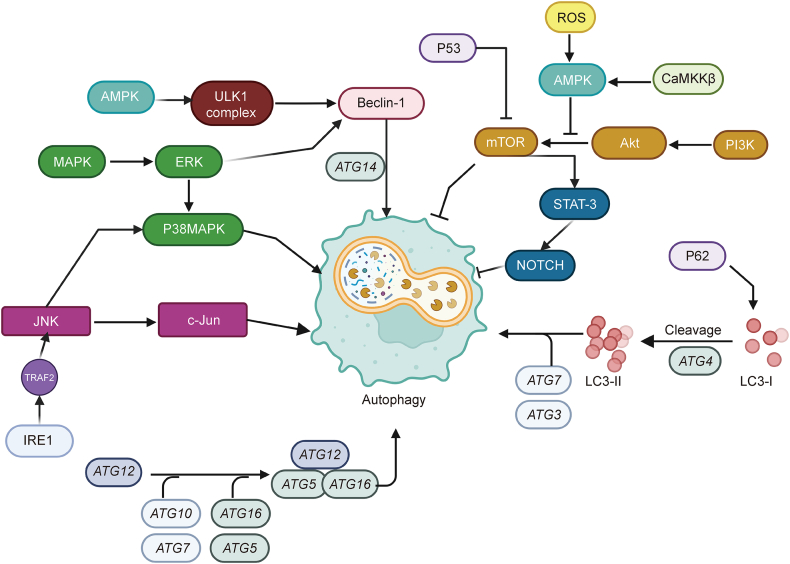
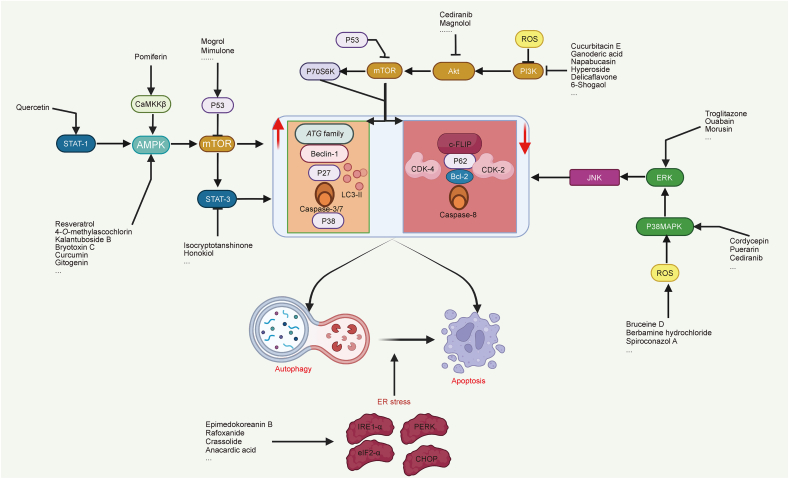
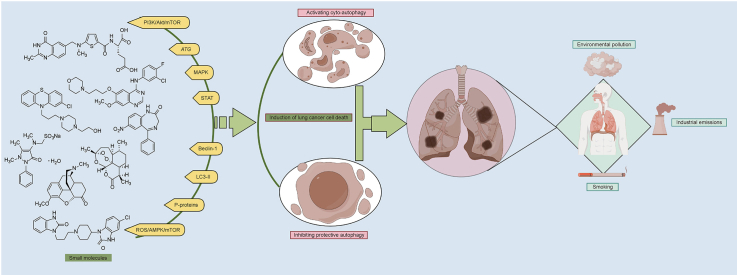
Lung cancer exhibits the highest incidence and mortality rates among cancers globally, with a five-year overall survival rate alarmingly below 20%. Targeting autophagy, though a controversial therapeutic strategy, is extensively employed in clinical practice. Current research is actively pursuing various therapeutic strategies using small molecules to exploit the dual function of autophagy. Nevertheless, the pivotal question of enhancing or inhibiting autophagy in cancer therapy merits further attention. This review aims to provide a comprehensive overview of the mechanisms of autophagy in lung cancer. It also explores recent advances in targeting cytotoxic autophagy and inhibiting protective autophagy with small molecules to induce cell death in lung cancer cells. Notably, most autophagy-targeting drugs, primarily natural small molecules, have demonstrated that activating cytotoxic autophagy effectively induces cell death in lung cancer, as opposed to inhibiting protective autophagy. These insights contribute to identifying druggable targets and drug candidates for potential autophagy-related lung cancer therapies, offering promising approaches to combat this disease.




 京公网安备 11010802042870号
京ICP备2023020795号-1
京公网安备 11010802042870号
京ICP备2023020795号-1

 分享
分享

 求助内容:
求助内容: 应助结果提醒方式:
 扫码关注我们
