Exploring the off-flavour removal mechanism of d-limonene, geraniol and acetophenone in perilla leaves from the perspective of molecular structure and kinetic properties
Ke Bi , Yue Liu , Kangyu Wang , Ping Yang , Dong Han , Chunhui Zhang , Yanlu Luan , Lijuan Dong , Prince Chisoro , Marie-laure Fauconnier
{"title":"Exploring the off-flavour removal mechanism of d-limonene, geraniol and acetophenone in perilla leaves from the perspective of molecular structure and kinetic properties","authors":"Ke Bi , Yue Liu , Kangyu Wang , Ping Yang , Dong Han , Chunhui Zhang , Yanlu Luan , Lijuan Dong , Prince Chisoro , Marie-laure Fauconnier","doi":"10.1016/j.foodchem.2025.143938","DOIUrl":null,"url":null,"abstract":"<div><div>Perilla leaf can effectively remove off-flavours from meat cuisine, but its mechanism of action is still unclear. The effects of three characteristic aroma-active compounds (CAACs) on the structure of myofibrillar proteins (MPs) were studied. The interactions between CAACs, off-flavour compounds (OFCs) and MPs were explored. CAAC can reduce the adsorption of OFCs on MPs. Under the action of CAAC, the α-helix structure content of MPs decreased, and the content of random coil structure increased, resulting in the aggregation of MPs, which enhanced the exposure of negative charges on the surface of MPs and the zeta potential decreased from 4.52 mV to 7.5 mV. At this time, the binding interaction between OFCs and MPs weakened, resulting in the extrusion of OFCs. Fluorescence spectroscopy analysis found that the fluorescence signal of MPs was quenched after the addition of CAAC, and the connection between CAAC and MP was mainly through hydrophobic interaction. Molecular dynamics simulation showed that the average binding energy of geraniol was −7.69644 kcal/mol, which was stronger than the average binding energy of hexanal to protein (−4.67025 kcal/mol). Some binding sites on MPs partially overlapped with hexanal, and hexanal that originally bound to MPs were replaced by CAAC. In summary, CAAC molecules compete with hexanal for binding sites by changing the conformation of MPs, thereby reducing the binding rate of hexanal. This study provides new ideas for studying the off-flavour removal mechanism of spices.</div></div>","PeriodicalId":318,"journal":{"name":"Food Chemistry","volume":"480 ","pages":"Article 143938"},"PeriodicalIF":9.8000,"publicationDate":"2025-07-15","publicationTypes":"Journal Article","fieldsOfStudy":null,"isOpenAccess":false,"openAccessPdf":"","citationCount":"0","resultStr":null,"platform":"Semanticscholar","paperid":null,"PeriodicalName":"Food Chemistry","FirstCategoryId":"97","ListUrlMain":"https://www.sciencedirect.com/science/article/pii/S0308814625011896","RegionNum":1,"RegionCategory":"农林科学","ArticlePicture":[],"TitleCN":null,"AbstractTextCN":null,"PMCID":null,"EPubDate":"2025/3/19 0:00:00","PubModel":"Epub","JCR":"Q1","JCRName":"CHEMISTRY, APPLIED","Score":null,"Total":0}
引用次数: 0
Abstract
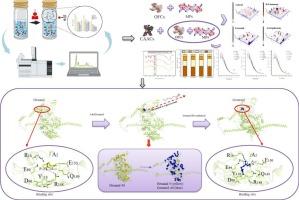
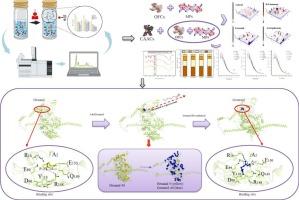
Perilla leaf can effectively remove off-flavours from meat cuisine, but its mechanism of action is still unclear. The effects of three characteristic aroma-active compounds (CAACs) on the structure of myofibrillar proteins (MPs) were studied. The interactions between CAACs, off-flavour compounds (OFCs) and MPs were explored. CAAC can reduce the adsorption of OFCs on MPs. Under the action of CAAC, the α-helix structure content of MPs decreased, and the content of random coil structure increased, resulting in the aggregation of MPs, which enhanced the exposure of negative charges on the surface of MPs and the zeta potential decreased from 4.52 mV to 7.5 mV. At this time, the binding interaction between OFCs and MPs weakened, resulting in the extrusion of OFCs. Fluorescence spectroscopy analysis found that the fluorescence signal of MPs was quenched after the addition of CAAC, and the connection between CAAC and MP was mainly through hydrophobic interaction. Molecular dynamics simulation showed that the average binding energy of geraniol was −7.69644 kcal/mol, which was stronger than the average binding energy of hexanal to protein (−4.67025 kcal/mol). Some binding sites on MPs partially overlapped with hexanal, and hexanal that originally bound to MPs were replaced by CAAC. In summary, CAAC molecules compete with hexanal for binding sites by changing the conformation of MPs, thereby reducing the binding rate of hexanal. This study provides new ideas for studying the off-flavour removal mechanism of spices.
期刊介绍:
Food Chemistry publishes original research papers dealing with the advancement of the chemistry and biochemistry of foods or the analytical methods/ approach used. All papers should focus on the novelty of the research carried out.




 京公网安备 11010802042870号
京ICP备2023020795号-1
京公网安备 11010802042870号
京ICP备2023020795号-1

 分享
分享
 求助内容:
求助内容: 应助结果提醒方式:
 扫码关注我们
