Bodore Al-Baker, Xiangyang Ju, Peter Mossey, Ashraf Ayoub
{"title":"The accuracy of automated facial landmarking - a comparative study between Cliniface software and patch-based Convoluted Neural Network algorithm.","authors":"Bodore Al-Baker, Xiangyang Ju, Peter Mossey, Ashraf Ayoub","doi":"10.1093/ejo/cjaf009","DOIUrl":null,"url":null,"abstract":"<p><strong>Background: </strong>Automatic landmarking software packages simplify the analysis of the 3D facial images. Their main deficiency is the limited accuracy of detecting landmarks for routine clinical applications. Cliniface is readily available open-access software for automatic facial landmarking, its validity has not been fully investigated.</p><p><strong>Objectives: </strong>Evaluate the accuracy of Cliniface software in comparison with the developed patch-based Convoluted Neural Network (CNN) algorithm in identifying facial landmarks.</p><p><strong>Materials /methods: </strong>The study was carried out on 30 3D photographic images; twenty anatomical facial landmarks were used for the analysis. The manual digitization of the landmarks was repeated twice by an expert operator, which considered the ground truth for the analysis. Each 3D facial image was imported into Cliniface software, and the landmarks were detected automatically. The same set of the facial landmarks were automatically detected using the developed patch-based CNN algorithm. The 3D image of the face was subdivided into multiple patches, the trained CNN algorithm detected the landmarks within each patch. Partial Procrustes Analysis was applied to assess the accuracy of automated landmarking. The method allowed the measurement of the Euclidean distances between the manually detected landmarks and the corresponding ones generated by each of the two automated methods. The significance level was set at 0.05 for the differences between the measured distances.</p><p><strong>Results: </strong>The overall landmark localization error of Cliniface software was 3.66 ± 1.53 mm, Subalar exhibiting the largest discrepancy of more than 8 mm in comparison with the manual digitization. Stomion demonstrated the smallest error. The patch-based CNN algorithm was more accurate than Cliniface software in detecting the facial landmarks, it reached the same level of the manual precision in identifying the same points. The inaccuracy of Cliniface software in detecting the facial landmarks was significantly higher than the manual landmarking precision.</p><p><strong>Limitations: </strong>The study was limited to one centre, one groups of 3D images, and one operator.</p><p><strong>Conclusions: </strong>The patch-based CNN algorithm provided a satisfactory accuracy of automatic landmarks detection which is satisfactory for the clinical evaluation of the 3D facial images. Cliniface software is limited in its accuracy in detecting certain landmark which bounds its clinical application.</p>","PeriodicalId":11989,"journal":{"name":"European journal of orthodontics","volume":"47 2","pages":""},"PeriodicalIF":2.7000,"publicationDate":"2025-02-07","publicationTypes":"Journal Article","fieldsOfStudy":null,"isOpenAccess":false,"openAccessPdf":"https://www.ncbi.nlm.nih.gov/pmc/articles/PMC11923742/pdf/","citationCount":"0","resultStr":null,"platform":"Semanticscholar","paperid":null,"PeriodicalName":"European journal of orthodontics","FirstCategoryId":"3","ListUrlMain":"https://doi.org/10.1093/ejo/cjaf009","RegionNum":3,"RegionCategory":"医学","ArticlePicture":[],"TitleCN":null,"AbstractTextCN":null,"PMCID":null,"EPubDate":"","PubModel":"","JCR":"Q1","JCRName":"DENTISTRY, ORAL SURGERY & MEDICINE","Score":null,"Total":0}
引用次数: 0
Abstract
Background: Automatic landmarking software packages simplify the analysis of the 3D facial images. Their main deficiency is the limited accuracy of detecting landmarks for routine clinical applications. Cliniface is readily available open-access software for automatic facial landmarking, its validity has not been fully investigated.
Objectives: Evaluate the accuracy of Cliniface software in comparison with the developed patch-based Convoluted Neural Network (CNN) algorithm in identifying facial landmarks.
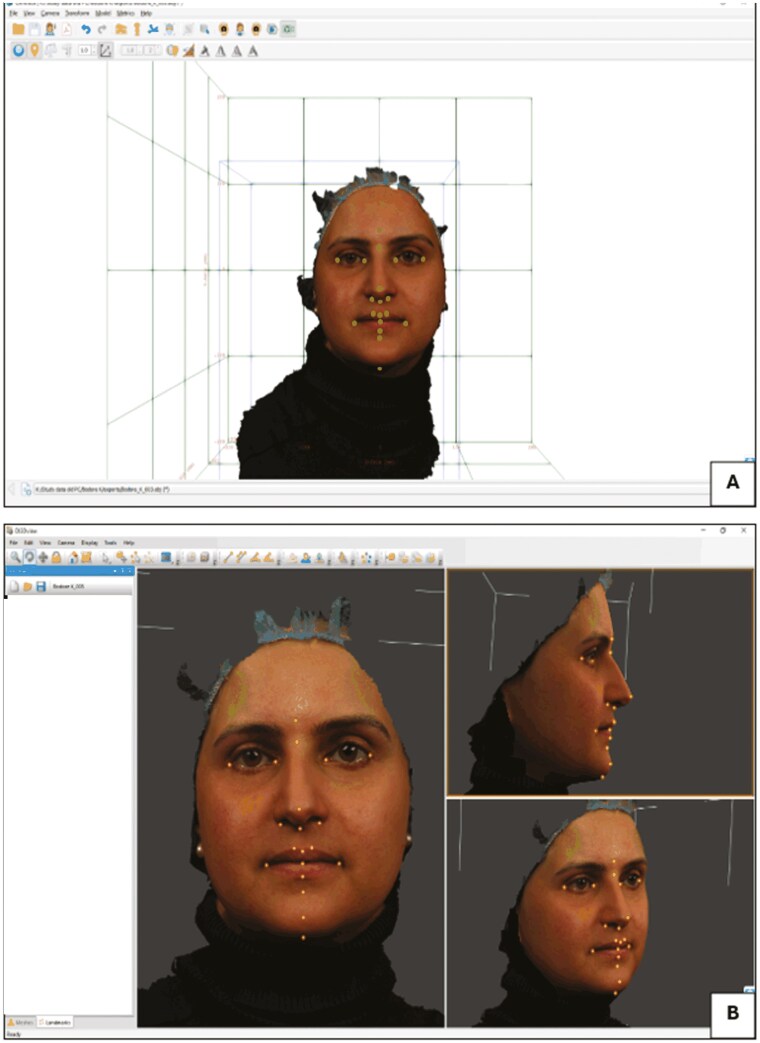
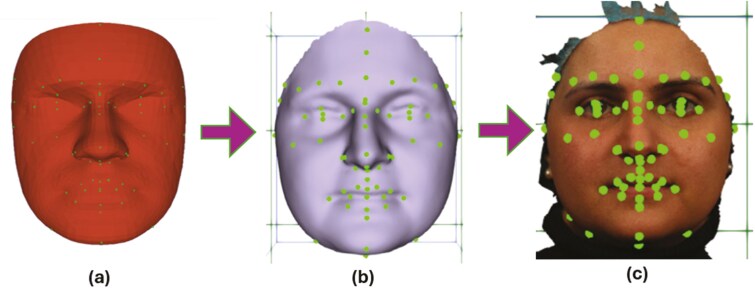
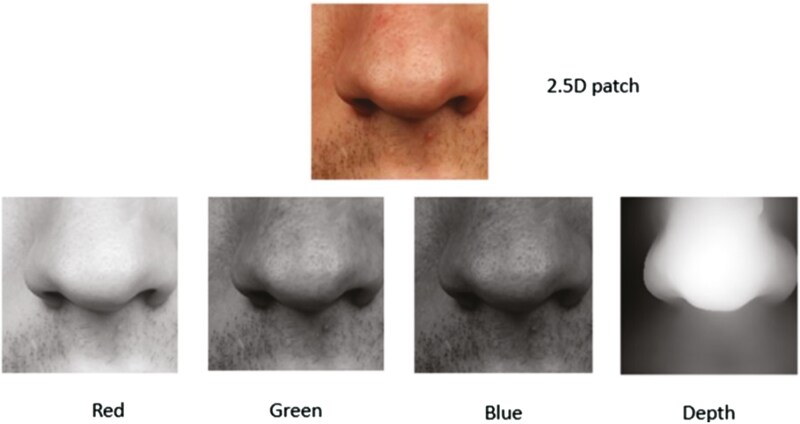
Materials /methods: The study was carried out on 30 3D photographic images; twenty anatomical facial landmarks were used for the analysis. The manual digitization of the landmarks was repeated twice by an expert operator, which considered the ground truth for the analysis. Each 3D facial image was imported into Cliniface software, and the landmarks were detected automatically. The same set of the facial landmarks were automatically detected using the developed patch-based CNN algorithm. The 3D image of the face was subdivided into multiple patches, the trained CNN algorithm detected the landmarks within each patch. Partial Procrustes Analysis was applied to assess the accuracy of automated landmarking. The method allowed the measurement of the Euclidean distances between the manually detected landmarks and the corresponding ones generated by each of the two automated methods. The significance level was set at 0.05 for the differences between the measured distances.
Results: The overall landmark localization error of Cliniface software was 3.66 ± 1.53 mm, Subalar exhibiting the largest discrepancy of more than 8 mm in comparison with the manual digitization. Stomion demonstrated the smallest error. The patch-based CNN algorithm was more accurate than Cliniface software in detecting the facial landmarks, it reached the same level of the manual precision in identifying the same points. The inaccuracy of Cliniface software in detecting the facial landmarks was significantly higher than the manual landmarking precision.
Limitations: The study was limited to one centre, one groups of 3D images, and one operator.
Conclusions: The patch-based CNN algorithm provided a satisfactory accuracy of automatic landmarks detection which is satisfactory for the clinical evaluation of the 3D facial images. Cliniface software is limited in its accuracy in detecting certain landmark which bounds its clinical application.
期刊介绍:
The European Journal of Orthodontics publishes papers of excellence on all aspects of orthodontics including craniofacial development and growth. The emphasis of the journal is on full research papers. Succinct and carefully prepared papers are favoured in terms of impact as well as readability.





 京公网安备 11010802042870号
京ICP备2023020795号-1
京公网安备 11010802042870号
京ICP备2023020795号-1

 分享
分享
 求助内容:
求助内容: 应助结果提醒方式:
 扫码关注我们
