Kristina R Stefaniak, Lark Kellogg, Matthew T Close, Karen E Powers
{"title":"Chemical Composition of Secretions from Facial Glands of Captive Hoary Bat (Lasiurus cinereus) in Virginia.","authors":"Kristina R Stefaniak, Lark Kellogg, Matthew T Close, Karen E Powers","doi":"10.1007/s10886-025-01593-3","DOIUrl":null,"url":null,"abstract":"<p><p>Our study represents the first known report of hoary bat (Lasiurus cinereus) facial gland histology and chemical characterization of facial gland secretions. While in captivity from October 2023 to February 2024, facial secretions of a male hoary bat were observed and collected. Gas chromatography-mass spectrometry (GC-MS) analysis of a methanol extraction of November 2023 samples identified 23 compounds after comparing retention times, mass spectra, and Kovats retention index. These compounds consisted of alkanes, alcohols, ketones, terpenoids, monoacylglycerols, and androgens. Of interest was the identification of five androstane derivatives, testosterone metabolites, that have not been seen previously in mammal secretions and indicate possible mating readiness. The chemical analyses from November swabs and histological examination of facial skin in February suggest that this male was actively secreting mate-signaling compounds throughout late fall and winter months. Anecdotal mating records on wintering grounds combined with this bat's warm captive environment likely allowed for this extended mating readiness for his many months at the wildlife center.</p>","PeriodicalId":15346,"journal":{"name":"Journal of Chemical Ecology","volume":"51 2","pages":"42"},"PeriodicalIF":1.8000,"publicationDate":"2025-03-20","publicationTypes":"Journal Article","fieldsOfStudy":null,"isOpenAccess":false,"openAccessPdf":"https://www.ncbi.nlm.nih.gov/pmc/articles/PMC11923032/pdf/","citationCount":"0","resultStr":null,"platform":"Semanticscholar","paperid":null,"PeriodicalName":"Journal of Chemical Ecology","FirstCategoryId":"93","ListUrlMain":"https://doi.org/10.1007/s10886-025-01593-3","RegionNum":3,"RegionCategory":"环境科学与生态学","ArticlePicture":[],"TitleCN":null,"AbstractTextCN":null,"PMCID":null,"EPubDate":"","PubModel":"","JCR":"Q4","JCRName":"BIOCHEMISTRY & MOLECULAR BIOLOGY","Score":null,"Total":0}
引用次数: 0
Abstract
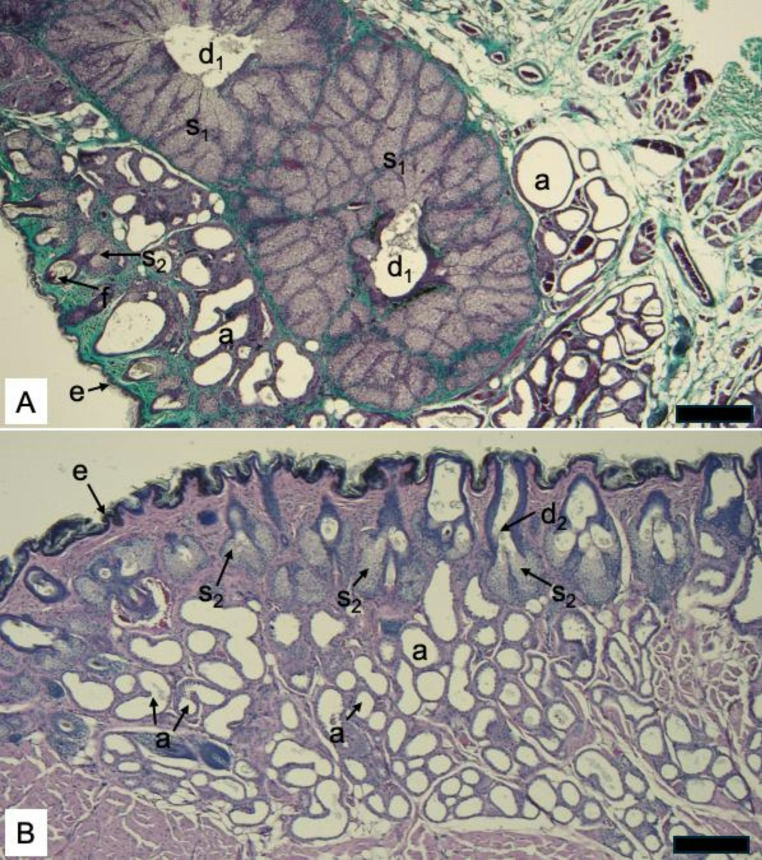
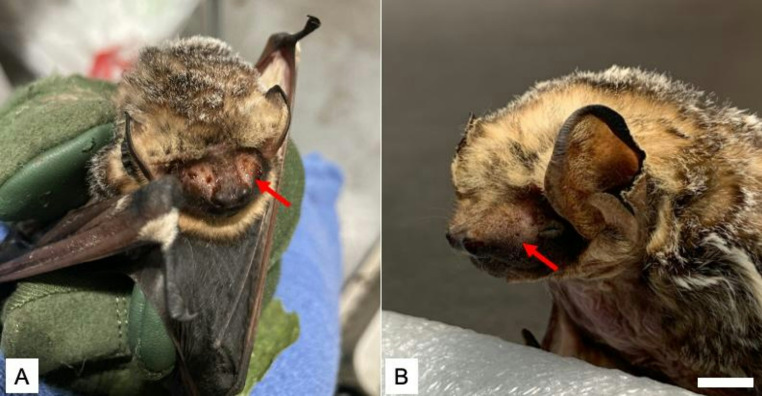
Our study represents the first known report of hoary bat (Lasiurus cinereus) facial gland histology and chemical characterization of facial gland secretions. While in captivity from October 2023 to February 2024, facial secretions of a male hoary bat were observed and collected. Gas chromatography-mass spectrometry (GC-MS) analysis of a methanol extraction of November 2023 samples identified 23 compounds after comparing retention times, mass spectra, and Kovats retention index. These compounds consisted of alkanes, alcohols, ketones, terpenoids, monoacylglycerols, and androgens. Of interest was the identification of five androstane derivatives, testosterone metabolites, that have not been seen previously in mammal secretions and indicate possible mating readiness. The chemical analyses from November swabs and histological examination of facial skin in February suggest that this male was actively secreting mate-signaling compounds throughout late fall and winter months. Anecdotal mating records on wintering grounds combined with this bat's warm captive environment likely allowed for this extended mating readiness for his many months at the wildlife center.
期刊介绍:
Journal of Chemical Ecology is devoted to promoting an ecological understanding of the origin, function, and significance of natural chemicals that mediate interactions within and between organisms. Such relationships, often adaptively important, comprise the oldest of communication systems in terrestrial and aquatic environments. With recent advances in methodology for elucidating structures of the chemical compounds involved, a strong interdisciplinary association has developed between chemists and biologists which should accelerate understanding of these interactions in nature.
Scientific contributions, including review articles, are welcome from either members or nonmembers of the International Society of Chemical Ecology. Manuscripts must be in English and may include original research in biological and/or chemical aspects of chemical ecology. They may include substantive observations of interactions in nature, the elucidation of the chemical compounds involved, the mechanisms of their production and reception, and the translation of such basic information into survey and control protocols. Sufficient biological and chemical detail should be given to substantiate conclusions and to permit results to be evaluated and reproduced.





 京公网安备 11010802042870号
京ICP备2023020795号-1
京公网安备 11010802042870号
京ICP备2023020795号-1

 分享
分享
 求助内容:
求助内容: 应助结果提醒方式:
 扫码关注我们
