Päivi Hämäläinen, Matias Viitala, Merja Soilu-Hänninen, Hanna Kuusisto, Marja Niiranen, Sari Avikainen, Juha Puustinen, Juhani Ruutiainen, Mervi Ryytty, Henrik Ahvenjärvi, Carl Björkholm, Annika Hulten
{"title":"Evaluation of patient-perceived fatigue in multiple sclerosis utilizing the Finnish MS registry.","authors":"Päivi Hämäläinen, Matias Viitala, Merja Soilu-Hänninen, Hanna Kuusisto, Marja Niiranen, Sari Avikainen, Juha Puustinen, Juhani Ruutiainen, Mervi Ryytty, Henrik Ahvenjärvi, Carl Björkholm, Annika Hulten","doi":"10.1177/20552173251325098","DOIUrl":null,"url":null,"abstract":"<p><strong>Objectives: </strong>To characterize patient-perceived fatigue by using the Finnish Multiple Sclerosis (MS) registry data.</p><p><strong>Materials & methods: </strong>Fatigue was assessed with the Fatigue Severity Scale (FSS), the Fatigue Scale for Motor and Cognitive Functions (FSMC), and the Visual Analogue Scale-Fatigue. Disease severity was evaluated with the Expanded Disability Status Scale and symptoms with the Visual Analogue Scales. Patient reported outcomes (PROs) included the Multiple Sclerosis Neuropsychological Questionnaire, the Euro Quality of Life - 5 dimensions, the 15 D, and the Multiple Sclerosis Impact Scale. For the purposes of the study, patients were classified to those without (FSS ≤ 4) and those with (FSS ≥ 5) fatigue. The FSS scores were correlated with the results of other PROs.</p><p><strong>Results: </strong>Based on the 512 FSS scores, 47% of the patients reported fatigue (FSS ≥ 5). Fatigue was related to higher disability, lower education, and smoking. FSS correlated significantly with other measures of fatigue, cognitive, and mood symptoms, and was associated with lower Quality of Life.</p><p><strong>Conclusions: </strong>As an invisible and debilitating symptom fatigue should be evaluated systematically. In the screening, it is important to recognize the characteristics of the different scales. Whereas the FSS may serve as an overall screen, the FSMC may help to identify aspects of cognitive and motor fatigue separately.</p>","PeriodicalId":18961,"journal":{"name":"Multiple Sclerosis Journal - Experimental, Translational and Clinical","volume":"11 1","pages":"20552173251325098"},"PeriodicalIF":2.3000,"publicationDate":"2025-03-18","publicationTypes":"Journal Article","fieldsOfStudy":null,"isOpenAccess":false,"openAccessPdf":"https://www.ncbi.nlm.nih.gov/pmc/articles/PMC11920993/pdf/","citationCount":"0","resultStr":null,"platform":"Semanticscholar","paperid":null,"PeriodicalName":"Multiple Sclerosis Journal - Experimental, Translational and Clinical","FirstCategoryId":"1085","ListUrlMain":"https://doi.org/10.1177/20552173251325098","RegionNum":0,"RegionCategory":null,"ArticlePicture":[],"TitleCN":null,"AbstractTextCN":null,"PMCID":null,"EPubDate":"2025/1/1 0:00:00","PubModel":"eCollection","JCR":"Q2","JCRName":"CLINICAL NEUROLOGY","Score":null,"Total":0}
引用次数: 0
Abstract
Objectives: To characterize patient-perceived fatigue by using the Finnish Multiple Sclerosis (MS) registry data.
Materials & methods: Fatigue was assessed with the Fatigue Severity Scale (FSS), the Fatigue Scale for Motor and Cognitive Functions (FSMC), and the Visual Analogue Scale-Fatigue. Disease severity was evaluated with the Expanded Disability Status Scale and symptoms with the Visual Analogue Scales. Patient reported outcomes (PROs) included the Multiple Sclerosis Neuropsychological Questionnaire, the Euro Quality of Life - 5 dimensions, the 15 D, and the Multiple Sclerosis Impact Scale. For the purposes of the study, patients were classified to those without (FSS ≤ 4) and those with (FSS ≥ 5) fatigue. The FSS scores were correlated with the results of other PROs.
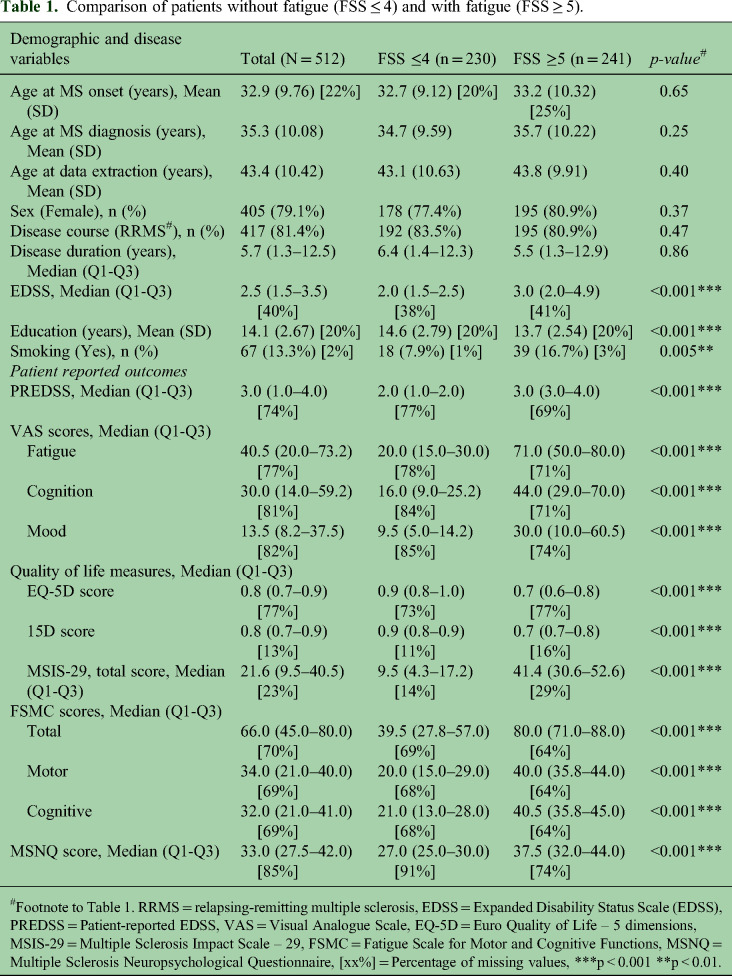
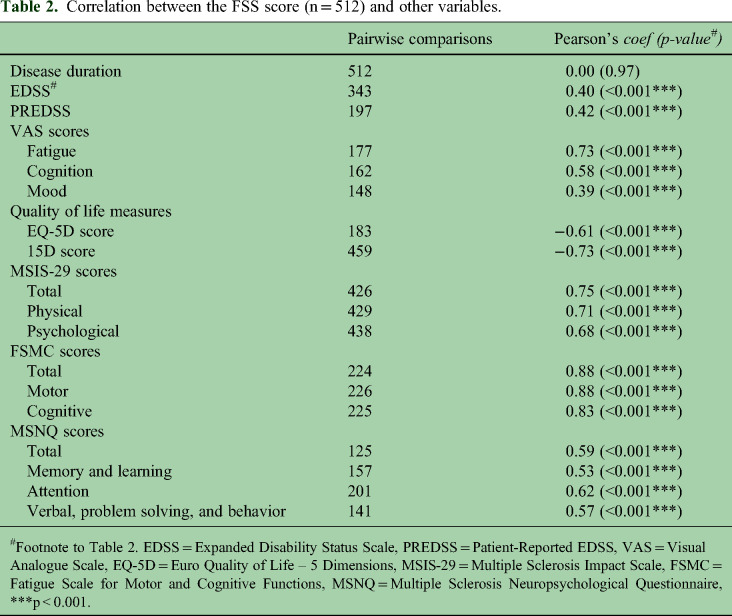
Results: Based on the 512 FSS scores, 47% of the patients reported fatigue (FSS ≥ 5). Fatigue was related to higher disability, lower education, and smoking. FSS correlated significantly with other measures of fatigue, cognitive, and mood symptoms, and was associated with lower Quality of Life.
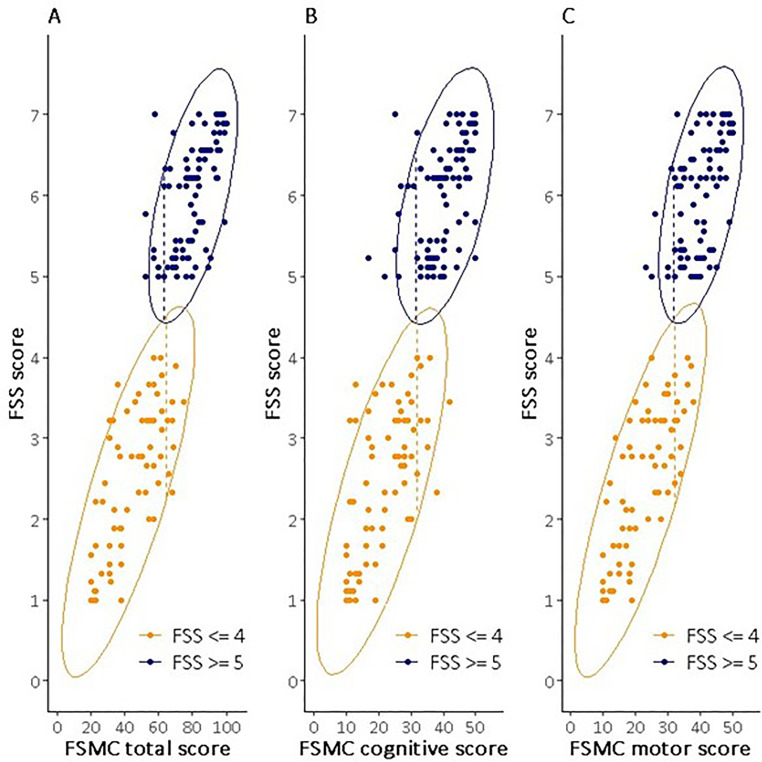
Conclusions: As an invisible and debilitating symptom fatigue should be evaluated systematically. In the screening, it is important to recognize the characteristics of the different scales. Whereas the FSS may serve as an overall screen, the FSMC may help to identify aspects of cognitive and motor fatigue separately.




 京公网安备 11010802042870号
京ICP备2023020795号-1
京公网安备 11010802042870号
京ICP备2023020795号-1

 分享
分享
 求助内容:
求助内容: 应助结果提醒方式:
 扫码关注我们
