{"title":"Understanding vaccine hesitancy: Insights from social media on polio, human papilloma virus, and COVID-19 in Zambia.","authors":"Samuel Munalula Munjita","doi":"10.1177/20552076251326131","DOIUrl":null,"url":null,"abstract":"<p><strong>Objectives: </strong>Vaccine hesitancy remains a critical challenge to public health in Zambia and globally, necessitating a deeper understanding of the factors influencing this phenomenon. The study analyzed user-generated Facebook comments from January 2021 to December 2023 to understand the factors influencing vaccine hesitancy in Zambia.</p><p><strong>Methods: </strong>This study employed a qualitative case study design, focusing on the official Facebook page of the Ministry of Health in Zambia. A purposeful sampling technique was used, collecting comments that discussed vaccine hesitancy related to polio, human papilloma virus (HPV), and coronavirus disease 2019 (COVID-19) vaccines.</p><p><strong>Results: </strong>The analysis revealed that men contributed 77.5% of comments followed by women with 22.5%. The majority of comments (82.5%) pertained to COVID-19 vaccines, followed by polio (14.1%) and HPV (3.4%). Notably, women expressed greater hesitancy toward polio vaccines (60%) compared to COVID-19 (19.9%) and HPV (12.5%). Thematic analysis highlighted significant hesitancy against vaccines shaped by vaccine safety and efficacy concerns, frequent calls for vaccination particularly against polio, conspiracy theories, distrust in health authorities, and poor communication from health authorities. Other drivers of vaccine hesitancy were reliance on spiritual beliefs, herbal remedies and natural immunity, and the pervasive spread of misinformation.</p><p><strong>Conclusion: </strong>These findings underscore the barriers to vaccine acceptance, emphasizing the critical need for transparent communication and community engagement. To improve vaccine uptake, public health strategies must address community-specific concerns, foster trust, and enhance the effectiveness of health communication efforts.</p>","PeriodicalId":51333,"journal":{"name":"DIGITAL HEALTH","volume":"11 ","pages":"20552076251326131"},"PeriodicalIF":3.3000,"publicationDate":"2025-03-18","publicationTypes":"Journal Article","fieldsOfStudy":null,"isOpenAccess":false,"openAccessPdf":"https://www.ncbi.nlm.nih.gov/pmc/articles/PMC11920985/pdf/","citationCount":"0","resultStr":null,"platform":"Semanticscholar","paperid":null,"PeriodicalName":"DIGITAL HEALTH","FirstCategoryId":"3","ListUrlMain":"https://doi.org/10.1177/20552076251326131","RegionNum":3,"RegionCategory":"医学","ArticlePicture":[],"TitleCN":null,"AbstractTextCN":null,"PMCID":null,"EPubDate":"2025/1/1 0:00:00","PubModel":"eCollection","JCR":"Q2","JCRName":"HEALTH CARE SCIENCES & SERVICES","Score":null,"Total":0}
引用次数: 0
Abstract
Objectives: Vaccine hesitancy remains a critical challenge to public health in Zambia and globally, necessitating a deeper understanding of the factors influencing this phenomenon. The study analyzed user-generated Facebook comments from January 2021 to December 2023 to understand the factors influencing vaccine hesitancy in Zambia.
Methods: This study employed a qualitative case study design, focusing on the official Facebook page of the Ministry of Health in Zambia. A purposeful sampling technique was used, collecting comments that discussed vaccine hesitancy related to polio, human papilloma virus (HPV), and coronavirus disease 2019 (COVID-19) vaccines.
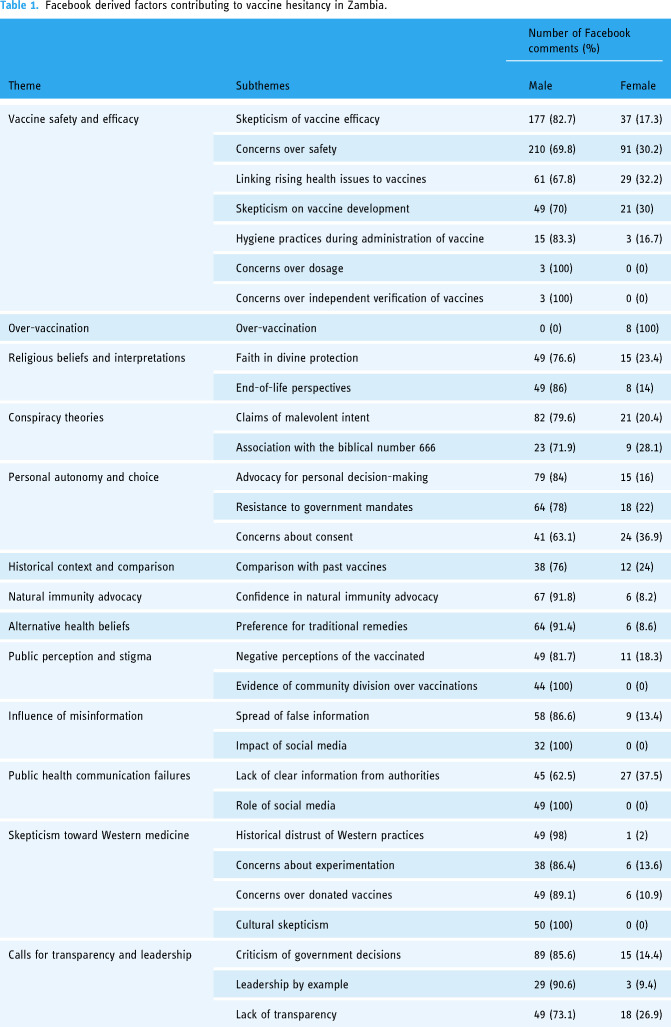
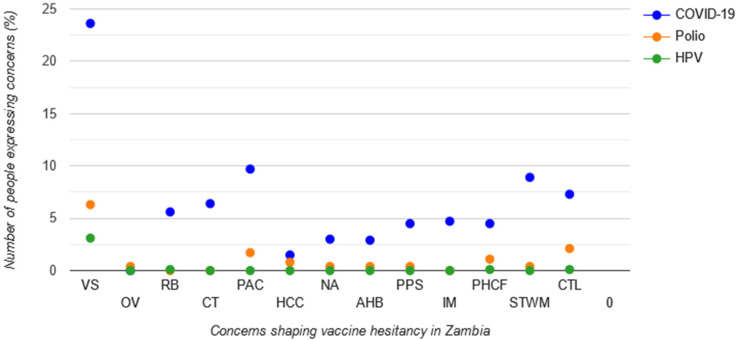
Results: The analysis revealed that men contributed 77.5% of comments followed by women with 22.5%. The majority of comments (82.5%) pertained to COVID-19 vaccines, followed by polio (14.1%) and HPV (3.4%). Notably, women expressed greater hesitancy toward polio vaccines (60%) compared to COVID-19 (19.9%) and HPV (12.5%). Thematic analysis highlighted significant hesitancy against vaccines shaped by vaccine safety and efficacy concerns, frequent calls for vaccination particularly against polio, conspiracy theories, distrust in health authorities, and poor communication from health authorities. Other drivers of vaccine hesitancy were reliance on spiritual beliefs, herbal remedies and natural immunity, and the pervasive spread of misinformation.
Conclusion: These findings underscore the barriers to vaccine acceptance, emphasizing the critical need for transparent communication and community engagement. To improve vaccine uptake, public health strategies must address community-specific concerns, foster trust, and enhance the effectiveness of health communication efforts.




 京公网安备 11010802042870号
京ICP备2023020795号-1
京公网安备 11010802042870号
京ICP备2023020795号-1

 分享
分享
 求助内容:
求助内容: 应助结果提醒方式:
 扫码关注我们
