Effectiveness of intramuscular electrical stimulation using conventional and inverse electrode placement methods on pressure pain threshold and electromyographic activity of the upper trapezius muscle with myofascial trigger points: a randomized clinical trial.
Sukumar Shanmugam, Fabio Vieira Dos Anjos, Arthur de Sá Ferreira, Ramprasad Muthukrishnan, Praveen Kumar Kandakurti, Satheeskumar Durairaj
{"title":"Effectiveness of intramuscular electrical stimulation using conventional and inverse electrode placement methods on pressure pain threshold and electromyographic activity of the upper trapezius muscle with myofascial trigger points: a randomized clinical trial.","authors":"Sukumar Shanmugam, Fabio Vieira Dos Anjos, Arthur de Sá Ferreira, Ramprasad Muthukrishnan, Praveen Kumar Kandakurti, Satheeskumar Durairaj","doi":"10.3344/kjp.24332","DOIUrl":null,"url":null,"abstract":"<p><strong>Background: </strong>This study investigates whether intramuscular electrical stimulation (IMES) with inverse electrode placement (IEP) or conventional electrode placement (CEP) more effectively modulates pain. The current study's aim was to compare the effects of IMES using IEP and CEP, and sham-IMES on the pressure pain threshold (PPT), EMG activity, upper trapezius (UT) muscle length and pain severity among adults with UT myofascial trigger points (MTrPs).</p><p><strong>Methods: </strong>Thirty-six male adults with UT-MTrPs were allocated into three groups. IEP, CEP and sham groups were respectively treated with a single IMES session using IEP, CEP, and sham-IMES. Pain intensity, PPT, EMG activity (root mean square, RMS) and UT muscle length were measured on day one before the treatment, day one post treatment and at a day three follow-up to determine the immediate and short-term effectiveness of IMES.</p><p><strong>Results: </strong>IMES using both IEP and CEP methods produced significant higher changes in UT-PPT (median, interquartile-interval, IEP group: 3.25, 2.56-3.50 and CEP group: 2.75, 1.75-3.00, vs. sham group: 1.07, 0.89-1.71 kg/cm<sup>2</sup>), RMS (IEP: 0.31, 0.26-0.35 and CEP: 0.36, 0.23-0.38, vs. sham: 0.21, 0.16-0.25 mV), and UT muscle length (IEP: 9.50, 8-12.75 and CEP: 8, 7-10, vs. 1.5. 1-2.75 degrees) and UT-pain severity (IEP: 3.00, 2.25-4 and CEP: 3, 3-3, vs. sham: 2, 2-2.75 points on VAS) compared to the score change in sham-IMES at day three follow up.</p><p><strong>Conclusions: </strong>Pain modulation can be effectively achieved using IMES regardless of electrode placement method, with different electrode configurations.</p>","PeriodicalId":56252,"journal":{"name":"Korean Journal of Pain","volume":" ","pages":"187-197"},"PeriodicalIF":3.1000,"publicationDate":"2025-04-01","publicationTypes":"Journal Article","fieldsOfStudy":null,"isOpenAccess":false,"openAccessPdf":"https://www.ncbi.nlm.nih.gov/pmc/articles/PMC11965987/pdf/","citationCount":"0","resultStr":null,"platform":"Semanticscholar","paperid":null,"PeriodicalName":"Korean Journal of Pain","FirstCategoryId":"3","ListUrlMain":"https://doi.org/10.3344/kjp.24332","RegionNum":3,"RegionCategory":"医学","ArticlePicture":[],"TitleCN":null,"AbstractTextCN":null,"PMCID":null,"EPubDate":"2025/3/20 0:00:00","PubModel":"Epub","JCR":"Q2","JCRName":"CLINICAL NEUROLOGY","Score":null,"Total":0}
引用次数: 0
Abstract
Background: This study investigates whether intramuscular electrical stimulation (IMES) with inverse electrode placement (IEP) or conventional electrode placement (CEP) more effectively modulates pain. The current study's aim was to compare the effects of IMES using IEP and CEP, and sham-IMES on the pressure pain threshold (PPT), EMG activity, upper trapezius (UT) muscle length and pain severity among adults with UT myofascial trigger points (MTrPs).
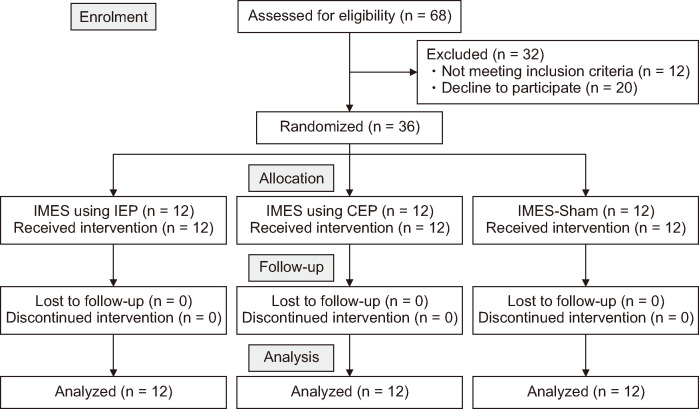
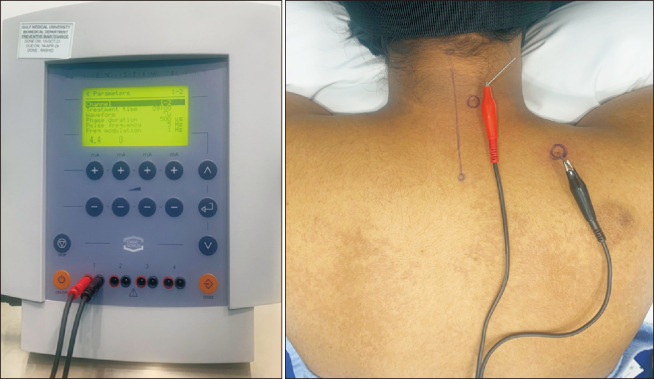
Methods: Thirty-six male adults with UT-MTrPs were allocated into three groups. IEP, CEP and sham groups were respectively treated with a single IMES session using IEP, CEP, and sham-IMES. Pain intensity, PPT, EMG activity (root mean square, RMS) and UT muscle length were measured on day one before the treatment, day one post treatment and at a day three follow-up to determine the immediate and short-term effectiveness of IMES.
Results: IMES using both IEP and CEP methods produced significant higher changes in UT-PPT (median, interquartile-interval, IEP group: 3.25, 2.56-3.50 and CEP group: 2.75, 1.75-3.00, vs. sham group: 1.07, 0.89-1.71 kg/cm2), RMS (IEP: 0.31, 0.26-0.35 and CEP: 0.36, 0.23-0.38, vs. sham: 0.21, 0.16-0.25 mV), and UT muscle length (IEP: 9.50, 8-12.75 and CEP: 8, 7-10, vs. 1.5. 1-2.75 degrees) and UT-pain severity (IEP: 3.00, 2.25-4 and CEP: 3, 3-3, vs. sham: 2, 2-2.75 points on VAS) compared to the score change in sham-IMES at day three follow up.
Conclusions: Pain modulation can be effectively achieved using IMES regardless of electrode placement method, with different electrode configurations.
期刊介绍:
Korean Journal of Pain (Korean J Pain, KJP) is the official journal of the Korean Pain Society, founded in 1986. It has been published since 1988. It publishes peer reviewed original articles related to all aspects of pain, including clinical and basic research, patient care, education, and health policy. It has been published quarterly in English since 2009 (on the first day of January, April, July, and October). In addition, it has also become the official journal of the International Spinal Pain Society since 2016. The mission of the Journal is to improve the care of patients in pain by providing a forum for clinical researchers, basic scientists, clinicians, and other health professionals. The circulation number per issue is 50.



 京公网安备 11010802042870号
京ICP备2023020795号-1
京公网安备 11010802042870号
京ICP备2023020795号-1

 分享
分享
 求助内容:
求助内容: 应助结果提醒方式:
 扫码关注我们
