Sarah P Bowers, Polly Black, Lewis McCheyne, Darcy Wilson, Rose S Penfold, Liam Stapleton, Pam Channer, Sarah E E Mills, Linda Williams, Frances Quirk, Jo Bowden
{"title":"Descriptions of advanced multimorbidity: A scoping review with content analysis.","authors":"Sarah P Bowers, Polly Black, Lewis McCheyne, Darcy Wilson, Rose S Penfold, Liam Stapleton, Pam Channer, Sarah E E Mills, Linda Williams, Frances Quirk, Jo Bowden","doi":"10.1177/26335565251326309","DOIUrl":null,"url":null,"abstract":"<p><strong>Introduction: </strong>Multimorbidity is associated with adverse clinical outcomes, including increased symptom burden and healthcare utilisation, particularly towards the end of life. Despite this, there is no accepted method to identify the point at which individuals with deteriorating health due to long-term conditions are nearing the end of life or might benefit from a palliative care approach - conceptualised as 'Advanced Multimorbidity'. This scoping review explored how Advanced Multimorbidity is described and operationalised within the literature.</p><p><strong>Methods: </strong>Multiple electronic databases and Grey Literature sources were searched following scoping review frameworks. Two reviewers independently performed screening and data extraction. Content analysis was used to examine the different descriptions of Advanced Multimorbidity. Stakeholder consultations were undertaken with clinicians, academics and public participants. Patient and public involvement was separately integrated throughout this review from conceptualisation, design and reporting.</p><p><strong>Results: </strong>Forty-four different descriptions of Advanced Multimorbidity were identified from 38 publications. These varied in terms of the clinical conditions and descriptors used. Eighteen descriptions relied on a single indicator to identify Advanced Multimorbidity; 24 used a multidimensional approach. Stakeholder consultations highlighted the need for descriptions that are user-friendly and actionable.</p><p><strong>Conclusion: </strong>The lack of a standardised definition of Advanced Multimorbidity risks variance in clinical and research practice, potentially affecting patient care. A consensus on defining Advanced Multimorbidity would enable better identification of patients who could benefit from a palliative care approach, ensuring more consistent and person-centred care, as well as supporting research and policy development.</p>","PeriodicalId":73843,"journal":{"name":"Journal of multimorbidity and comorbidity","volume":"15 ","pages":"26335565251326309"},"PeriodicalIF":3.0000,"publicationDate":"2025-03-18","publicationTypes":"Journal Article","fieldsOfStudy":null,"isOpenAccess":false,"openAccessPdf":"https://www.ncbi.nlm.nih.gov/pmc/articles/PMC11920996/pdf/","citationCount":"0","resultStr":null,"platform":"Semanticscholar","paperid":null,"PeriodicalName":"Journal of multimorbidity and comorbidity","FirstCategoryId":"1085","ListUrlMain":"https://doi.org/10.1177/26335565251326309","RegionNum":0,"RegionCategory":null,"ArticlePicture":[],"TitleCN":null,"AbstractTextCN":null,"PMCID":null,"EPubDate":"2025/1/1 0:00:00","PubModel":"eCollection","JCR":"","JCRName":"","Score":null,"Total":0}
引用次数: 0
Abstract
Introduction: Multimorbidity is associated with adverse clinical outcomes, including increased symptom burden and healthcare utilisation, particularly towards the end of life. Despite this, there is no accepted method to identify the point at which individuals with deteriorating health due to long-term conditions are nearing the end of life or might benefit from a palliative care approach - conceptualised as 'Advanced Multimorbidity'. This scoping review explored how Advanced Multimorbidity is described and operationalised within the literature.
Methods: Multiple electronic databases and Grey Literature sources were searched following scoping review frameworks. Two reviewers independently performed screening and data extraction. Content analysis was used to examine the different descriptions of Advanced Multimorbidity. Stakeholder consultations were undertaken with clinicians, academics and public participants. Patient and public involvement was separately integrated throughout this review from conceptualisation, design and reporting.
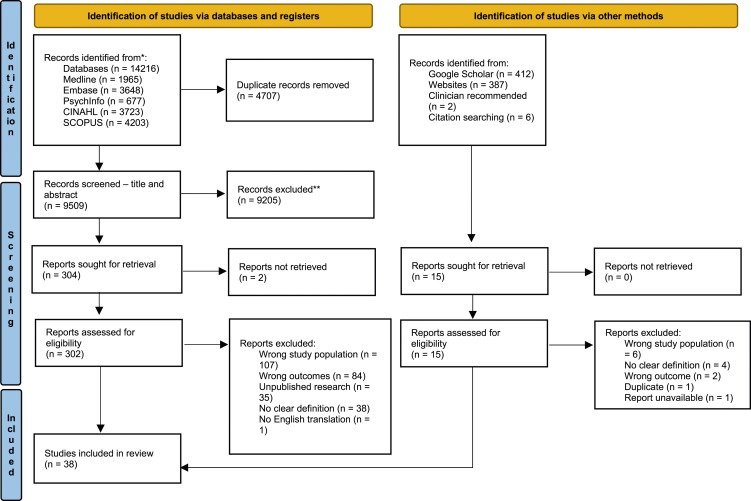
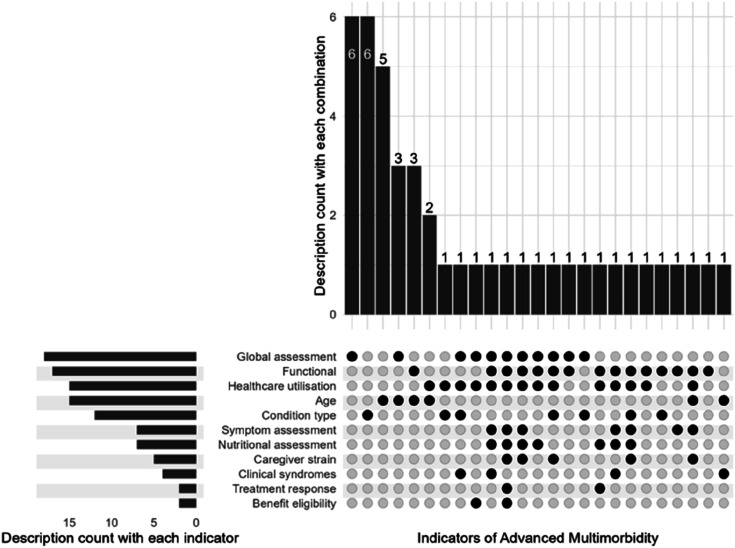
Results: Forty-four different descriptions of Advanced Multimorbidity were identified from 38 publications. These varied in terms of the clinical conditions and descriptors used. Eighteen descriptions relied on a single indicator to identify Advanced Multimorbidity; 24 used a multidimensional approach. Stakeholder consultations highlighted the need for descriptions that are user-friendly and actionable.
Conclusion: The lack of a standardised definition of Advanced Multimorbidity risks variance in clinical and research practice, potentially affecting patient care. A consensus on defining Advanced Multimorbidity would enable better identification of patients who could benefit from a palliative care approach, ensuring more consistent and person-centred care, as well as supporting research and policy development.



 京公网安备 11010802042870号
京ICP备2023020795号-1
京公网安备 11010802042870号
京ICP备2023020795号-1

 分享
分享

 求助内容:
求助内容: 应助结果提醒方式:
 扫码关注我们
