Francesco Di Giacomo Barbagallo, Giosiana Bosco, Maurizio Di Marco, Sabrina Scilletta, Nicoletta Miano, Marco Musmeci, Marina Martedì, Ana M González-Lleó, Daiana Ibarretxe, Ernestina Marianna De Francesco, Roberta Malaguarnera, Antonino Di Pino, Luís Masana, Francesco Purrello, Salvatore Piro, Roberto Scicali
{"title":"Evaluation of glycemic status and subclinical atherosclerosis in familial hypercholesterolemia subjects with or without LDL receptor mutation.","authors":"Francesco Di Giacomo Barbagallo, Giosiana Bosco, Maurizio Di Marco, Sabrina Scilletta, Nicoletta Miano, Marco Musmeci, Marina Martedì, Ana M González-Lleó, Daiana Ibarretxe, Ernestina Marianna De Francesco, Roberta Malaguarnera, Antonino Di Pino, Luís Masana, Francesco Purrello, Salvatore Piro, Roberto Scicali","doi":"10.1186/s12933-025-02683-y","DOIUrl":null,"url":null,"abstract":"<p><strong>Background: </strong>Familial hypercholesterolemia (FH) is a genetic condition characterized by elevated LDL-C and increased cardiovascular risk. Beyond LDL-C levels, the impact of genotype on glucose homeostasis has not been well evaluated. We aimed to evaluate the impact of genotype on glycemic status and on atherosclerotic injury in FH subjects.</p><p><strong>Methods: </strong>We conducted a cross-sectional study on 322 FH subjects not on lipid-lowering therapy and without history of cardiovascular disease. Biochemical and genetic analyses as well as vascular profile assessment were obtained from all subjects. The study population was divided into two groups according to genotype: LDL receptor (LDLR) group and non-LDLR (NLDLR) group.</p><p><strong>Results: </strong>The LDLR group exhibited a higher prevalence of low glycemic status (LGS) than the NLDLR group (44.1% vs. 26%, p < 0.01), whereas a high glycemic status (HGS) was more prevalent in the NLDLR group compared with LDLR group (74% vs. 55.9%, p < 0.01). The NLDLR group exhibited a higher prevalence of peripheral atherosclerotic plaques than the LDLR group (93.4% vs. 73%, p < 0.05), while coronary artery calcification (CAC) presence was more prevalent in the LDLR group compared with the NLDLR group (74.7% vs. 48%, p < 0.01). In a secondary analysis the study population was stratified into three groups based on LDLR genotype: NLDLR, LDLR defective, LDLR null groups. The prevalence of LGS progressively increased from the NLDLR to the LDLR null group, while HGS showed an inverse trend (p for trend < 0.05). Peripheral atherosclerotic plaque prevalence decreased from the NLDLR to the LDLR null group (p for trend < 0.05), while CAC prevalence increased progressively in the three groups (p for trend < 0.01). Logistic regression analysis showed that FH groups with an LDLR mutation were inversely associated with HGS (p for both < 0.01) and the LDLR null group exhibited the strongest association.</p><p><strong>Conclusions: </strong>FH subjects with NLDLR mutations exhibited a worse glycemic profile, while null LDLR mutations showed the strongest inverse association with HGS. The integrations of genetic, lipid and glucose data could be useful to better identify the metabolic profile and the atherosclerosis distribution in FH subjects.</p><p><strong>Research insights: </strong>WHAT IS CURRENTLY KNOWN ABOUT THIS TOPIC?: Familial hypercholesterolemia (FH) is characterized by elevated LDL-C levels. LDLR null mutations protected pancreatic β-cells from cholesterol accumulation. NGS has improved FH diagnosis by analysis of all genes implicated in the lipid disorder. WHAT IS THE KEY RESEARCH QUESTION?: What is the impact of FH genotype (monogenic with or without LDLR mutation/polygenic) on glycemic status? WHAT IS NEW?: FH population was characterized by a heterogeneous glycemic profile according to LDLR mutation. LDL-C and plasma glucose could modulate the distribution of subclinical atherosclerosis. HOW MIGHT THIS STUDYINFLUENCE CLINICAL PRACTICE?: Genetic, lipid, glucose data could better identify the metabolic and atherosclerotic profiles in FH.</p>","PeriodicalId":9374,"journal":{"name":"Cardiovascular Diabetology","volume":"24 1","pages":"126"},"PeriodicalIF":10.6000,"publicationDate":"2025-03-20","publicationTypes":"Journal Article","fieldsOfStudy":null,"isOpenAccess":false,"openAccessPdf":"https://www.ncbi.nlm.nih.gov/pmc/articles/PMC11927314/pdf/","citationCount":"0","resultStr":null,"platform":"Semanticscholar","paperid":null,"PeriodicalName":"Cardiovascular Diabetology","FirstCategoryId":"3","ListUrlMain":"https://doi.org/10.1186/s12933-025-02683-y","RegionNum":1,"RegionCategory":"医学","ArticlePicture":[],"TitleCN":null,"AbstractTextCN":null,"PMCID":null,"EPubDate":"","PubModel":"","JCR":"Q1","JCRName":"CARDIAC & CARDIOVASCULAR SYSTEMS","Score":null,"Total":0}
引用次数: 0
Abstract
Background: Familial hypercholesterolemia (FH) is a genetic condition characterized by elevated LDL-C and increased cardiovascular risk. Beyond LDL-C levels, the impact of genotype on glucose homeostasis has not been well evaluated. We aimed to evaluate the impact of genotype on glycemic status and on atherosclerotic injury in FH subjects.
Methods: We conducted a cross-sectional study on 322 FH subjects not on lipid-lowering therapy and without history of cardiovascular disease. Biochemical and genetic analyses as well as vascular profile assessment were obtained from all subjects. The study population was divided into two groups according to genotype: LDL receptor (LDLR) group and non-LDLR (NLDLR) group.
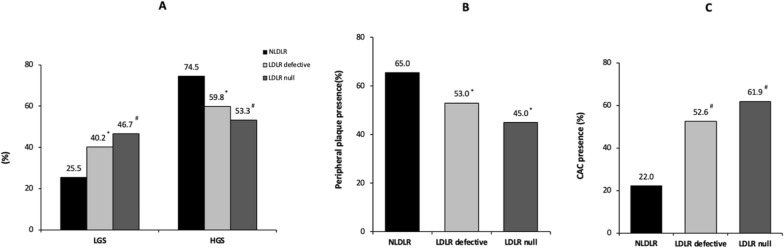
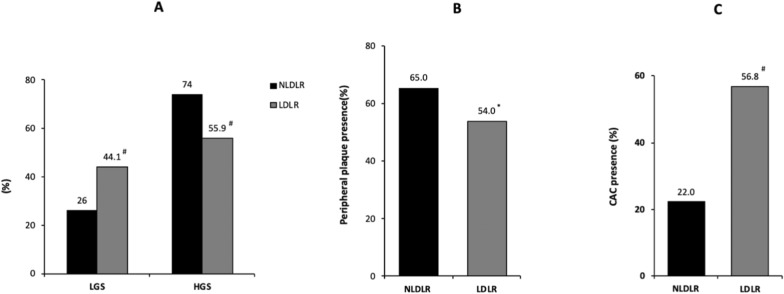
Results: The LDLR group exhibited a higher prevalence of low glycemic status (LGS) than the NLDLR group (44.1% vs. 26%, p < 0.01), whereas a high glycemic status (HGS) was more prevalent in the NLDLR group compared with LDLR group (74% vs. 55.9%, p < 0.01). The NLDLR group exhibited a higher prevalence of peripheral atherosclerotic plaques than the LDLR group (93.4% vs. 73%, p < 0.05), while coronary artery calcification (CAC) presence was more prevalent in the LDLR group compared with the NLDLR group (74.7% vs. 48%, p < 0.01). In a secondary analysis the study population was stratified into three groups based on LDLR genotype: NLDLR, LDLR defective, LDLR null groups. The prevalence of LGS progressively increased from the NLDLR to the LDLR null group, while HGS showed an inverse trend (p for trend < 0.05). Peripheral atherosclerotic plaque prevalence decreased from the NLDLR to the LDLR null group (p for trend < 0.05), while CAC prevalence increased progressively in the three groups (p for trend < 0.01). Logistic regression analysis showed that FH groups with an LDLR mutation were inversely associated with HGS (p for both < 0.01) and the LDLR null group exhibited the strongest association.
Conclusions: FH subjects with NLDLR mutations exhibited a worse glycemic profile, while null LDLR mutations showed the strongest inverse association with HGS. The integrations of genetic, lipid and glucose data could be useful to better identify the metabolic profile and the atherosclerosis distribution in FH subjects.
Research insights: WHAT IS CURRENTLY KNOWN ABOUT THIS TOPIC?: Familial hypercholesterolemia (FH) is characterized by elevated LDL-C levels. LDLR null mutations protected pancreatic β-cells from cholesterol accumulation. NGS has improved FH diagnosis by analysis of all genes implicated in the lipid disorder. WHAT IS THE KEY RESEARCH QUESTION?: What is the impact of FH genotype (monogenic with or without LDLR mutation/polygenic) on glycemic status? WHAT IS NEW?: FH population was characterized by a heterogeneous glycemic profile according to LDLR mutation. LDL-C and plasma glucose could modulate the distribution of subclinical atherosclerosis. HOW MIGHT THIS STUDYINFLUENCE CLINICAL PRACTICE?: Genetic, lipid, glucose data could better identify the metabolic and atherosclerotic profiles in FH.
背景:家族性高胆固醇血症(FH)是一种以LDL-C升高和心血管风险增加为特征的遗传病。除LDL-C水平外,基因型对葡萄糖稳态的影响尚未得到很好的评估。我们的目的是评估基因型对FH受试者血糖状态和动脉粥样硬化损伤的影响。方法:我们对322名未接受降脂治疗且无心血管疾病史的FH受试者进行了横断面研究。对所有受试者进行生化和遗传分析以及血管谱评估。将研究人群按基因型分为低密度脂蛋白受体(LDLR)组和非低密度脂蛋白受体(NLDLR)组。结果:LDLR组低血糖状态(LGS)的患病率高于NLDLR组(44.1% vs. 26%)。结论:携带NLDLR突变的FH受试者血糖状况更差,而无LDLR突变与HGS呈最强的负相关。基因、脂质和葡萄糖数据的整合可能有助于更好地识别FH受试者的代谢谱和动脉粥样硬化分布。研究见解:关于这个主题目前已知的是什么?家族性高胆固醇血症(FH)以LDL-C水平升高为特征。LDLR零突变保护胰腺β细胞免受胆固醇积累。NGS通过分析与脂质紊乱有关的所有基因,改善了FH的诊断。关键的研究问题是什么?FH基因型(单基因或无LDLR突变/多基因)对血糖状态的影响是什么?有什么新鲜事吗?根据LDLR突变,FH人群的血糖分布具有异质性。LDL-C和血糖可调节亚临床动脉粥样硬化的分布。这项研究如何影响临床实践?基因、脂质、葡萄糖数据可以更好地识别FH的代谢和动脉粥样硬化特征。
期刊介绍:
Cardiovascular Diabetology is a journal that welcomes manuscripts exploring various aspects of the relationship between diabetes, cardiovascular health, and the metabolic syndrome. We invite submissions related to clinical studies, genetic investigations, experimental research, pharmacological studies, epidemiological analyses, and molecular biology research in this field.




 京公网安备 11010802042870号
京ICP备2023020795号-1
京公网安备 11010802042870号
京ICP备2023020795号-1

 分享
分享
 求助内容:
求助内容: 应助结果提醒方式:
 扫码关注我们
