Simone J M Stoots, Michaël M E L Henderickx, Guido M Kamphuis
{"title":"What kind of water should I advise my kidney stone patient to drink: the Dutch experience.","authors":"Simone J M Stoots, Michaël M E L Henderickx, Guido M Kamphuis","doi":"10.5173/ceju.2024.42.R1","DOIUrl":null,"url":null,"abstract":"<p><strong>Introduction: </strong>To compare the mineral content of commercially available water (tap and bottled) in the Netherlands and to evaluate which type of water should be recommended for kidney stone patients.</p><p><strong>Material and methods: </strong>All Dutch water supply companies were contacted to request water analysis reports of tap water. Bottled still and sparkling water available in the 5 main supermarket chains in the Netherlands were also included. Information regarding the mineral composition of bottled waters was read from the manufacturers' ingredient label on the bottles. Data regarding sodium, potassium, bicarbonate, calcium, magnesium, and sulphate content were evaluated.</p><p><strong>Results: </strong>All Dutch water supply companies, consisting of 179 production locations, were included. Twenty-one bottled still waters and 25 bottled sparkling waters were included. There was a wide range of results for the evaluated minerals. Sodium levels were highest in tap water (134.0 mg/l), whereas potassium concentrations were highest in bottled water (18.0 mg/l). Bicarbonate, calcium, and sulphate concentrations were highest in bottled still water (432.0 mg/l, 240.0 mg/l, and 400.0 mg/l, respectively). Magnesium levels were highest in bottled sparkling water (51.4 mg/l).</p><p><strong>Conclusions: </strong>Commercially available water (bottled and tap) in the Netherlands is safe to use for KSD patients. However, specific bottled waters can be described as calcium and magnesium rich. Therefore, it remains important for KSD patients and their physicians to realise that the mineral composition of drinking water may vary, and its consumption might require alterations of their diet.</p>","PeriodicalId":9744,"journal":{"name":"Central European Journal of Urology","volume":"77 3","pages":"494-506"},"PeriodicalIF":1.9000,"publicationDate":"2024-01-01","publicationTypes":"Journal Article","fieldsOfStudy":null,"isOpenAccess":false,"openAccessPdf":"https://www.ncbi.nlm.nih.gov/pmc/articles/PMC11921946/pdf/","citationCount":"0","resultStr":null,"platform":"Semanticscholar","paperid":null,"PeriodicalName":"Central European Journal of Urology","FirstCategoryId":"1085","ListUrlMain":"https://doi.org/10.5173/ceju.2024.42.R1","RegionNum":0,"RegionCategory":null,"ArticlePicture":[],"TitleCN":null,"AbstractTextCN":null,"PMCID":null,"EPubDate":"2024/9/30 0:00:00","PubModel":"Epub","JCR":"Q3","JCRName":"UROLOGY & NEPHROLOGY","Score":null,"Total":0}
引用次数: 0
Abstract
Introduction: To compare the mineral content of commercially available water (tap and bottled) in the Netherlands and to evaluate which type of water should be recommended for kidney stone patients.
Material and methods: All Dutch water supply companies were contacted to request water analysis reports of tap water. Bottled still and sparkling water available in the 5 main supermarket chains in the Netherlands were also included. Information regarding the mineral composition of bottled waters was read from the manufacturers' ingredient label on the bottles. Data regarding sodium, potassium, bicarbonate, calcium, magnesium, and sulphate content were evaluated.
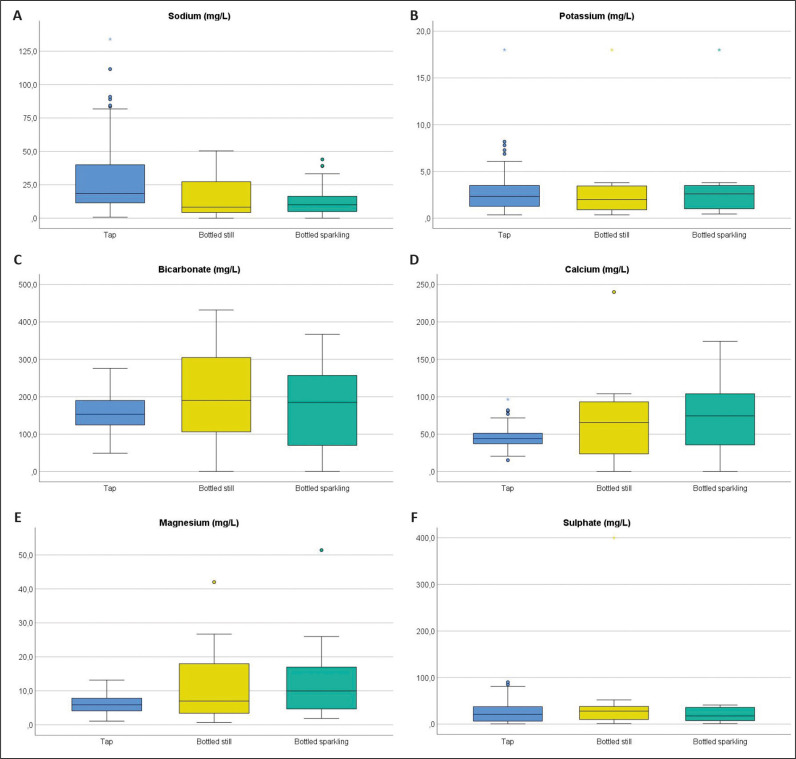
Results: All Dutch water supply companies, consisting of 179 production locations, were included. Twenty-one bottled still waters and 25 bottled sparkling waters were included. There was a wide range of results for the evaluated minerals. Sodium levels were highest in tap water (134.0 mg/l), whereas potassium concentrations were highest in bottled water (18.0 mg/l). Bicarbonate, calcium, and sulphate concentrations were highest in bottled still water (432.0 mg/l, 240.0 mg/l, and 400.0 mg/l, respectively). Magnesium levels were highest in bottled sparkling water (51.4 mg/l).
Conclusions: Commercially available water (bottled and tap) in the Netherlands is safe to use for KSD patients. However, specific bottled waters can be described as calcium and magnesium rich. Therefore, it remains important for KSD patients and their physicians to realise that the mineral composition of drinking water may vary, and its consumption might require alterations of their diet.




 京公网安备 11010802042870号
京ICP备2023020795号-1
京公网安备 11010802042870号
京ICP备2023020795号-1

 分享
分享
 求助内容:
求助内容: 应助结果提醒方式:
 扫码关注我们
