Mahbub-Ul Alam, Md Assaduzzaman Rahat, Shahpara Nawaz, Nishantika Neeher, Kazy Farhat Tabassum, Tasnia Alam Upoma, Abul Kamal, Barbara Evans, Paul Hutchings
{"title":"Behaviour change interventions to promote household connectivity to sewer: a scoping review.","authors":"Mahbub-Ul Alam, Md Assaduzzaman Rahat, Shahpara Nawaz, Nishantika Neeher, Kazy Farhat Tabassum, Tasnia Alam Upoma, Abul Kamal, Barbara Evans, Paul Hutchings","doi":"10.1080/16549716.2025.2476335","DOIUrl":null,"url":null,"abstract":"<p><p>Households without access to a functioning and well-managed sanitation system produce untreated faecal waste. While connecting households to sewers is ideal in densely populated low-income areas, the connection rates often remain low. Most interventions to increase connectivity focused on addressing financial, social, and legal barriers; there is limited evidence on the effectiveness of behaviour change interventions in promoting sewer connections. Thus, we aim to understand the effectiveness of behaviour change interventions in increasing the uptake of sewer connections. We developed a review protocol with key search terms relating to households, sewers, behaviour change interventions, promotion, and effectiveness. We aimed to identify both the types of interventions deployed and their impact on increasing household sewer connections. Eleven articles met the eligibility criteria and were included in the review. Findings indicate that changes in rates of connection were associated with interventions that included a blend of indirect financial subsidy in the form of a free connection and community-engagement activities. There was limited evidence that behaviour change campaigns without financial incentives lead to changes in sewer connection rates. A multi-component package involving financial subsidies with community engagement is likely to improve the sewer connection rate.</p>","PeriodicalId":49197,"journal":{"name":"Global Health Action","volume":"18 1","pages":"2476335"},"PeriodicalIF":2.6000,"publicationDate":"2025-12-01","publicationTypes":"Journal Article","fieldsOfStudy":null,"isOpenAccess":false,"openAccessPdf":"https://www.ncbi.nlm.nih.gov/pmc/articles/PMC11934160/pdf/","citationCount":"0","resultStr":null,"platform":"Semanticscholar","paperid":null,"PeriodicalName":"Global Health Action","FirstCategoryId":"3","ListUrlMain":"https://doi.org/10.1080/16549716.2025.2476335","RegionNum":3,"RegionCategory":"医学","ArticlePicture":[],"TitleCN":null,"AbstractTextCN":null,"PMCID":null,"EPubDate":"2025/3/21 0:00:00","PubModel":"Epub","JCR":"Q2","JCRName":"PUBLIC, ENVIRONMENTAL & OCCUPATIONAL HEALTH","Score":null,"Total":0}
引用次数: 0
Abstract
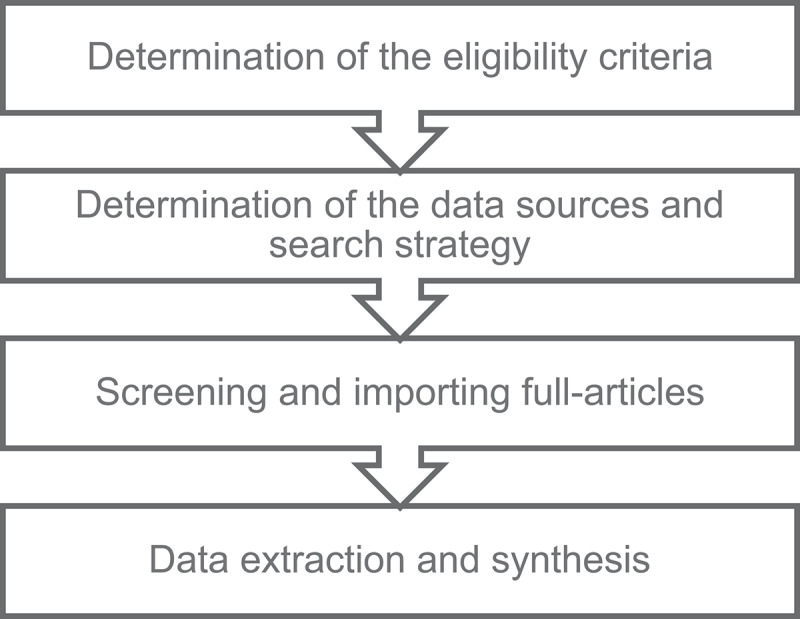
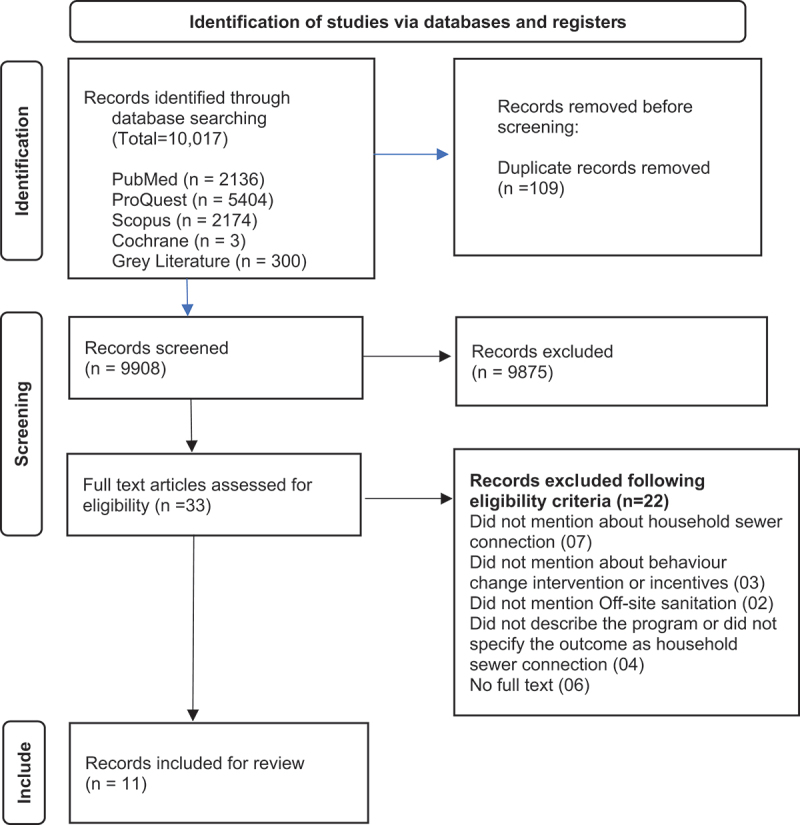
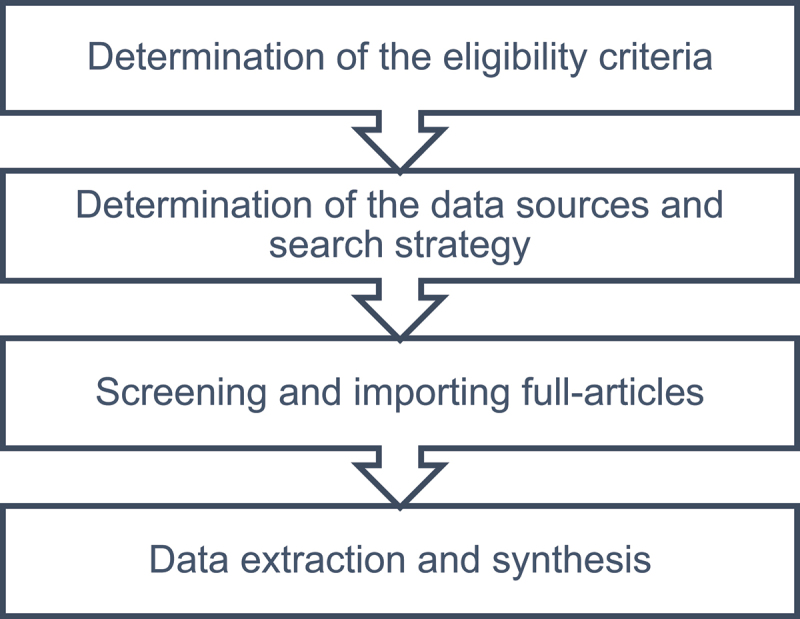
Households without access to a functioning and well-managed sanitation system produce untreated faecal waste. While connecting households to sewers is ideal in densely populated low-income areas, the connection rates often remain low. Most interventions to increase connectivity focused on addressing financial, social, and legal barriers; there is limited evidence on the effectiveness of behaviour change interventions in promoting sewer connections. Thus, we aim to understand the effectiveness of behaviour change interventions in increasing the uptake of sewer connections. We developed a review protocol with key search terms relating to households, sewers, behaviour change interventions, promotion, and effectiveness. We aimed to identify both the types of interventions deployed and their impact on increasing household sewer connections. Eleven articles met the eligibility criteria and were included in the review. Findings indicate that changes in rates of connection were associated with interventions that included a blend of indirect financial subsidy in the form of a free connection and community-engagement activities. There was limited evidence that behaviour change campaigns without financial incentives lead to changes in sewer connection rates. A multi-component package involving financial subsidies with community engagement is likely to improve the sewer connection rate.
期刊介绍:
Global Health Action is an international peer-reviewed Open Access journal affiliated with the Unit of Epidemiology and Global Health, Department of Public Health and Clinical Medicine at Umeå University, Sweden. The Unit hosts the Umeå International School of Public Health and the Umeå Centre for Global Health Research.
Vision: Our vision is to be a leading journal in the global health field, narrowing health information gaps and contributing to the implementation of policies and actions that lead to improved global health.
Aim: The widening gap between the winners and losers of globalisation presents major public health challenges. To meet these challenges, it is crucial to generate new knowledge and evidence in the field and in settings where the evidence is lacking, as well as to bridge the gaps between existing knowledge and implementation of relevant findings. Thus, the aim of Global Health Action is to contribute to fuelling a more concrete, hands-on approach to addressing global health challenges. Manuscripts suggesting strategies for practical interventions and research implementations where none already exist are specifically welcomed. Further, the journal encourages articles from low- and middle-income countries, while also welcoming articles originated from South-South and South-North collaborations. All articles are expected to address a global agenda and include a strong implementation or policy component.




 京公网安备 11010802042870号
京ICP备2023020795号-1
京公网安备 11010802042870号
京ICP备2023020795号-1

 分享
分享
 求助内容:
求助内容: 应助结果提醒方式:
 扫码关注我们
