Tobias Kleemann, Robert Freund, Barbara Braden, Michael Hocke, Stephan Hollerbach, Christian Jenssen, Kathleen Möller, Yi Dong, Manoop Singh Bhutani, Masayuki Kitano, Siyu Sun, Abed El-Lehibi, Christoph Frank Dietrich
{"title":"An international survey on the geographical differences in practice patterns and training of endoscopic ultrasound.","authors":"Tobias Kleemann, Robert Freund, Barbara Braden, Michael Hocke, Stephan Hollerbach, Christian Jenssen, Kathleen Möller, Yi Dong, Manoop Singh Bhutani, Masayuki Kitano, Siyu Sun, Abed El-Lehibi, Christoph Frank Dietrich","doi":"10.1515/jtim-2025-0006","DOIUrl":null,"url":null,"abstract":"<p><strong>Background and objectives: </strong>Recently, a series of publications discuss what kind of clinical and technical information is important to know before performing endoscopic ultrasound (EUS) examinations. This paper aims to investigate variations in the performance of EUS examinations in different countries worldwide to present views and experiences on the use of pre-EUS investigations.</p><p><strong>Methods: </strong>In a multinational and multidisciplinary survey, more than 100 practicing EUS endoscopists were surveyed by a questionnaire asking for their level of education and training, their experience in diagnostic and therapeutic procedures, preferred technical use and procedural steps before EUS examination. Substantial geographic variation not only in the level of training and mandatory imaging prior to EUS, but consequently also in the standards and practice of EUS examinations and advanced EUS guided therapeutic procedures were observed. The participants' preferences regarding technical use and procedural steps prior to EUS examinations were assessed according to their level of education and training experience.</p><p><strong>Results: </strong>Transabdominal ultrasound (TUS) is performed prior to EUS by the EUS endoscopists themselves in most European countries but not in North and South Americas where non-invasive pre-EUS imaging is delegated to other specialties such as radiology. Different training backgrounds, cultural beliefs, infrastructures, available equipment and access to training programs have a strong impact on the EUS workforce and EUS procedural practice across the continents.</p><p><strong>Conclusions: </strong>The study results suggest existence of relevant geographical differences that reflect not only the different levels of education in different settings but also differences regarding technical standards for the performance of EUS and TUS examinations worldwide.</p>","PeriodicalId":51339,"journal":{"name":"Journal of Translational Internal Medicine","volume":"13 1","pages":"48-64"},"PeriodicalIF":7.4000,"publicationDate":"2025-03-19","publicationTypes":"Journal Article","fieldsOfStudy":null,"isOpenAccess":false,"openAccessPdf":"https://www.ncbi.nlm.nih.gov/pmc/articles/PMC11921813/pdf/","citationCount":"0","resultStr":null,"platform":"Semanticscholar","paperid":null,"PeriodicalName":"Journal of Translational Internal Medicine","FirstCategoryId":"3","ListUrlMain":"https://doi.org/10.1515/jtim-2025-0006","RegionNum":2,"RegionCategory":"医学","ArticlePicture":[],"TitleCN":null,"AbstractTextCN":null,"PMCID":null,"EPubDate":"2025/2/1 0:00:00","PubModel":"eCollection","JCR":"Q1","JCRName":"MEDICINE, GENERAL & INTERNAL","Score":null,"Total":0}
引用次数: 0
Abstract
Background and objectives: Recently, a series of publications discuss what kind of clinical and technical information is important to know before performing endoscopic ultrasound (EUS) examinations. This paper aims to investigate variations in the performance of EUS examinations in different countries worldwide to present views and experiences on the use of pre-EUS investigations.
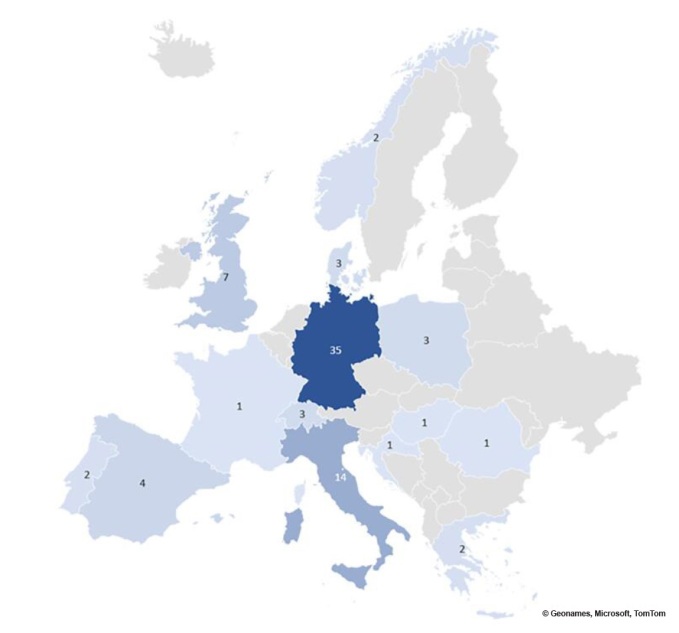
Methods: In a multinational and multidisciplinary survey, more than 100 practicing EUS endoscopists were surveyed by a questionnaire asking for their level of education and training, their experience in diagnostic and therapeutic procedures, preferred technical use and procedural steps before EUS examination. Substantial geographic variation not only in the level of training and mandatory imaging prior to EUS, but consequently also in the standards and practice of EUS examinations and advanced EUS guided therapeutic procedures were observed. The participants' preferences regarding technical use and procedural steps prior to EUS examinations were assessed according to their level of education and training experience.
Results: Transabdominal ultrasound (TUS) is performed prior to EUS by the EUS endoscopists themselves in most European countries but not in North and South Americas where non-invasive pre-EUS imaging is delegated to other specialties such as radiology. Different training backgrounds, cultural beliefs, infrastructures, available equipment and access to training programs have a strong impact on the EUS workforce and EUS procedural practice across the continents.
Conclusions: The study results suggest existence of relevant geographical differences that reflect not only the different levels of education in different settings but also differences regarding technical standards for the performance of EUS and TUS examinations worldwide.






 京公网安备 11010802042870号
京ICP备2023020795号-1
京公网安备 11010802042870号
京ICP备2023020795号-1

 分享
分享
 求助内容:
求助内容: 应助结果提醒方式:
 扫码关注我们
