{"title":"Simulated Environmental Nanoplastics Induce Zebrafish Developmental Toxicity and Stress Response","authors":"Astrid Saraceni, Andrey Ethan Rubin, Yair Wexler, Yoav Gothilf, Patrizia Bovolin, Ines Zucker","doi":"10.1021/acssuschemeng.4c10847","DOIUrl":null,"url":null,"abstract":"Nanoplastics (NPs) pose emerging risks to both the environment and human health. In this study, we use a zebrafish in vivo model to study─and compare─the physicochemical and toxicological effects of two distinct polystyrene NPs: widely used commercial polymeric nanobeads and nanoscale simulated environmental plastics (SEPs) engineered using a top-down accelerated weathering protocol. Zebrafish embryos and larvae exposed to NPs were assessed for changes in development, growth, locomotor activity, and stress and hypoxic responses. SEP─besides being more environmentally relevant than the commercial nanobeads─significantly delayed hatching and reduced body length (up to 150 μm shorter) compared to the minor effects of the nanobeads at the same concentrations. Moreover, SEPs impaired locomotor activity (40% reduction in distance traveled) and triggered a dose-dependent stress response, increasing cortisol levels (2–3 fold) and upregulating stress and hypoxia-related genes. The stress-related condition induced by SEP exposure, observed throughout the study, involved alterations in the hypothalamic-pituitary-adrenal-interrenal (HPA/HPI) axis, particularly in glucocorticoid signaling (i.e., cortisol), which plays a crucial role in regulating stress responses and developmental processes. These alterations could potentially influence the development and adult life of living organisms, including the onset of associated pathologies. Furthermore, these findings underscore significant ecological and health risks, as even low concentrations of NPs in aquatic ecosystems may impair fish populations and biodiversity while also presenting potential human health hazards through the contamination of water sources and seafood. Notably, all reported effects occurred at a relatively low concentration (0.1 μg/L), emphasizing the need for rigorous NP risk assessment and the importance of selecting an appropriate and environmentally relevant experimental model.","PeriodicalId":25,"journal":{"name":"ACS Sustainable Chemistry & Engineering","volume":"16 1","pages":""},"PeriodicalIF":7.3000,"publicationDate":"2025-03-21","publicationTypes":"Journal Article","fieldsOfStudy":null,"isOpenAccess":false,"openAccessPdf":"","citationCount":"0","resultStr":null,"platform":"Semanticscholar","paperid":null,"PeriodicalName":"ACS Sustainable Chemistry & Engineering","FirstCategoryId":"92","ListUrlMain":"https://doi.org/10.1021/acssuschemeng.4c10847","RegionNum":1,"RegionCategory":"化学","ArticlePicture":[],"TitleCN":null,"AbstractTextCN":null,"PMCID":null,"EPubDate":"","PubModel":"","JCR":"Q1","JCRName":"CHEMISTRY, MULTIDISCIPLINARY","Score":null,"Total":0}
引用次数: 0
Abstract
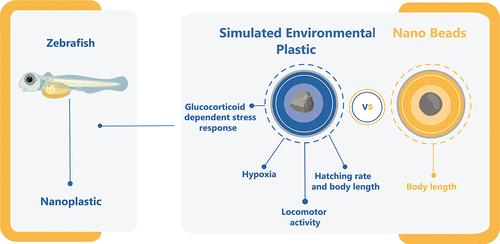
Nanoplastics (NPs) pose emerging risks to both the environment and human health. In this study, we use a zebrafish in vivo model to study─and compare─the physicochemical and toxicological effects of two distinct polystyrene NPs: widely used commercial polymeric nanobeads and nanoscale simulated environmental plastics (SEPs) engineered using a top-down accelerated weathering protocol. Zebrafish embryos and larvae exposed to NPs were assessed for changes in development, growth, locomotor activity, and stress and hypoxic responses. SEP─besides being more environmentally relevant than the commercial nanobeads─significantly delayed hatching and reduced body length (up to 150 μm shorter) compared to the minor effects of the nanobeads at the same concentrations. Moreover, SEPs impaired locomotor activity (40% reduction in distance traveled) and triggered a dose-dependent stress response, increasing cortisol levels (2–3 fold) and upregulating stress and hypoxia-related genes. The stress-related condition induced by SEP exposure, observed throughout the study, involved alterations in the hypothalamic-pituitary-adrenal-interrenal (HPA/HPI) axis, particularly in glucocorticoid signaling (i.e., cortisol), which plays a crucial role in regulating stress responses and developmental processes. These alterations could potentially influence the development and adult life of living organisms, including the onset of associated pathologies. Furthermore, these findings underscore significant ecological and health risks, as even low concentrations of NPs in aquatic ecosystems may impair fish populations and biodiversity while also presenting potential human health hazards through the contamination of water sources and seafood. Notably, all reported effects occurred at a relatively low concentration (0.1 μg/L), emphasizing the need for rigorous NP risk assessment and the importance of selecting an appropriate and environmentally relevant experimental model.
期刊介绍:
ACS Sustainable Chemistry & Engineering is a prestigious weekly peer-reviewed scientific journal published by the American Chemical Society. Dedicated to advancing the principles of green chemistry and green engineering, it covers a wide array of research topics including green chemistry, green engineering, biomass, alternative energy, and life cycle assessment.
The journal welcomes submissions in various formats, including Letters, Articles, Features, and Perspectives (Reviews), that address the challenges of sustainability in the chemical enterprise and contribute to the advancement of sustainable practices. Join us in shaping the future of sustainable chemistry and engineering.



 京公网安备 11010802042870号
京ICP备2023020795号-1
京公网安备 11010802042870号
京ICP备2023020795号-1

 分享
分享
 求助内容:
求助内容: 应助结果提醒方式:
 扫码关注我们
