Emy S van der Valk Bouman, Antonia S Becker, Julian Schaap, Roos Cats, Michaël Berghman, M Klimek
{"title":"Perceptions of music listening for pain management: a multi-method study.","authors":"Emy S van der Valk Bouman, Antonia S Becker, Julian Schaap, Roos Cats, Michaël Berghman, M Klimek","doi":"10.1136/bmjopen-2024-097233","DOIUrl":null,"url":null,"abstract":"<p><strong>Objectives: </strong>Music listening for pain relief is well studied in diverse healthcare settings, but its implementation remains challenging. While healthcare providers generally have a positive attitude, there is a lack of knowledge about healthcare recipients' perceptions and attitudes. Therefore, the aim of this study is to explore healthcare recipients' perceptions of listening to music for pain management, focusing on their general attitudes, implementation strategies and subjective experiences of how music helps (or does not help).</p><p><strong>Design: </strong>A multi-method study comprising a quantitative survey and qualitative interviews. It is a follow-up conducted 6 months after a randomised experimental study, which assessed the influence of different music genres on pain tolerance. At the end of the original experiment, participants received advice on listening to music in painful situations.</p><p><strong>Setting: </strong>Rotterdam, The Netherlands.</p><p><strong>Participants: </strong>The survey involved 169 participants (age mean 30.6, SD 9.8; 61.9% female) who participated in the initial trial. Following this, 20 in-depth interviews were conducted.</p><p><strong>Outcome measures: </strong>Perceptions of music for pain management were investigated, revealing general trends in the quantitative survey data. Data-led thematic analysis of the qualitative interviews focused on individual perceptions.</p><p><strong>Results: </strong>Participants showed a high willingness to use music for pain relief, particularly for so-called emotional pain (eg, anxiety, stress and heartbreak). Individual attitudes varied regarding different situations, types of music and types of pain. Barriers such as not considering the option and social sensitivity within healthcare contexts were discussed. A proactive approach by healthcare professionals and autonomy of healthcare recipients were suggested to overcome these barriers. Interestingly, the 'wrong' type of music or the 'wrong' situation were mentioned as non-beneficial or even harmful.</p><p><strong>Conclusions: </strong>Awareness of individual needs and potential negative effects is crucial for the use of music for pain relief. A proactive and personalised approach is needed to effectively implement music in healthcare.</p>","PeriodicalId":9158,"journal":{"name":"BMJ Open","volume":"15 3","pages":"e097233"},"PeriodicalIF":2.3000,"publicationDate":"2025-03-21","publicationTypes":"Journal Article","fieldsOfStudy":null,"isOpenAccess":false,"openAccessPdf":"https://www.ncbi.nlm.nih.gov/pmc/articles/PMC11931901/pdf/","citationCount":"0","resultStr":null,"platform":"Semanticscholar","paperid":null,"PeriodicalName":"BMJ Open","FirstCategoryId":"3","ListUrlMain":"https://doi.org/10.1136/bmjopen-2024-097233","RegionNum":3,"RegionCategory":"医学","ArticlePicture":[],"TitleCN":null,"AbstractTextCN":null,"PMCID":null,"EPubDate":"","PubModel":"","JCR":"Q1","JCRName":"MEDICINE, GENERAL & INTERNAL","Score":null,"Total":0}
引用次数: 0
Abstract
Objectives: Music listening for pain relief is well studied in diverse healthcare settings, but its implementation remains challenging. While healthcare providers generally have a positive attitude, there is a lack of knowledge about healthcare recipients' perceptions and attitudes. Therefore, the aim of this study is to explore healthcare recipients' perceptions of listening to music for pain management, focusing on their general attitudes, implementation strategies and subjective experiences of how music helps (or does not help).
Design: A multi-method study comprising a quantitative survey and qualitative interviews. It is a follow-up conducted 6 months after a randomised experimental study, which assessed the influence of different music genres on pain tolerance. At the end of the original experiment, participants received advice on listening to music in painful situations.
Setting: Rotterdam, The Netherlands.
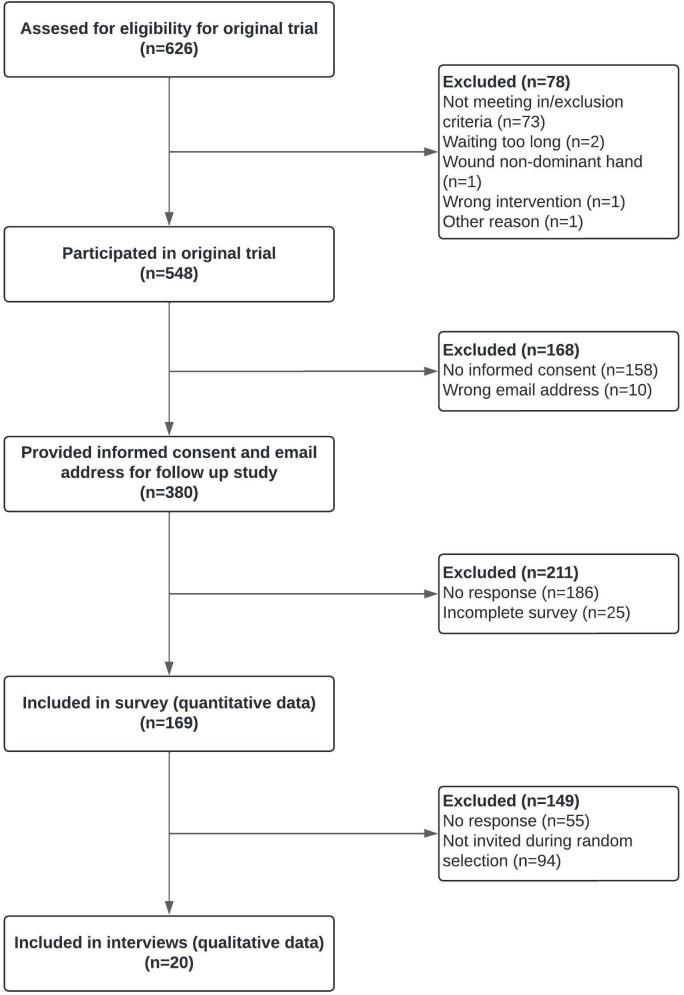
Participants: The survey involved 169 participants (age mean 30.6, SD 9.8; 61.9% female) who participated in the initial trial. Following this, 20 in-depth interviews were conducted.
Outcome measures: Perceptions of music for pain management were investigated, revealing general trends in the quantitative survey data. Data-led thematic analysis of the qualitative interviews focused on individual perceptions.
Results: Participants showed a high willingness to use music for pain relief, particularly for so-called emotional pain (eg, anxiety, stress and heartbreak). Individual attitudes varied regarding different situations, types of music and types of pain. Barriers such as not considering the option and social sensitivity within healthcare contexts were discussed. A proactive approach by healthcare professionals and autonomy of healthcare recipients were suggested to overcome these barriers. Interestingly, the 'wrong' type of music or the 'wrong' situation were mentioned as non-beneficial or even harmful.
Conclusions: Awareness of individual needs and potential negative effects is crucial for the use of music for pain relief. A proactive and personalised approach is needed to effectively implement music in healthcare.
期刊介绍:
BMJ Open is an online, open access journal, dedicated to publishing medical research from all disciplines and therapeutic areas. The journal publishes all research study types, from study protocols to phase I trials to meta-analyses, including small or specialist studies. Publishing procedures are built around fully open peer review and continuous publication, publishing research online as soon as the article is ready.






 京公网安备 11010802042870号
京ICP备2023020795号-1
京公网安备 11010802042870号
京ICP备2023020795号-1

 分享
分享
 求助内容:
求助内容: 应助结果提醒方式:
 扫码关注我们
