Jiahui Cai, Jiaying Xiao, Gaoxiang Du, Qi An and Wangshu Tong
{"title":"Heterogeneous piezo-self-Fenton material design: an intersecting solution for pollutant degradation and tumor therapy","authors":"Jiahui Cai, Jiaying Xiao, Gaoxiang Du, Qi An and Wangshu Tong","doi":"10.1039/D4TB02558J","DOIUrl":null,"url":null,"abstract":"<p >Heterogeneous piezo-self-Fenton (EPSF), an integration of piezocatalysis and heterogeneous Fenton reactions, forms the foundation for efficient redox interfacial reactions in complex environments. The significant generation of reactive oxygen species (ROS) during the catalytic process and the mechanical energy-driven nature of the EPSF process provide distinct advantages in environmental remediation and biomedical applications. Numerous studies on EPSF catalysts have emerged in recent years across these fields. However, the construction approaches and design strategies for EPSF catalysts in various application scenarios remain unclear. This review synthesizes and analyzes studies on organic pollutant degradation and targeted tumor therapy. Based on the elucidation of redox processes in EPSF catalysis, the catalysts are categorized according to structural features, clarifying common material systems across different fields. The factors influencing EPSF catalytic performance are subsequently outlined, followed by an evaluation of corresponding enhancement strategies. Finally, design strategies for EPSF catalysts across applications are analyzed, emphasizing the commonalities and distinctions in catalyst design for different fields. Insights are provided to inform future catalyst development.</p>","PeriodicalId":83,"journal":{"name":"Journal of Materials Chemistry B","volume":" 15","pages":" 4544-4569"},"PeriodicalIF":6.1000,"publicationDate":"2025-03-05","publicationTypes":"Journal Article","fieldsOfStudy":null,"isOpenAccess":false,"openAccessPdf":"","citationCount":"0","resultStr":null,"platform":"Semanticscholar","paperid":null,"PeriodicalName":"Journal of Materials Chemistry B","FirstCategoryId":"1","ListUrlMain":"https://pubs.rsc.org/en/content/articlelanding/2025/tb/d4tb02558j","RegionNum":3,"RegionCategory":"医学","ArticlePicture":[],"TitleCN":null,"AbstractTextCN":null,"PMCID":null,"EPubDate":"","PubModel":"","JCR":"Q1","JCRName":"MATERIALS SCIENCE, BIOMATERIALS","Score":null,"Total":0}
引用次数: 0
Abstract
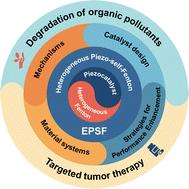
Heterogeneous piezo-self-Fenton (EPSF), an integration of piezocatalysis and heterogeneous Fenton reactions, forms the foundation for efficient redox interfacial reactions in complex environments. The significant generation of reactive oxygen species (ROS) during the catalytic process and the mechanical energy-driven nature of the EPSF process provide distinct advantages in environmental remediation and biomedical applications. Numerous studies on EPSF catalysts have emerged in recent years across these fields. However, the construction approaches and design strategies for EPSF catalysts in various application scenarios remain unclear. This review synthesizes and analyzes studies on organic pollutant degradation and targeted tumor therapy. Based on the elucidation of redox processes in EPSF catalysis, the catalysts are categorized according to structural features, clarifying common material systems across different fields. The factors influencing EPSF catalytic performance are subsequently outlined, followed by an evaluation of corresponding enhancement strategies. Finally, design strategies for EPSF catalysts across applications are analyzed, emphasizing the commonalities and distinctions in catalyst design for different fields. Insights are provided to inform future catalyst development.
期刊介绍:
Journal of Materials Chemistry A, B & C cover high quality studies across all fields of materials chemistry. The journals focus on those theoretical or experimental studies that report new understanding, applications, properties and synthesis of materials. Journal of Materials Chemistry A, B & C are separated by the intended application of the material studied. Broadly, applications in energy and sustainability are of interest to Journal of Materials Chemistry A, applications in biology and medicine are of interest to Journal of Materials Chemistry B, and applications in optical, magnetic and electronic devices are of interest to Journal of Materials Chemistry C.Journal of Materials Chemistry B is a Transformative Journal and Plan S compliant. Example topic areas within the scope of Journal of Materials Chemistry B are listed below. This list is neither exhaustive nor exclusive:
Antifouling coatings
Biocompatible materials
Bioelectronics
Bioimaging
Biomimetics
Biomineralisation
Bionics
Biosensors
Diagnostics
Drug delivery
Gene delivery
Immunobiology
Nanomedicine
Regenerative medicine & Tissue engineering
Scaffolds
Soft robotics
Stem cells
Therapeutic devices



 京公网安备 11010802042870号
京ICP备2023020795号-1
京公网安备 11010802042870号
京ICP备2023020795号-1

 分享
分享
 求助内容:
求助内容: 应助结果提醒方式:
 扫码关注我们
