Tau Ming Liew, Jessica Yi Hui Foo, Howard Yang, Sze Yan Tay, Way Inn Koay, King Fan Yip, Simon Kang Seng Ting, Kaavya Narasimhalu, Weishan Li, Congyuan Tan, Danlin Luo, Rebecca Chong, Rachel Shong, Christopher Sia, Gerald Choon-Huat Koh, Julian Thumboo
{"title":"PENSIEVE-AI a brief cognitive test to detect cognitive impairment across diverse literacy","authors":"Tau Ming Liew, Jessica Yi Hui Foo, Howard Yang, Sze Yan Tay, Way Inn Koay, King Fan Yip, Simon Kang Seng Ting, Kaavya Narasimhalu, Weishan Li, Congyuan Tan, Danlin Luo, Rebecca Chong, Rachel Shong, Christopher Sia, Gerald Choon-Huat Koh, Julian Thumboo","doi":"10.1038/s41467-025-58201-x","DOIUrl":null,"url":null,"abstract":"<p>Undiagnosed cognitive impairment is a pervasive global issue, often due to subtle nature of early symptoms, necessitating the use of brief cognitive tests for early detection. However, most brief tests are not scalable (requiring trained professionals), and are not designed for lower literacy groups (e.g. in underserved communities). Here, we developed PENSIEVE-AI<sup>TM</sup>, a drawing-based digital test that is less dependent on literacy, and can be self-administered in <5 min. In a prospective study involving 1758 community-dwelling individuals aged 65 and older from Singapore (education range = 0–23 years), our deep-learning model showed excellent performance in detecting clinically-adjudicated mild cognitive impairment and dementia (AUC = 93%), comparable to traditional neuropsychological assessments (AUC = 94%, <i>P</i><sub><i>comparison</i></sub> = 1.000). Results were consistent even across education subgroups. Being less dependent on literacy, PENSIEVE-AI holds promise for broader deployment in literacy-diverse populations similar to Singapore (e.g. some Asian and lower- and middle-income countries), potentially improving early detection and intervention of cognitive impairment.</p>","PeriodicalId":19066,"journal":{"name":"Nature Communications","volume":"27 1","pages":""},"PeriodicalIF":15.7000,"publicationDate":"2025-03-23","publicationTypes":"Journal Article","fieldsOfStudy":null,"isOpenAccess":false,"openAccessPdf":"","citationCount":"0","resultStr":null,"platform":"Semanticscholar","paperid":null,"PeriodicalName":"Nature Communications","FirstCategoryId":"103","ListUrlMain":"https://doi.org/10.1038/s41467-025-58201-x","RegionNum":1,"RegionCategory":"综合性期刊","ArticlePicture":[],"TitleCN":null,"AbstractTextCN":null,"PMCID":null,"EPubDate":"","PubModel":"","JCR":"Q1","JCRName":"MULTIDISCIPLINARY SCIENCES","Score":null,"Total":0}
引用次数: 0
Abstract
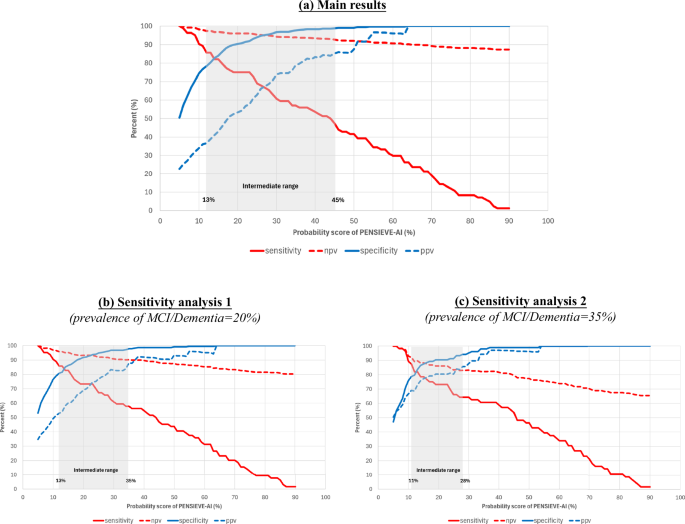
Undiagnosed cognitive impairment is a pervasive global issue, often due to subtle nature of early symptoms, necessitating the use of brief cognitive tests for early detection. However, most brief tests are not scalable (requiring trained professionals), and are not designed for lower literacy groups (e.g. in underserved communities). Here, we developed PENSIEVE-AITM, a drawing-based digital test that is less dependent on literacy, and can be self-administered in <5 min. In a prospective study involving 1758 community-dwelling individuals aged 65 and older from Singapore (education range = 0–23 years), our deep-learning model showed excellent performance in detecting clinically-adjudicated mild cognitive impairment and dementia (AUC = 93%), comparable to traditional neuropsychological assessments (AUC = 94%, Pcomparison = 1.000). Results were consistent even across education subgroups. Being less dependent on literacy, PENSIEVE-AI holds promise for broader deployment in literacy-diverse populations similar to Singapore (e.g. some Asian and lower- and middle-income countries), potentially improving early detection and intervention of cognitive impairment.
期刊介绍:
Nature Communications, an open-access journal, publishes high-quality research spanning all areas of the natural sciences. Papers featured in the journal showcase significant advances relevant to specialists in each respective field. With a 2-year impact factor of 16.6 (2022) and a median time of 8 days from submission to the first editorial decision, Nature Communications is committed to rapid dissemination of research findings. As a multidisciplinary journal, it welcomes contributions from biological, health, physical, chemical, Earth, social, mathematical, applied, and engineering sciences, aiming to highlight important breakthroughs within each domain.



 京公网安备 11010802042870号
京ICP备2023020795号-1
京公网安备 11010802042870号
京ICP备2023020795号-1

 分享
分享
 求助内容:
求助内容: 应助结果提醒方式:
 扫码关注我们
