Maximilian Meißner, Kahargyan Nugraha, Kristin D. Grandstaff, Thomas H. Do, Carolina A. Jiménez, William Y. Chin, Lauren E. Farrell, Peter D. Nguyen and Seth N. Brown*,
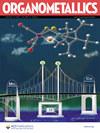
{"title":"Bis(iminoxolene)iridium Anion and Alkyls: How Does Ligand Redox Noninnocence Interface with Oxidative Addition?","authors":"Maximilian Meißner, Kahargyan Nugraha, Kristin D. Grandstaff, Thomas H. Do, Carolina A. Jiménez, William Y. Chin, Lauren E. Farrell, Peter D. Nguyen and Seth N. Brown*, ","doi":"10.1021/acs.organomet.4c00514","DOIUrl":null,"url":null,"abstract":"<p >The bis(iminoxolene) complex (Diso)<sub>2</sub>IrCl (Diso = <i>N</i>-(2,6-diisopropylphenyl)-4,6-di-<i>tert</i>-butyl-2-imino-<i>o</i>-benzoquinone) is reduced by two equivalents of sodium naphthalenide to give square planar, diamagnetic Na[(Diso)<sub>2</sub>Ir]. The anionic iridium center acts as a nucleophile to primary and secondary alkyl and allyl halides to give square pyramidal iridium alkyls. Benzoyl chloride reacts to give an iridium benzoyl complex. Organoiridium complexes are also formed by reaction of (Diso)<sub>2</sub>IrCl with Grignard reagents, and treatment with acetone in the presence of base gives the κ<sup>1</sup> carbon-bonded enolate complex (Diso)<sub>2</sub>IrCH<sub>2</sub>COCH<sub>3</sub>. The solid-state structures of the primary alkyls show significant inclinations of the iridium–carbon bond away from the 2-fold axis of the square pyramid, apparently for steric reasons. The relative reactivity of substrates and exclusive formation of (Diso)<sub>2</sub>Ir(5-hexenyl) from 6-bromo-1-hexene indicate that primary alkyl halides react by an S<sub>N</sub>2 mechanism. Structural data suggest that the oxidative addition is about 70% metal-centered, consistent with nucleophilic behavior that is analogous to that of other square planar group 9 anions.</p>","PeriodicalId":56,"journal":{"name":"Organometallics","volume":"44 6","pages":"760–775 760–775"},"PeriodicalIF":2.9000,"publicationDate":"2025-03-03","publicationTypes":"Journal Article","fieldsOfStudy":null,"isOpenAccess":false,"openAccessPdf":"","citationCount":"0","resultStr":null,"platform":"Semanticscholar","paperid":null,"PeriodicalName":"Organometallics","FirstCategoryId":"92","ListUrlMain":"https://pubs.acs.org/doi/10.1021/acs.organomet.4c00514","RegionNum":3,"RegionCategory":"化学","ArticlePicture":[],"TitleCN":null,"AbstractTextCN":null,"PMCID":null,"EPubDate":"","PubModel":"","JCR":"Q2","JCRName":"CHEMISTRY, INORGANIC & NUCLEAR","Score":null,"Total":0}
引用次数: 0
Abstract
The bis(iminoxolene) complex (Diso)2IrCl (Diso = N-(2,6-diisopropylphenyl)-4,6-di-tert-butyl-2-imino-o-benzoquinone) is reduced by two equivalents of sodium naphthalenide to give square planar, diamagnetic Na[(Diso)2Ir]. The anionic iridium center acts as a nucleophile to primary and secondary alkyl and allyl halides to give square pyramidal iridium alkyls. Benzoyl chloride reacts to give an iridium benzoyl complex. Organoiridium complexes are also formed by reaction of (Diso)2IrCl with Grignard reagents, and treatment with acetone in the presence of base gives the κ1 carbon-bonded enolate complex (Diso)2IrCH2COCH3. The solid-state structures of the primary alkyls show significant inclinations of the iridium–carbon bond away from the 2-fold axis of the square pyramid, apparently for steric reasons. The relative reactivity of substrates and exclusive formation of (Diso)2Ir(5-hexenyl) from 6-bromo-1-hexene indicate that primary alkyl halides react by an SN2 mechanism. Structural data suggest that the oxidative addition is about 70% metal-centered, consistent with nucleophilic behavior that is analogous to that of other square planar group 9 anions.
期刊介绍:
Organometallics is the flagship journal of organometallic chemistry and records progress in one of the most active fields of science, bridging organic and inorganic chemistry. The journal publishes Articles, Communications, Reviews, and Tutorials (instructional overviews) that depict research on the synthesis, structure, bonding, chemical reactivity, and reaction mechanisms for a variety of applications, including catalyst design and catalytic processes; main-group, transition-metal, and lanthanide and actinide metal chemistry; synthetic aspects of polymer science and materials science; and bioorganometallic chemistry.





 京公网安备 11010802042870号
京ICP备2023020795号-1
京公网安备 11010802042870号
京ICP备2023020795号-1

 分享
分享
 求助内容:
求助内容: 应助结果提醒方式:
 扫码关注我们
