Investigating the results of transcatheter aortic valve implantation (TAVI) in non-diabetic and diabetic patients: a systematic review and meta-analysis.
{"title":"Investigating the results of transcatheter aortic valve implantation (TAVI) in non-diabetic and diabetic patients: a systematic review and meta-analysis.","authors":"Azam Soleimani, Mahsa Maghsoodi, Saeide Bahrani, Atefeh Amerizadeh, Zahra Teimouri-Jervekani","doi":"10.1186/s12872-025-04646-3","DOIUrl":null,"url":null,"abstract":"<p><strong>Background: </strong>Transcatheter aortic valve implantation (TAVI) has emerged as an effective treatment option for patients with severe aortic stenosis, particularly in those who are not suitable candidates for open-heart surgery. While diabetes is known to be associated with a higher risk of cardiovascular diseases, the impact of diabetes on the outcomes of TAVI remains controversial.</p><p><strong>Methods: </strong>A systematic literature search was conducted across major databases, including PubMed, Web of Science (WOS), and Google Scholar, for studies published in English over the past 20 years, up until July 2024.</p><p><strong>Results: </strong>A total of 10 observational studies were analyzed, revealing that diabetic patients were generally younger than non-diabetic patients. The 30-day mortality rate was lower in non-diabetics (0.03 [0.02-0.04]) compared to diabetics (0.04 [0.03-0.05]). However, the hazard ratio for death beyond 30 days in diabetics was 2.05 (95% CI: 0.91-4.60, p = 0.08), and at one year, it was 1.04 (95% CI: 0.78-1.39, p = 0.77), with neither result reaching statistical significance. Meta-regression analysis showed that non-insulin-treated diabetes was significantly associated with an increased risk of acute kidney injury (AKI) compared to non-diabetics, with a log odds ratio (LogOR) of 0.3393 (p = 0.035) in one analysis and 0.3166 (p = 0.028) in another, confirming a statistically significant increase in AKI risk.</p><p><strong>Conclusions: </strong>This review highlights that while diabetes slightly increases short-term mortality after TAVI, long-term survival remains comparable to non-diabetic patients. However, non-insulin-treated diabetes significantly raises the risk of acute kidney injury (AKI), emphasizing the need for enhanced renal protection and perioperative management.</p><p><strong>Clinical trial number: </strong>Not applicable.</p>","PeriodicalId":9195,"journal":{"name":"BMC Cardiovascular Disorders","volume":"25 1","pages":"205"},"PeriodicalIF":2.3000,"publicationDate":"2025-03-21","publicationTypes":"Journal Article","fieldsOfStudy":null,"isOpenAccess":false,"openAccessPdf":"https://www.ncbi.nlm.nih.gov/pmc/articles/PMC11927261/pdf/","citationCount":"0","resultStr":null,"platform":"Semanticscholar","paperid":null,"PeriodicalName":"BMC Cardiovascular Disorders","FirstCategoryId":"3","ListUrlMain":"https://doi.org/10.1186/s12872-025-04646-3","RegionNum":3,"RegionCategory":"医学","ArticlePicture":[],"TitleCN":null,"AbstractTextCN":null,"PMCID":null,"EPubDate":"","PubModel":"","JCR":"Q3","JCRName":"CARDIAC & CARDIOVASCULAR SYSTEMS","Score":null,"Total":0}
引用次数: 0
Abstract
Background: Transcatheter aortic valve implantation (TAVI) has emerged as an effective treatment option for patients with severe aortic stenosis, particularly in those who are not suitable candidates for open-heart surgery. While diabetes is known to be associated with a higher risk of cardiovascular diseases, the impact of diabetes on the outcomes of TAVI remains controversial.
Methods: A systematic literature search was conducted across major databases, including PubMed, Web of Science (WOS), and Google Scholar, for studies published in English over the past 20 years, up until July 2024.
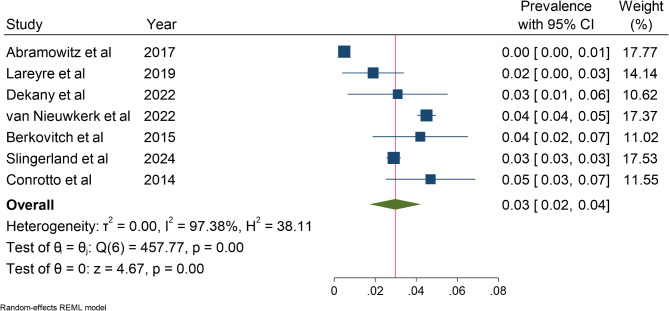
Results: A total of 10 observational studies were analyzed, revealing that diabetic patients were generally younger than non-diabetic patients. The 30-day mortality rate was lower in non-diabetics (0.03 [0.02-0.04]) compared to diabetics (0.04 [0.03-0.05]). However, the hazard ratio for death beyond 30 days in diabetics was 2.05 (95% CI: 0.91-4.60, p = 0.08), and at one year, it was 1.04 (95% CI: 0.78-1.39, p = 0.77), with neither result reaching statistical significance. Meta-regression analysis showed that non-insulin-treated diabetes was significantly associated with an increased risk of acute kidney injury (AKI) compared to non-diabetics, with a log odds ratio (LogOR) of 0.3393 (p = 0.035) in one analysis and 0.3166 (p = 0.028) in another, confirming a statistically significant increase in AKI risk.
Conclusions: This review highlights that while diabetes slightly increases short-term mortality after TAVI, long-term survival remains comparable to non-diabetic patients. However, non-insulin-treated diabetes significantly raises the risk of acute kidney injury (AKI), emphasizing the need for enhanced renal protection and perioperative management.
期刊介绍:
BMC Cardiovascular Disorders is an open access, peer-reviewed journal that considers articles on all aspects of the prevention, diagnosis and management of disorders of the heart and circulatory system, as well as related molecular and cell biology, genetics, pathophysiology, epidemiology, and controlled trials.





 京公网安备 11010802042870号
京ICP备2023020795号-1
京公网安备 11010802042870号
京ICP备2023020795号-1

 分享
分享
 求助内容:
求助内容: 应助结果提醒方式:
 扫码关注我们
