The combination of poly(ADP-ribose) polymerase inhibitor and statin inhibits the proliferation of human castration-resistant and taxane-resistant prostate cancer cells in vitro and in vivo.
{"title":"The combination of poly(ADP-ribose) polymerase inhibitor and statin inhibits the proliferation of human castration-resistant and taxane-resistant prostate cancer cells in vitro and in vivo.","authors":"Yoshitaka Sekine, Daisuke Oka, Akira Ohtsu, Hiroshi Nakayama, Takeshi Miyao, Yoshiyuki Miyazawa, Seiji Arai, Hidekazu Koike, Hiroshi Matsui, Yasuhiro Shibata, Kazuhiro Suzuki","doi":"10.1186/s12885-025-13895-6","DOIUrl":null,"url":null,"abstract":"<p><strong>Background: </strong>Olaparib exhibits antitumor effects in castration-resistant prostate cancer patients with germline mutations in DNA repair genes. We previously reported that simvastatin reduced the expression of DNA repair genes in PC-3 cells. The efficacy of combination therapy using olaparib and simvastatin as \"BRCAness\" in castration-resistant and taxane-resistant prostate cancers was evaluated in this study.</p><p><strong>Methods: </strong>PC-3, LNCaP, and 22Rv1 human prostate cancer cell lines were used to develop androgen-independent LNCaP cells (LNCaP-LA). mRNA and protein expression levels were evaluated by quantitative real-time polymerase chain reaction and western blot analysis, respectively. Cell viability was determined using the MTS assay and cell counts. All evaluations were performed on cells treated with simvastatin with or without olaparib.</p><p><strong>Results: </strong>The mRNA levels of BRCA1, BRCA2, RAD51, FANCD2, FANCG, FANCA, BARD1, RFC3, RFC4, and RFC5, which are known DNA repair genes, were downregulated by simvastatin in androgen-independent prostate cancer cells, such as PC-3, LNCaP-LA, and 22Rv1 cells. In contrast, the expression of all these genes remained unchanged in androgen-dependent LNCaP cells following treatment with simvastatin. Furthermore, simvastatin increased the expression of above stated genes in normal prostate stromal cells (PrSC). The reduction in BRCA1 and BRCA2 expression following siRNA transfection increased the cytocidal effects of Olaparib in PC-3 and LNCaP-LA cells. The combination of olaparib and simvastatin further inhibited cell proliferation compared to monotherapy with either drug in PC-3, 22Rv1, and LNCaP-LA cells but not in PrSC cells. In a 22Rv1-derived mouse xenograft model, the combination of olaparib and simvastatin enhanced the inhibition of cell proliferation. Moreover, we established a 22Rv1 cell line with acquired resistance to Cabazitaxel (22Rv1-CR). In 22Rv1-CR cells, simvastatin also decreased the expression of BRCA1, BRCA2, and FANCA, and the combination of olaparib and simvastatin further enhanced the inhibition of cell proliferation compared with treatment with either of the drugs alone.</p><p><strong>Conclusions: </strong>Simvastatin altered the expression of several genes associated with DNA repair in castration-resistant and taxane-resistant prostate cancer cells. The combination of poly (ADP-ribose) polymerase inhibitors and drugs that decrease DNA repair gene expression can potentially affect castration-resistant and taxane-resistant prostate cancer growth.</p>","PeriodicalId":9131,"journal":{"name":"BMC Cancer","volume":"25 1","pages":"521"},"PeriodicalIF":3.4000,"publicationDate":"2025-03-21","publicationTypes":"Journal Article","fieldsOfStudy":null,"isOpenAccess":false,"openAccessPdf":"https://www.ncbi.nlm.nih.gov/pmc/articles/PMC11929194/pdf/","citationCount":"0","resultStr":null,"platform":"Semanticscholar","paperid":null,"PeriodicalName":"BMC Cancer","FirstCategoryId":"3","ListUrlMain":"https://doi.org/10.1186/s12885-025-13895-6","RegionNum":2,"RegionCategory":"医学","ArticlePicture":[],"TitleCN":null,"AbstractTextCN":null,"PMCID":null,"EPubDate":"","PubModel":"","JCR":"Q2","JCRName":"ONCOLOGY","Score":null,"Total":0}
引用次数: 0
Abstract
Background: Olaparib exhibits antitumor effects in castration-resistant prostate cancer patients with germline mutations in DNA repair genes. We previously reported that simvastatin reduced the expression of DNA repair genes in PC-3 cells. The efficacy of combination therapy using olaparib and simvastatin as "BRCAness" in castration-resistant and taxane-resistant prostate cancers was evaluated in this study.
Methods: PC-3, LNCaP, and 22Rv1 human prostate cancer cell lines were used to develop androgen-independent LNCaP cells (LNCaP-LA). mRNA and protein expression levels were evaluated by quantitative real-time polymerase chain reaction and western blot analysis, respectively. Cell viability was determined using the MTS assay and cell counts. All evaluations were performed on cells treated with simvastatin with or without olaparib.
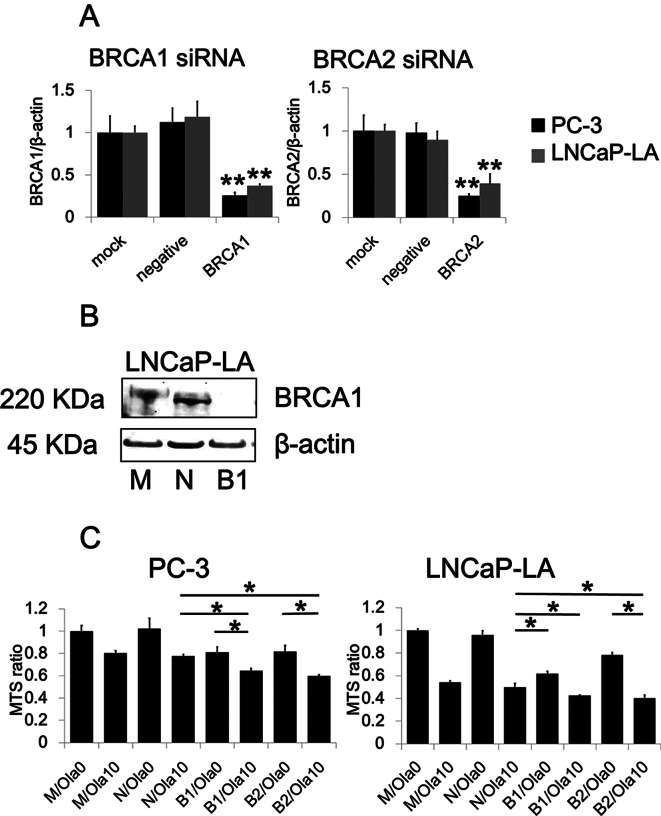
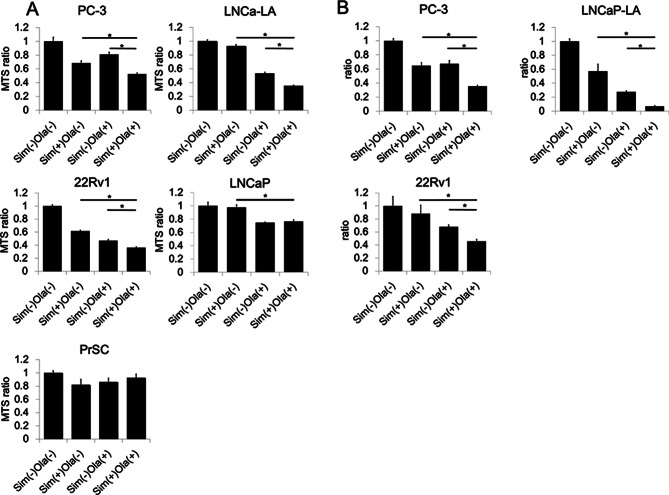
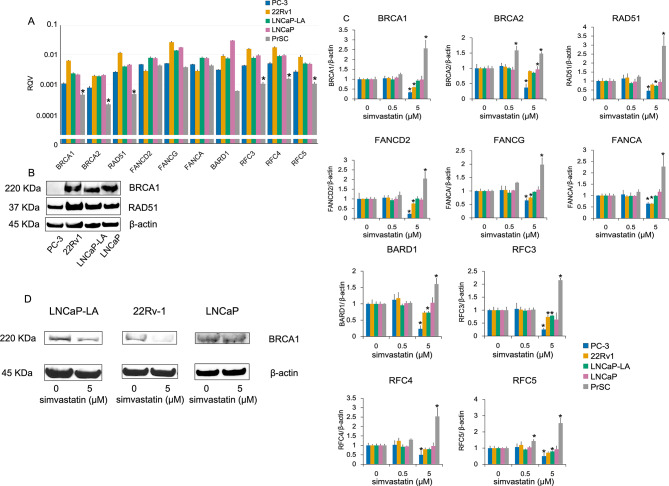
Results: The mRNA levels of BRCA1, BRCA2, RAD51, FANCD2, FANCG, FANCA, BARD1, RFC3, RFC4, and RFC5, which are known DNA repair genes, were downregulated by simvastatin in androgen-independent prostate cancer cells, such as PC-3, LNCaP-LA, and 22Rv1 cells. In contrast, the expression of all these genes remained unchanged in androgen-dependent LNCaP cells following treatment with simvastatin. Furthermore, simvastatin increased the expression of above stated genes in normal prostate stromal cells (PrSC). The reduction in BRCA1 and BRCA2 expression following siRNA transfection increased the cytocidal effects of Olaparib in PC-3 and LNCaP-LA cells. The combination of olaparib and simvastatin further inhibited cell proliferation compared to monotherapy with either drug in PC-3, 22Rv1, and LNCaP-LA cells but not in PrSC cells. In a 22Rv1-derived mouse xenograft model, the combination of olaparib and simvastatin enhanced the inhibition of cell proliferation. Moreover, we established a 22Rv1 cell line with acquired resistance to Cabazitaxel (22Rv1-CR). In 22Rv1-CR cells, simvastatin also decreased the expression of BRCA1, BRCA2, and FANCA, and the combination of olaparib and simvastatin further enhanced the inhibition of cell proliferation compared with treatment with either of the drugs alone.
Conclusions: Simvastatin altered the expression of several genes associated with DNA repair in castration-resistant and taxane-resistant prostate cancer cells. The combination of poly (ADP-ribose) polymerase inhibitors and drugs that decrease DNA repair gene expression can potentially affect castration-resistant and taxane-resistant prostate cancer growth.
期刊介绍:
BMC Cancer is an open access, peer-reviewed journal that considers articles on all aspects of cancer research, including the pathophysiology, prevention, diagnosis and treatment of cancers. The journal welcomes submissions concerning molecular and cellular biology, genetics, epidemiology, and clinical trials.




 京公网安备 11010802042870号
京ICP备2023020795号-1
京公网安备 11010802042870号
京ICP备2023020795号-1

 分享
分享
 求助内容:
求助内容: 应助结果提醒方式:
 扫码关注我们
