Lei Dai, Kun Ye, Gaosheng Yao, Juan Lin, Zhiping Tan, Jinhuan Wei, Yanchang Hu, Junhang Luo, Yong Fang, Wei Chen
{"title":"Using machine learning for predicting cancer-specific mortality in bladder cancer patients undergoing radical cystectomy: a SEER-based study.","authors":"Lei Dai, Kun Ye, Gaosheng Yao, Juan Lin, Zhiping Tan, Jinhuan Wei, Yanchang Hu, Junhang Luo, Yong Fang, Wei Chen","doi":"10.1186/s12885-025-13942-2","DOIUrl":null,"url":null,"abstract":"<p><strong>Background: </strong>Accurately assessing the prognosis of bladder cancer patients after radical cystectomy has important clinical and research implications. Current models, based on traditional statistical approaches and complex variables, have limited performance. We aimed to develop a machine learning (ML)-based prognostic model to predict 5-year cancer-specific mortality (CSM) in bladder cancer patients undergoing radical cystectomy, and compare its performance with current validated models.</p><p><strong>Methods: </strong>Patients were selected from the Surveillance, Epidemiology, and End Results database and the First Affiliated Hospital of Sun Yat-sen University for model construction and validation. We used univariate and multivariate Cox regression to select variables with independent prognostic significance for inclusion in the model's construction. Six ML algorithms and Cox proportional hazards regression were used to construct prediction models. Concordance index (C-index) and Brier scores were used to compare the discrimination and calibration of these models. The Shapley additive explanation method was used to explain the best-performing model. Finally, we compared this model with three existing prognostic models in urothelial carcinoma patients using C-index, area under the receiver operating characteristic curve (AUC), Brier scores, calibration curves, and decision curve analysis (DCA).</p><p><strong>Results: </strong>This study included 8,380 patients, with 6,656 in the training set, 1,664 in the internal validation set, and 60 in the external validation set. Eight features were ultimately identified to build models. The Light Gradient Boosting Machine (LightGBM) model showed the best performance in predicting 5-year CSM in bladder cancer patients undergoing radical cystectomy (internal validation: C-index = 0.723, Brier score = 0.191; external validation: C-index = 0.791, Brier score = 0.134). The lymph node density and tumor stage have the most significant impact on the prediction. In comparison with current validated models, our model also demonstrated the best discrimination and calibration (internal validation: C-index = 0.718, AUC = 0.779, Brier score = 0.191; external validation: C-index = 0.789, AUC = 0.884, Brier score = 0.137). Finally, calibration curves and DCA exhibited better predictive performance as well.</p><p><strong>Conclusions: </strong>We successfully developed an explainable ML model for predicting 5-year CSM after radical cystectomy in bladder cancer patients, and it demonstrated better performance compared to existing models.</p>","PeriodicalId":9131,"journal":{"name":"BMC Cancer","volume":"25 1","pages":"523"},"PeriodicalIF":3.4000,"publicationDate":"2025-03-21","publicationTypes":"Journal Article","fieldsOfStudy":null,"isOpenAccess":false,"openAccessPdf":"https://www.ncbi.nlm.nih.gov/pmc/articles/PMC11929216/pdf/","citationCount":"0","resultStr":null,"platform":"Semanticscholar","paperid":null,"PeriodicalName":"BMC Cancer","FirstCategoryId":"3","ListUrlMain":"https://doi.org/10.1186/s12885-025-13942-2","RegionNum":2,"RegionCategory":"医学","ArticlePicture":[],"TitleCN":null,"AbstractTextCN":null,"PMCID":null,"EPubDate":"","PubModel":"","JCR":"Q2","JCRName":"ONCOLOGY","Score":null,"Total":0}
引用次数: 0
Abstract
Background: Accurately assessing the prognosis of bladder cancer patients after radical cystectomy has important clinical and research implications. Current models, based on traditional statistical approaches and complex variables, have limited performance. We aimed to develop a machine learning (ML)-based prognostic model to predict 5-year cancer-specific mortality (CSM) in bladder cancer patients undergoing radical cystectomy, and compare its performance with current validated models.
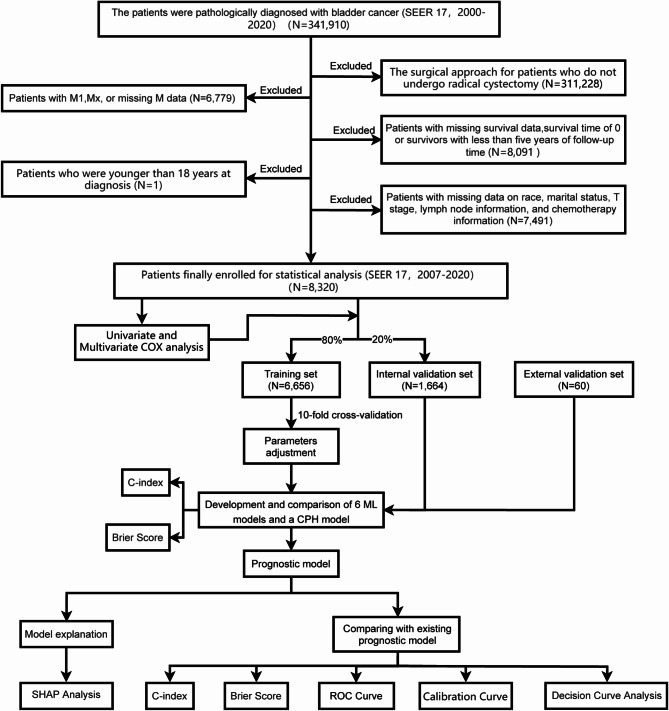
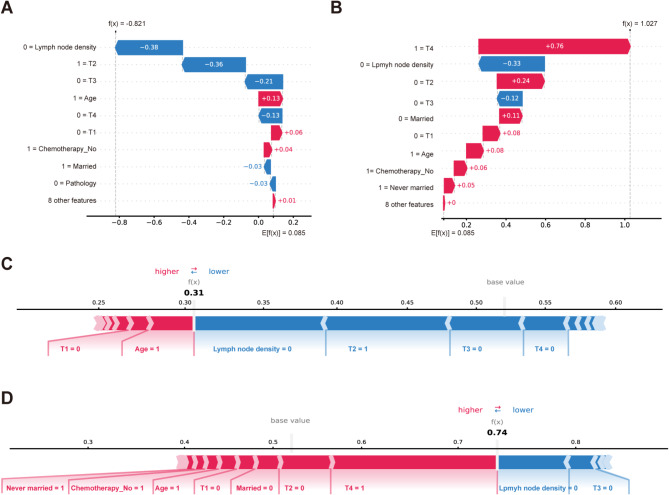
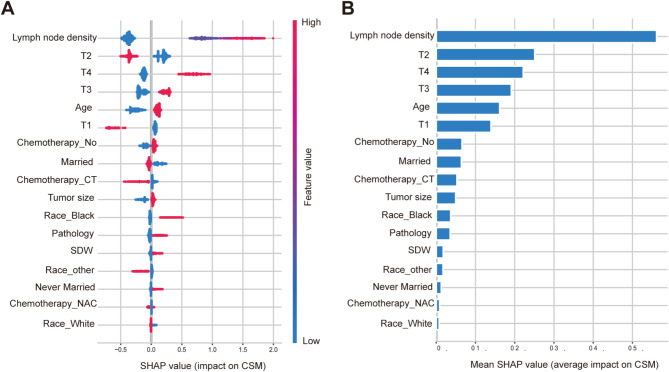
Methods: Patients were selected from the Surveillance, Epidemiology, and End Results database and the First Affiliated Hospital of Sun Yat-sen University for model construction and validation. We used univariate and multivariate Cox regression to select variables with independent prognostic significance for inclusion in the model's construction. Six ML algorithms and Cox proportional hazards regression were used to construct prediction models. Concordance index (C-index) and Brier scores were used to compare the discrimination and calibration of these models. The Shapley additive explanation method was used to explain the best-performing model. Finally, we compared this model with three existing prognostic models in urothelial carcinoma patients using C-index, area under the receiver operating characteristic curve (AUC), Brier scores, calibration curves, and decision curve analysis (DCA).
Results: This study included 8,380 patients, with 6,656 in the training set, 1,664 in the internal validation set, and 60 in the external validation set. Eight features were ultimately identified to build models. The Light Gradient Boosting Machine (LightGBM) model showed the best performance in predicting 5-year CSM in bladder cancer patients undergoing radical cystectomy (internal validation: C-index = 0.723, Brier score = 0.191; external validation: C-index = 0.791, Brier score = 0.134). The lymph node density and tumor stage have the most significant impact on the prediction. In comparison with current validated models, our model also demonstrated the best discrimination and calibration (internal validation: C-index = 0.718, AUC = 0.779, Brier score = 0.191; external validation: C-index = 0.789, AUC = 0.884, Brier score = 0.137). Finally, calibration curves and DCA exhibited better predictive performance as well.
Conclusions: We successfully developed an explainable ML model for predicting 5-year CSM after radical cystectomy in bladder cancer patients, and it demonstrated better performance compared to existing models.
期刊介绍:
BMC Cancer is an open access, peer-reviewed journal that considers articles on all aspects of cancer research, including the pathophysiology, prevention, diagnosis and treatment of cancers. The journal welcomes submissions concerning molecular and cellular biology, genetics, epidemiology, and clinical trials.




 京公网安备 11010802042870号
京ICP备2023020795号-1
京公网安备 11010802042870号
京ICP备2023020795号-1

 分享
分享
 求助内容:
求助内容: 应助结果提醒方式:
 扫码关注我们
