{"title":"Younger severe asthma patients with interleukin 4 (CC variant) and dupilumab treatment are more likely to achieve clinical remission.","authors":"Mona Al-Ahmad, Asmaa Ali, Wafaa Talat","doi":"10.1186/s12890-025-03578-0","DOIUrl":null,"url":null,"abstract":"<p><strong>Background and objectives: </strong>Asthma is a complex condition characterized by variable respiratory symptoms and chronic inflammation. In recent years, the use of biologics in severe asthma patients led to significant improvements in symptom control and disease outcomes. This has prompted healthcare providers to explore the possibility of achieving clinical remission (CR). This study aimed to evaluate the prevalence of clinical remission in severe asthma patients treated with biologics. Additionally, to identify factors associated with achieving clinical remission.</p><p><strong>Methods: </strong>The study recruited 116 patients from a national severe asthma registry in Kuwait, focusing on patients who had been treated with biologic therapy for at least 12 months. CR was defined as the absence of exacerbations and oral corticosteroids (OCS) use, an Asthma Control Test (ACT) score of ≥ 20, Asthma Control Questionnaire (ACQ-6) score of ≤ 0.75 and forced expiratory volume in one second (FEV1) ≥ 80% predicted. Data were collected on demographics, clinical, and functional parameters; including biomarkers such as blood eosinophils count (BEC), total immunoglobulin E (IgE), and fractional exhaled nitric oxide (FeNO), as well as the polymorphism patterns of the interleukin-4 (IL-4) and tumor necrosis factor-alpha (TNF-α) genes.</p><p><strong>Results: </strong>Patients with severe asthma were predominantly female (68.9%) with an average age of 54.09 years. Most had adult-onset asthma (67.3%), comorbid allergic rhinitis (AR) (81.03%), and experienced frequent exacerbations, with a median of four corticosteroids-requiring flare-ups per year. The allergic eosinophilic phenotype was common (74.14%), and a significant portion carried the CC genotype of the IL-4 gene (51.72%) or the GG genotype of the TNFα gene (57.76%). Biologic therapy significantly improved asthma control, reduced exacerbations and OCS use while improved lung function (p = 0.001 for all). About 18.1% of patients achieved CR after at least 12 months of biologic therapy, with dupilumab being the most effective, especially in biologic-naive patients. A multiple logistic regression analysis found that increasing age was negatively associated with CR (OR 0.95, p = 0.02), while the CC genotype of the IL-4 gene (OR 4.57, p = 0.008) and the use of dupilumab (OR 3.63, p = 0.001) were strong positive predictors of CR.</p><p><strong>Conclusion: </strong>This study suggested that CR can be achieved in patients with severe asthma. However, biologic therapy, particularly dupilumab, offers a promising avenue for achieving CR in comparison to other biologics, especially in younger patients with specific genetic profiles (CC genotype of the IL-4 gene).</p>","PeriodicalId":9148,"journal":{"name":"BMC Pulmonary Medicine","volume":"25 1","pages":"131"},"PeriodicalIF":2.8000,"publicationDate":"2025-03-21","publicationTypes":"Journal Article","fieldsOfStudy":null,"isOpenAccess":false,"openAccessPdf":"https://www.ncbi.nlm.nih.gov/pmc/articles/PMC11929188/pdf/","citationCount":"0","resultStr":null,"platform":"Semanticscholar","paperid":null,"PeriodicalName":"BMC Pulmonary Medicine","FirstCategoryId":"3","ListUrlMain":"https://doi.org/10.1186/s12890-025-03578-0","RegionNum":3,"RegionCategory":"医学","ArticlePicture":[],"TitleCN":null,"AbstractTextCN":null,"PMCID":null,"EPubDate":"","PubModel":"","JCR":"Q2","JCRName":"RESPIRATORY SYSTEM","Score":null,"Total":0}
引用次数: 0
Abstract
Background and objectives: Asthma is a complex condition characterized by variable respiratory symptoms and chronic inflammation. In recent years, the use of biologics in severe asthma patients led to significant improvements in symptom control and disease outcomes. This has prompted healthcare providers to explore the possibility of achieving clinical remission (CR). This study aimed to evaluate the prevalence of clinical remission in severe asthma patients treated with biologics. Additionally, to identify factors associated with achieving clinical remission.
Methods: The study recruited 116 patients from a national severe asthma registry in Kuwait, focusing on patients who had been treated with biologic therapy for at least 12 months. CR was defined as the absence of exacerbations and oral corticosteroids (OCS) use, an Asthma Control Test (ACT) score of ≥ 20, Asthma Control Questionnaire (ACQ-6) score of ≤ 0.75 and forced expiratory volume in one second (FEV1) ≥ 80% predicted. Data were collected on demographics, clinical, and functional parameters; including biomarkers such as blood eosinophils count (BEC), total immunoglobulin E (IgE), and fractional exhaled nitric oxide (FeNO), as well as the polymorphism patterns of the interleukin-4 (IL-4) and tumor necrosis factor-alpha (TNF-α) genes.
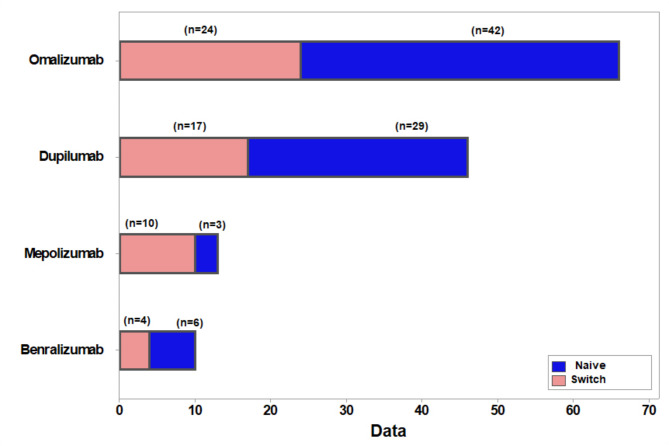
Results: Patients with severe asthma were predominantly female (68.9%) with an average age of 54.09 years. Most had adult-onset asthma (67.3%), comorbid allergic rhinitis (AR) (81.03%), and experienced frequent exacerbations, with a median of four corticosteroids-requiring flare-ups per year. The allergic eosinophilic phenotype was common (74.14%), and a significant portion carried the CC genotype of the IL-4 gene (51.72%) or the GG genotype of the TNFα gene (57.76%). Biologic therapy significantly improved asthma control, reduced exacerbations and OCS use while improved lung function (p = 0.001 for all). About 18.1% of patients achieved CR after at least 12 months of biologic therapy, with dupilumab being the most effective, especially in biologic-naive patients. A multiple logistic regression analysis found that increasing age was negatively associated with CR (OR 0.95, p = 0.02), while the CC genotype of the IL-4 gene (OR 4.57, p = 0.008) and the use of dupilumab (OR 3.63, p = 0.001) were strong positive predictors of CR.
Conclusion: This study suggested that CR can be achieved in patients with severe asthma. However, biologic therapy, particularly dupilumab, offers a promising avenue for achieving CR in comparison to other biologics, especially in younger patients with specific genetic profiles (CC genotype of the IL-4 gene).
期刊介绍:
BMC Pulmonary Medicine is an open access, peer-reviewed journal that considers articles on all aspects of the prevention, diagnosis and management of pulmonary and associated disorders, as well as related molecular genetics, pathophysiology, and epidemiology.





 京公网安备 11010802042870号
京ICP备2023020795号-1
京公网安备 11010802042870号
京ICP备2023020795号-1

 分享
分享
 求助内容:
求助内容: 应助结果提醒方式:
 扫码关注我们
