Vojtěch Smekal, Marta Poyo Solanas, Beatrice de Gelder
{"title":"Disentangling dynamic information and temporal order processing of human action perception.","authors":"Vojtěch Smekal, Marta Poyo Solanas, Beatrice de Gelder","doi":"10.1093/pnasnexus/pgaf067","DOIUrl":null,"url":null,"abstract":"<p><p>Human action perception involves processing dynamic information in its temporal order. However, previous studies investigating action perception have not yet distinguished between the presence of dynamic information and the temporal order in which dynamic information unfolds within the context of a single action. Using 3-T functional MRI, we presented participants with brief, single-actor, whole-body actions viewed either as still images, as intact videos, or as videos consisting of short dynamic fragments with the order temporally scrambled. Regions classically associated with action perception showed higher activity for dynamic compared with still stimuli, regardless of the temporal continuity in the dynamic stimuli. However, two clusters in the right inferior parietal lobule (IPL) differentiated between the intact and temporally scrambled videos. Specifically, the right angular gyrus (AG) showed a preference for the intact videos over the temporally scrambled ones, while the right supramarginal gyrus (SMG) showed the opposite pattern. Combined with previous literature, we argue for the role of the IPL as a temporospatial buffer, with the SMG processing dynamic information on short timescales and the AG processing on longer timescales. Our results underscore the need to consider dynamic information and temporal order separately in investigations of action perception.</p>","PeriodicalId":74468,"journal":{"name":"PNAS nexus","volume":"4 3","pages":"pgaf067"},"PeriodicalIF":3.8000,"publicationDate":"2025-03-24","publicationTypes":"Journal Article","fieldsOfStudy":null,"isOpenAccess":false,"openAccessPdf":"https://www.ncbi.nlm.nih.gov/pmc/articles/PMC11931616/pdf/","citationCount":"0","resultStr":null,"platform":"Semanticscholar","paperid":null,"PeriodicalName":"PNAS nexus","FirstCategoryId":"1085","ListUrlMain":"https://doi.org/10.1093/pnasnexus/pgaf067","RegionNum":0,"RegionCategory":null,"ArticlePicture":[],"TitleCN":null,"AbstractTextCN":null,"PMCID":null,"EPubDate":"2025/3/1 0:00:00","PubModel":"eCollection","JCR":"Q2","JCRName":"MULTIDISCIPLINARY SCIENCES","Score":null,"Total":0}
引用次数: 0
Abstract
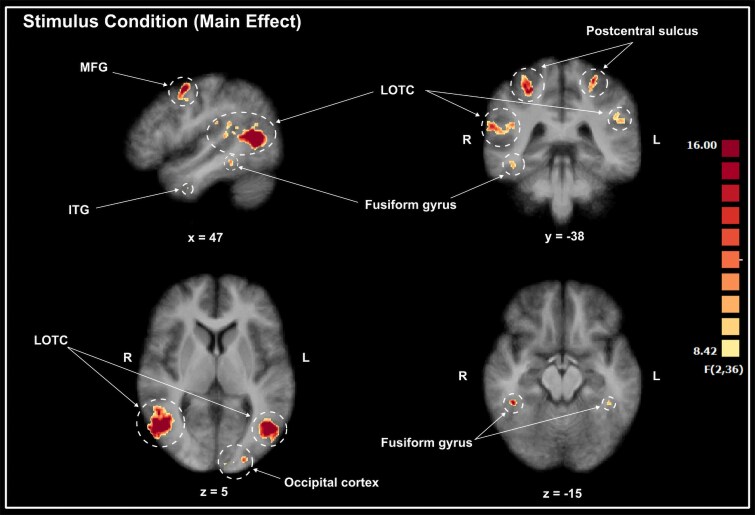
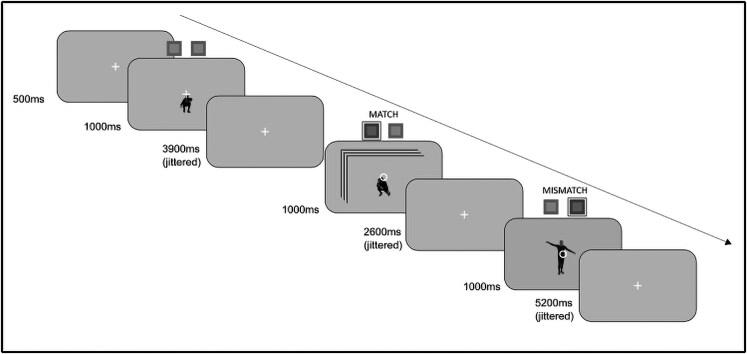
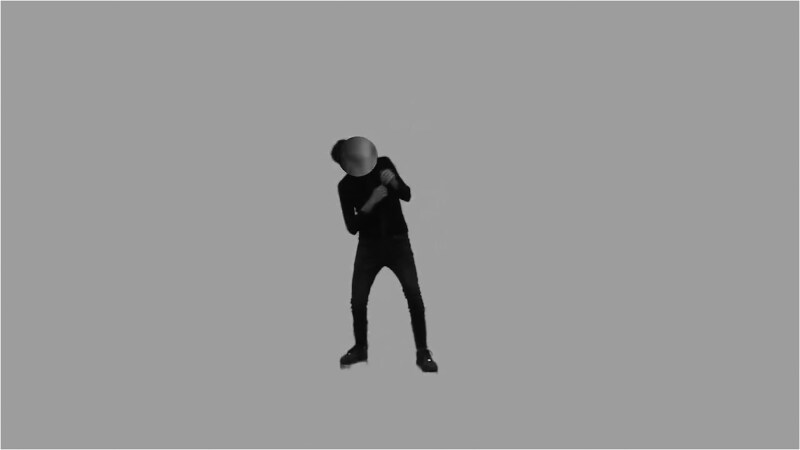
Human action perception involves processing dynamic information in its temporal order. However, previous studies investigating action perception have not yet distinguished between the presence of dynamic information and the temporal order in which dynamic information unfolds within the context of a single action. Using 3-T functional MRI, we presented participants with brief, single-actor, whole-body actions viewed either as still images, as intact videos, or as videos consisting of short dynamic fragments with the order temporally scrambled. Regions classically associated with action perception showed higher activity for dynamic compared with still stimuli, regardless of the temporal continuity in the dynamic stimuli. However, two clusters in the right inferior parietal lobule (IPL) differentiated between the intact and temporally scrambled videos. Specifically, the right angular gyrus (AG) showed a preference for the intact videos over the temporally scrambled ones, while the right supramarginal gyrus (SMG) showed the opposite pattern. Combined with previous literature, we argue for the role of the IPL as a temporospatial buffer, with the SMG processing dynamic information on short timescales and the AG processing on longer timescales. Our results underscore the need to consider dynamic information and temporal order separately in investigations of action perception.
人类的动作感知包括按照时间顺序处理动态信息。然而,以往对动作感知的研究尚未区分动态信息的存在和动态信息在单个动作中展开的时间顺序。我们使用 3 T 功能磁共振成像技术,向参与者展示了简短的单人全身动作,这些动作既可以是静止图像,也可以是完整的视频,还可以是由短小的动态片段组成的视频,其顺序在时间上被打乱。与静态刺激相比,无论动态刺激的时间连续性如何,与动作感知相关的经典区域在动态刺激下都表现出更高的活动性。然而,右侧下顶叶(IPL)的两个集群区分了完整视频和乱序视频。具体来说,右侧角回(AG)显示出对完整视频的偏好,而非时间上扰乱的视频,而右侧边际上回(SMG)则显示出相反的模式。结合以前的文献,我们认为 IPL 起着时间空间缓冲器的作用,SMG 处理短时标的动态信息,而 AG 则处理较长时标的动态信息。我们的研究结果强调,在研究动作感知时,有必要将动态信息和时间顺序分开考虑。



 京公网安备 11010802042870号
京ICP备2023020795号-1
京公网安备 11010802042870号
京ICP备2023020795号-1

 分享
分享

 求助内容:
求助内容: 应助结果提醒方式:
 扫码关注我们
