{"title":"Macrophage Subpopulation Promotes Skeletal Muscle Regeneration Through HGF/MET Signaling-Mediated Skeletal Muscle Stem Cell Proliferation","authors":"Hiroyuki Koike, Miho Sugimura, Rie Ouchi, Yuki Yoshimoto, Ichiro Manabe, Yumiko Oishi","doi":"10.1111/acel.70042","DOIUrl":null,"url":null,"abstract":"<p>Macrophages are key regulators of skeletal muscle regeneration, yet the specific macrophage subpopulations responsible for this process and their cell–cell interactions remain insufficiently understood, as does the mechanism underlying age-related impairment of skeletal muscle regeneration. We utilized single-cell RNA sequencing to identify transcriptionally distinct macrophage subpopulations within skeletal muscle from young (8-week-old) and aged (24-month-old) mice. Among them, the Mac_1 subpopulation interacted with muscle satellite cells (MuSCs) and promoted their proliferation through HGF/c-Met signaling that suppressed <i>Cdkn1b</i> expression. This interaction was critical for efficient muscle regeneration in vivo and in a 3D-muscle organoid model. The age-related decline in muscle regeneration was associated with reduced HGF expression in Mac_1 macrophages. Administration of exogenous HGF to aged mice and macrophage-depleted young mice partially rescued the impaired muscle regeneration. This study elucidates a mechanism of skeletal muscle regeneration that offers insight into potential strategies for preventing and treating skeletal muscle diseases, including sarcopenia.</p>","PeriodicalId":55543,"journal":{"name":"Aging Cell","volume":"24 6","pages":""},"PeriodicalIF":7.1000,"publicationDate":"2025-03-25","publicationTypes":"Journal Article","fieldsOfStudy":null,"isOpenAccess":false,"openAccessPdf":"https://onlinelibrary.wiley.com/doi/epdf/10.1111/acel.70042","citationCount":"0","resultStr":null,"platform":"Semanticscholar","paperid":null,"PeriodicalName":"Aging Cell","FirstCategoryId":"99","ListUrlMain":"https://onlinelibrary.wiley.com/doi/10.1111/acel.70042","RegionNum":1,"RegionCategory":"医学","ArticlePicture":[],"TitleCN":null,"AbstractTextCN":null,"PMCID":null,"EPubDate":"","PubModel":"","JCR":"Q1","JCRName":"Biochemistry, Genetics and Molecular Biology","Score":null,"Total":0}
引用次数: 0
Abstract
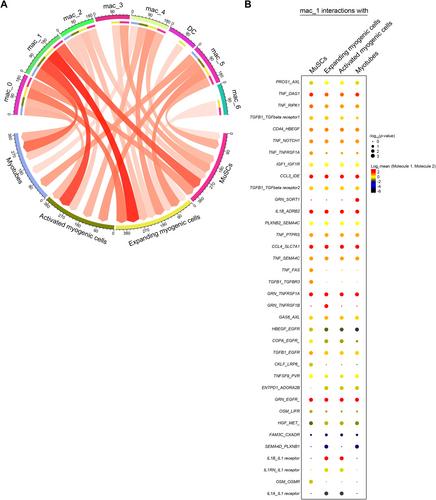
Macrophages are key regulators of skeletal muscle regeneration, yet the specific macrophage subpopulations responsible for this process and their cell–cell interactions remain insufficiently understood, as does the mechanism underlying age-related impairment of skeletal muscle regeneration. We utilized single-cell RNA sequencing to identify transcriptionally distinct macrophage subpopulations within skeletal muscle from young (8-week-old) and aged (24-month-old) mice. Among them, the Mac_1 subpopulation interacted with muscle satellite cells (MuSCs) and promoted their proliferation through HGF/c-Met signaling that suppressed Cdkn1b expression. This interaction was critical for efficient muscle regeneration in vivo and in a 3D-muscle organoid model. The age-related decline in muscle regeneration was associated with reduced HGF expression in Mac_1 macrophages. Administration of exogenous HGF to aged mice and macrophage-depleted young mice partially rescued the impaired muscle regeneration. This study elucidates a mechanism of skeletal muscle regeneration that offers insight into potential strategies for preventing and treating skeletal muscle diseases, including sarcopenia.
期刊介绍:
Aging Cell, an Open Access journal, delves into fundamental aspects of aging biology. It comprehensively explores geroscience, emphasizing research on the mechanisms underlying the aging process and the connections between aging and age-related diseases.



 京公网安备 11010802042870号
京ICP备2023020795号-1
京公网安备 11010802042870号
京ICP备2023020795号-1

 分享
分享
 求助内容:
求助内容: 应助结果提醒方式:
 扫码关注我们
