Helena Lindgren, Kristina Lindvall, Linda Richter-Sundberg
{"title":"Responsible design of an AI system for health behavior change-an ethics perspective on the participatory design process of the STAR-C digital coach.","authors":"Helena Lindgren, Kristina Lindvall, Linda Richter-Sundberg","doi":"10.3389/fdgth.2025.1436347","DOIUrl":null,"url":null,"abstract":"<p><strong>Introduction: </strong>The increased focus on the ethical aspects of artificial intelligence (AI) follows the increased use in society of data-driven analyses of personal information collected in the use of digital applications for various purposes that the individual is often not aware of. The purpose of this study is to investigate how values and norms are transformed into design choices in a participatory design process of an AI-based digital coaching application for promoting health and to prevent cardiovascular diseases, where a variety of expertise and perspectives are represented.</p><p><strong>Method: </strong>A participatory design process was conducted engaging domain professionals and potential users in co-design workshops, interviews and observations of prototype use. The design process and outcome was analyzed from a responsible design of AI systems perspective.</p><p><strong>Results: </strong>The results include deepened understanding of the values and norms underlying health coaching applications and how an AI-based intervention could provide person-tailored support in managing conflicting norms. Further, the study contributes to increased awareness of the value of participatory design in achieving value-based design of AI systems aimed at promoting health through behavior change, and the inclusion of social norms as a design material in the process.</p><p><strong>Conclusion: </strong>It was concluded that the relationship between the anticipated future users and the organization(s) or enterprises developing and implementing the health-promoting application is directing which values are manifested in the application.</p>","PeriodicalId":73078,"journal":{"name":"Frontiers in digital health","volume":"7 ","pages":"1436347"},"PeriodicalIF":3.2000,"publicationDate":"2025-03-11","publicationTypes":"Journal Article","fieldsOfStudy":null,"isOpenAccess":false,"openAccessPdf":"https://www.ncbi.nlm.nih.gov/pmc/articles/PMC11934961/pdf/","citationCount":"0","resultStr":null,"platform":"Semanticscholar","paperid":null,"PeriodicalName":"Frontiers in digital health","FirstCategoryId":"1085","ListUrlMain":"https://doi.org/10.3389/fdgth.2025.1436347","RegionNum":0,"RegionCategory":null,"ArticlePicture":[],"TitleCN":null,"AbstractTextCN":null,"PMCID":null,"EPubDate":"2025/1/1 0:00:00","PubModel":"eCollection","JCR":"Q1","JCRName":"HEALTH CARE SCIENCES & SERVICES","Score":null,"Total":0}
引用次数: 0
Abstract
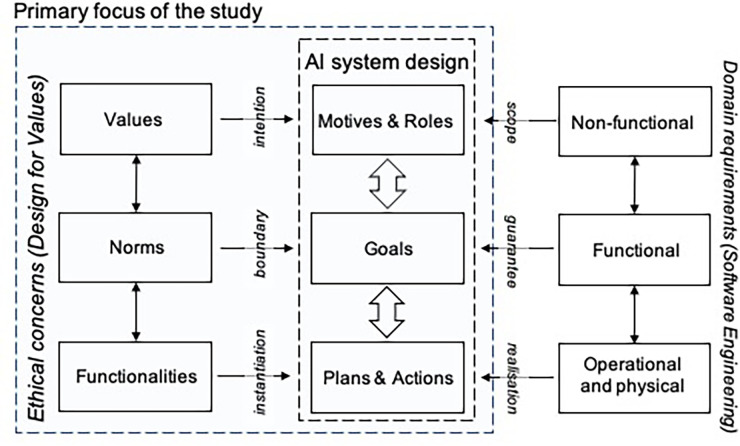
Introduction: The increased focus on the ethical aspects of artificial intelligence (AI) follows the increased use in society of data-driven analyses of personal information collected in the use of digital applications for various purposes that the individual is often not aware of. The purpose of this study is to investigate how values and norms are transformed into design choices in a participatory design process of an AI-based digital coaching application for promoting health and to prevent cardiovascular diseases, where a variety of expertise and perspectives are represented.
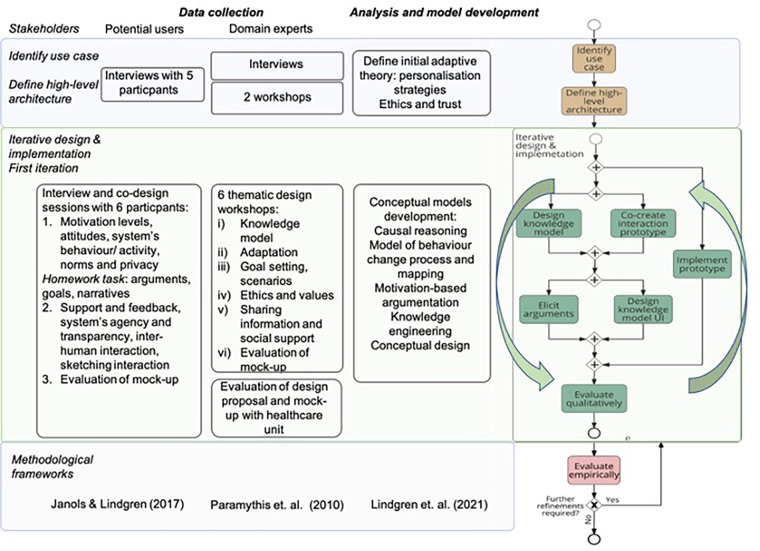
Method: A participatory design process was conducted engaging domain professionals and potential users in co-design workshops, interviews and observations of prototype use. The design process and outcome was analyzed from a responsible design of AI systems perspective.
Results: The results include deepened understanding of the values and norms underlying health coaching applications and how an AI-based intervention could provide person-tailored support in managing conflicting norms. Further, the study contributes to increased awareness of the value of participatory design in achieving value-based design of AI systems aimed at promoting health through behavior change, and the inclusion of social norms as a design material in the process.
Conclusion: It was concluded that the relationship between the anticipated future users and the organization(s) or enterprises developing and implementing the health-promoting application is directing which values are manifested in the application.



 京公网安备 11010802042870号
京ICP备2023020795号-1
京公网安备 11010802042870号
京ICP备2023020795号-1

 分享
分享

 求助内容:
求助内容: 应助结果提醒方式:
 扫码关注我们
