Rui-Qiang Jiao, Ming Li, Xi Chen, Mei-Ze Xu, Tian Ding, Xiao-Ping Gong, Zhuo-Mei Li, Xue-Yuan Liu, Yong-Min Liang
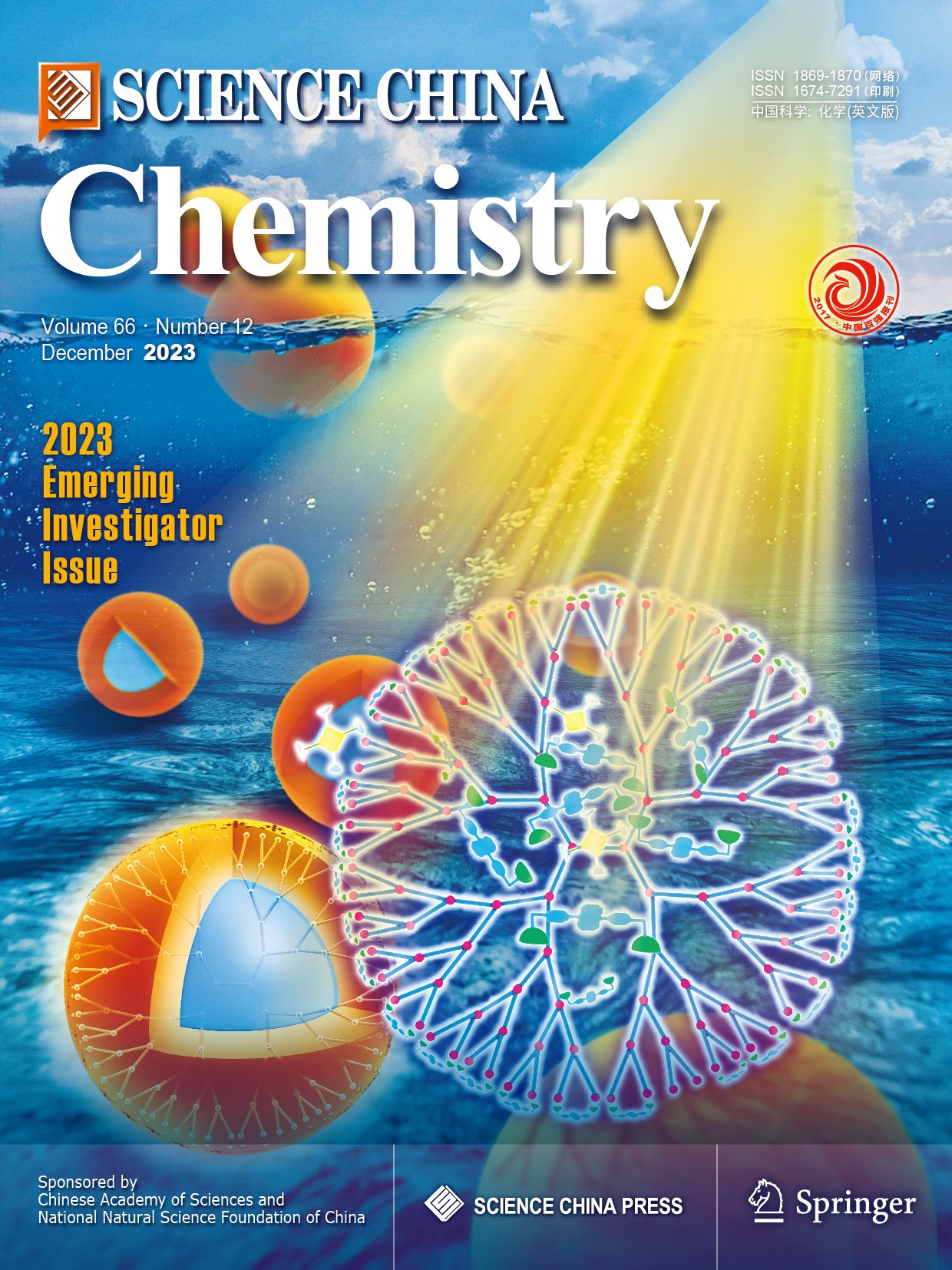
{"title":"Modular assembly of complex C-alkyl glycoside enabled via cooperative NHC and photoredox catalysis","authors":"Rui-Qiang Jiao, Ming Li, Xi Chen, Mei-Ze Xu, Tian Ding, Xiao-Ping Gong, Zhuo-Mei Li, Xue-Yuan Liu, Yong-Min Liang","doi":"10.1007/s11426-024-2348-y","DOIUrl":null,"url":null,"abstract":"<div><p><i>C</i>-Alkyl glycosides are found in natural products and are indispensable in drug development programs, owing to their diverse range of medicinal properties. Two-component reactions involving glycosyl radical addition are well documented and proved efficient for the <i>C</i>-alkyl glycosides synthesis. However, multicomponent reactions for the rapid and controllable construction of structurally diversified <i>C</i>-alkyl glycosides in a single step remains a significant challenge due to the issues associated with balancing reactivity, compatibility, and selectivity. Herein, we report an NHC and photoredox co-catalyzed three-component method to access complex and valuable <i>C</i>-alkyl glycosides. This protocol exhibits broad substrate scope and excellent chemo- and regioselectivity. Furthermore, nine types of sugars are compatible with this reaction. In addition, the generality of this catalytic strategy was further highlighted by the potential for scalable production, the feasibility of further modifications of the products and its successful application in the late-stage functionalization of pharmaceutical skeletons.</p><div><figure><div><div><picture><source><img></source></picture></div></div></figure></div></div>","PeriodicalId":772,"journal":{"name":"Science China Chemistry","volume":"68 4","pages":"1412 - 1417"},"PeriodicalIF":9.7000,"publicationDate":"2025-01-02","publicationTypes":"Journal Article","fieldsOfStudy":null,"isOpenAccess":false,"openAccessPdf":"","citationCount":"0","resultStr":null,"platform":"Semanticscholar","paperid":null,"PeriodicalName":"Science China Chemistry","FirstCategoryId":"1","ListUrlMain":"https://link.springer.com/article/10.1007/s11426-024-2348-y","RegionNum":1,"RegionCategory":"化学","ArticlePicture":[],"TitleCN":null,"AbstractTextCN":null,"PMCID":null,"EPubDate":"","PubModel":"","JCR":"Q1","JCRName":"CHEMISTRY, MULTIDISCIPLINARY","Score":null,"Total":0}
引用次数: 0
Abstract
C-Alkyl glycosides are found in natural products and are indispensable in drug development programs, owing to their diverse range of medicinal properties. Two-component reactions involving glycosyl radical addition are well documented and proved efficient for the C-alkyl glycosides synthesis. However, multicomponent reactions for the rapid and controllable construction of structurally diversified C-alkyl glycosides in a single step remains a significant challenge due to the issues associated with balancing reactivity, compatibility, and selectivity. Herein, we report an NHC and photoredox co-catalyzed three-component method to access complex and valuable C-alkyl glycosides. This protocol exhibits broad substrate scope and excellent chemo- and regioselectivity. Furthermore, nine types of sugars are compatible with this reaction. In addition, the generality of this catalytic strategy was further highlighted by the potential for scalable production, the feasibility of further modifications of the products and its successful application in the late-stage functionalization of pharmaceutical skeletons.
c -烷基糖苷存在于天然产物中,由于其多种药用特性,在药物开发项目中是不可或缺的。涉及糖基自由基加成的双组分反应被证明是有效的c -烷基糖苷的合成。然而,由于反应性、相容性和选择性的平衡问题,多组分反应在一步中快速、可控地构建结构多样化的c -烷基糖苷仍然是一个重大挑战。在此,我们报道了NHC和光氧化还原共催化的三组分方法来获得复杂和有价值的c -烷基糖苷。该方案具有广泛的底物范围和良好的化学和区域选择性。此外,有九种类型的糖与该反应相容。此外,这种催化策略的通用性进一步强调了可扩展生产的潜力,产品进一步修改的可行性以及其在药物骨架后期功能化中的成功应用。
期刊介绍:
Science China Chemistry, co-sponsored by the Chinese Academy of Sciences and the National Natural Science Foundation of China and published by Science China Press, publishes high-quality original research in both basic and applied chemistry. Indexed by Science Citation Index, it is a premier academic journal in the field.
Categories of articles include:
Highlights. Brief summaries and scholarly comments on recent research achievements in any field of chemistry.
Perspectives. Concise reports on thelatest chemistry trends of interest to scientists worldwide, including discussions of research breakthroughs and interpretations of important science and funding policies.
Reviews. In-depth summaries of representative results and achievements of the past 5–10 years in selected topics based on or closely related to the research expertise of the authors, providing a thorough assessment of the significance, current status, and future research directions of the field.



 京公网安备 11010802042870号
京ICP备2023020795号-1
京公网安备 11010802042870号
京ICP备2023020795号-1

 分享
分享
 求助内容:
求助内容: 应助结果提醒方式:
 扫码关注我们
