{"title":"Deep enteroscopy in children: techniques, applications, and future directions.","authors":"Brett J Hoskins","doi":"10.3389/fped.2025.1562075","DOIUrl":null,"url":null,"abstract":"<p><p>Deep enteroscopy, encompassing push enteroscopy (PE) and balloon-assisted enteroscopy (BAE), has revolutionized the diagnosis and treatment of pediatric small bowel disorders. This review examines the evolving role of these techniques in managing conditions such as obscure gastrointestinal bleeding, Crohn's disease, polyposis syndromes, strictures, and small bowel tumors. While PE is effective for both diagnostic and therapeutic interventions in the proximal small bowel, its limited insertion depth has driven the adoption of BAE techniques. These include single-balloon enteroscopy (SBE) and double-balloon enteroscopy (DBE), which provide deeper and more comprehensive access. Both BAE modalities offer greater insertion depth and stability, enabling advanced therapeutic interventions such as polypectomy, stricture dilation, and hemostasis. Pediatric-specific data demonstrate high diagnostic yields for BAE, with comparable outcomes between SBE and DBE. These techniques have proven safe across diverse indications, though younger children may experience slightly higher complication rates due to anatomical considerations. Despite these advancements, challenges persist, including a limited evidence base in pediatrics, barriers to training, and the need for standardized protocols. Additionally, emerging innovations such as artificial intelligence offer opportunities to enhance diagnostic accuracy and procedural efficiency. Comparative analyses of PE, BAE, and capsule endoscopy are necessary to refine procedural selection and optimize outcomes in pediatric patients. Furthermore, structured pediatric training programs and simulation-based learning could address competency gaps, ensuring safe and effective application of these techniques. By addressing current research gaps, embracing technological advancements, and tailoring approaches to pediatric populations, deep enteroscopy can continue to transform the management of small bowel disorders in children.</p>","PeriodicalId":12637,"journal":{"name":"Frontiers in Pediatrics","volume":"13 ","pages":"1562075"},"PeriodicalIF":2.0000,"publicationDate":"2025-03-12","publicationTypes":"Journal Article","fieldsOfStudy":null,"isOpenAccess":false,"openAccessPdf":"https://www.ncbi.nlm.nih.gov/pmc/articles/PMC11937097/pdf/","citationCount":"0","resultStr":null,"platform":"Semanticscholar","paperid":null,"PeriodicalName":"Frontiers in Pediatrics","FirstCategoryId":"3","ListUrlMain":"https://doi.org/10.3389/fped.2025.1562075","RegionNum":3,"RegionCategory":"医学","ArticlePicture":[],"TitleCN":null,"AbstractTextCN":null,"PMCID":null,"EPubDate":"2025/1/1 0:00:00","PubModel":"eCollection","JCR":"Q2","JCRName":"PEDIATRICS","Score":null,"Total":0}
引用次数: 0
Abstract
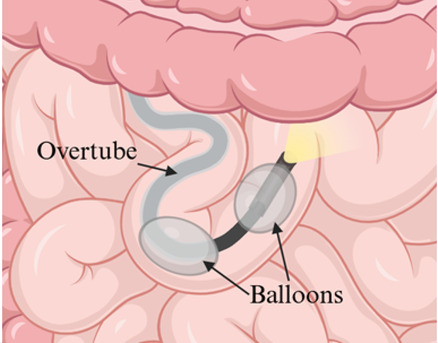
Deep enteroscopy, encompassing push enteroscopy (PE) and balloon-assisted enteroscopy (BAE), has revolutionized the diagnosis and treatment of pediatric small bowel disorders. This review examines the evolving role of these techniques in managing conditions such as obscure gastrointestinal bleeding, Crohn's disease, polyposis syndromes, strictures, and small bowel tumors. While PE is effective for both diagnostic and therapeutic interventions in the proximal small bowel, its limited insertion depth has driven the adoption of BAE techniques. These include single-balloon enteroscopy (SBE) and double-balloon enteroscopy (DBE), which provide deeper and more comprehensive access. Both BAE modalities offer greater insertion depth and stability, enabling advanced therapeutic interventions such as polypectomy, stricture dilation, and hemostasis. Pediatric-specific data demonstrate high diagnostic yields for BAE, with comparable outcomes between SBE and DBE. These techniques have proven safe across diverse indications, though younger children may experience slightly higher complication rates due to anatomical considerations. Despite these advancements, challenges persist, including a limited evidence base in pediatrics, barriers to training, and the need for standardized protocols. Additionally, emerging innovations such as artificial intelligence offer opportunities to enhance diagnostic accuracy and procedural efficiency. Comparative analyses of PE, BAE, and capsule endoscopy are necessary to refine procedural selection and optimize outcomes in pediatric patients. Furthermore, structured pediatric training programs and simulation-based learning could address competency gaps, ensuring safe and effective application of these techniques. By addressing current research gaps, embracing technological advancements, and tailoring approaches to pediatric populations, deep enteroscopy can continue to transform the management of small bowel disorders in children.
期刊介绍:
Frontiers in Pediatrics (Impact Factor 2.33) publishes rigorously peer-reviewed research broadly across the field, from basic to clinical research that meets ongoing challenges in pediatric patient care and child health. Field Chief Editors Arjan Te Pas at Leiden University and Michael L. Moritz at the Children''s Hospital of Pittsburgh are supported by an outstanding Editorial Board of international experts. This multidisciplinary open-access journal is at the forefront of disseminating and communicating scientific knowledge and impactful discoveries to researchers, academics, clinicians and the public worldwide.
Frontiers in Pediatrics also features Research Topics, Frontiers special theme-focused issues managed by Guest Associate Editors, addressing important areas in pediatrics. In this fashion, Frontiers serves as an outlet to publish the broadest aspects of pediatrics in both basic and clinical research, including high-quality reviews, case reports, editorials and commentaries related to all aspects of pediatrics.






 京公网安备 11010802042870号
京ICP备2023020795号-1
京公网安备 11010802042870号
京ICP备2023020795号-1

 分享
分享
 求助内容:
求助内容: 应助结果提醒方式:
 扫码关注我们
