Brian J Lithgow, Chandan Saha, Zeinab Dastgheib, Zahra Moussavi
{"title":"Surface Versus Penetrative rTMS Stimulation May Be More Effective for AD Patients with Cerebrovascular Disease.","authors":"Brian J Lithgow, Chandan Saha, Zeinab Dastgheib, Zahra Moussavi","doi":"10.1177/26331055251328355","DOIUrl":null,"url":null,"abstract":"<p><p>Repetitive Transcranial Magnetic Stimulation (rTMS) has been applied as an investigational therapy for Alzheimer's Disease (AD). The recent largest (N = 135) double-blind study with 6 months post-treatment follow-up investigating rTMS efficacy as a treatment for AD found about 72% of participants in each group of active and sham were positively responsive to rTMS (using Magstim AirFilm active and sham coils). Since the used sham coil produced about 25.3% of the peak active stimulus, it was hypothesized it could evoke a measurable response in AD patients. This study looks at the details of the above study's sham responses to determine why and how such a response might occur and how cerebrovascular symptomatology may have impacted that response. In the above-mentioned study, 90 and 45 patients were randomly assigned to active and sham groups, respectively. Those with modified Hachinski Ischemic Scores (HIS) below and above 2 were labeled AD<sub>2</sub> and ADcvd<sub>2</sub>, respectively. Analysis of the primary outcome measure ADAS-Cog score change from baseline to post-treatment and follow-ups showed the ADcvd<sub>2</sub> in the sham group had a significantly (<i>p</i> = .034) greater improvement or less decline at post-treatment and follow-up sessions compared to the ADcvd<sub>2</sub> in the active group. Additionally, the improvement of the ADcvd<sub>2</sub> sham compared to those in the active group persisted longer. Also, there was a significant (<i>p</i> = .036) improvement for AD<sub>2</sub> individuals in the active compared to AD<sub>2</sub> sham stimulation group at 2-months post-treatment. Overall, the sham rTMS stimulus did evoke a measurable response which was more effective for ADcvd<sub>2</sub> in sham than ADcvd<sub>2</sub> in active support of a vascular mechanism likely linked to the shallower sham stimulus penetration.</p>","PeriodicalId":36527,"journal":{"name":"Neuroscience Insights","volume":"20 ","pages":"26331055251328355"},"PeriodicalIF":2.6000,"publicationDate":"2025-03-25","publicationTypes":"Journal Article","fieldsOfStudy":null,"isOpenAccess":false,"openAccessPdf":"https://www.ncbi.nlm.nih.gov/pmc/articles/PMC11938491/pdf/","citationCount":"0","resultStr":null,"platform":"Semanticscholar","paperid":null,"PeriodicalName":"Neuroscience Insights","FirstCategoryId":"1085","ListUrlMain":"https://doi.org/10.1177/26331055251328355","RegionNum":0,"RegionCategory":null,"ArticlePicture":[],"TitleCN":null,"AbstractTextCN":null,"PMCID":null,"EPubDate":"2025/1/1 0:00:00","PubModel":"eCollection","JCR":"Q2","JCRName":"NEUROSCIENCES","Score":null,"Total":0}
引用次数: 0
Abstract
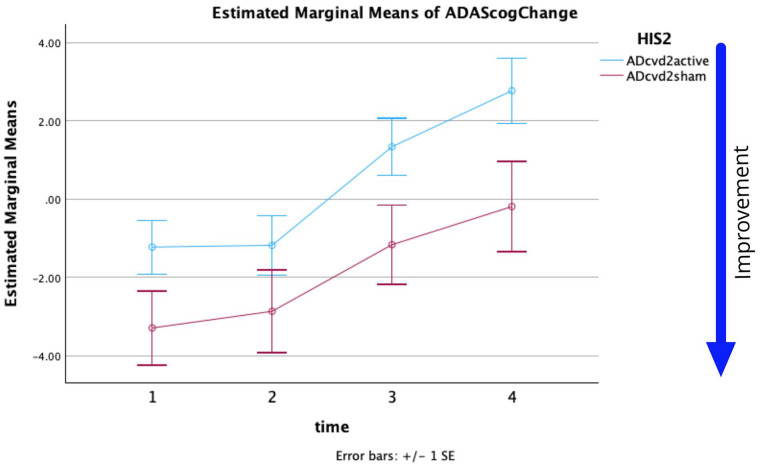
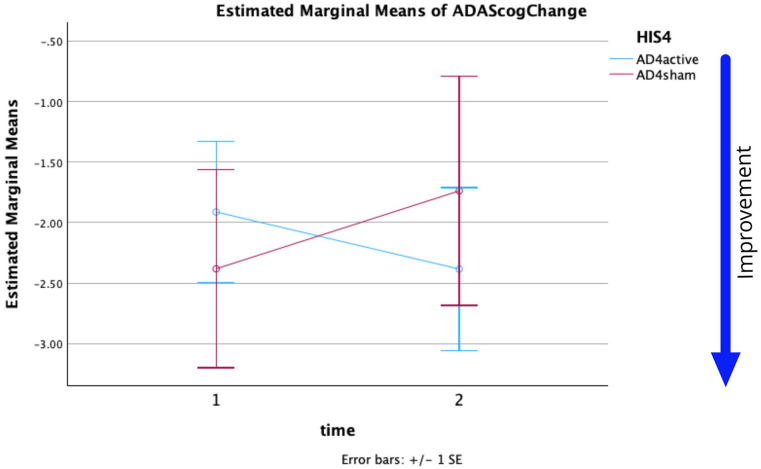
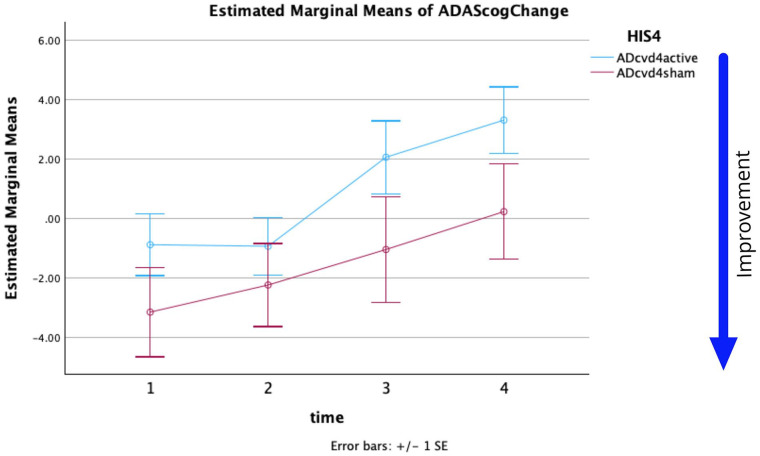
Repetitive Transcranial Magnetic Stimulation (rTMS) has been applied as an investigational therapy for Alzheimer's Disease (AD). The recent largest (N = 135) double-blind study with 6 months post-treatment follow-up investigating rTMS efficacy as a treatment for AD found about 72% of participants in each group of active and sham were positively responsive to rTMS (using Magstim AirFilm active and sham coils). Since the used sham coil produced about 25.3% of the peak active stimulus, it was hypothesized it could evoke a measurable response in AD patients. This study looks at the details of the above study's sham responses to determine why and how such a response might occur and how cerebrovascular symptomatology may have impacted that response. In the above-mentioned study, 90 and 45 patients were randomly assigned to active and sham groups, respectively. Those with modified Hachinski Ischemic Scores (HIS) below and above 2 were labeled AD2 and ADcvd2, respectively. Analysis of the primary outcome measure ADAS-Cog score change from baseline to post-treatment and follow-ups showed the ADcvd2 in the sham group had a significantly (p = .034) greater improvement or less decline at post-treatment and follow-up sessions compared to the ADcvd2 in the active group. Additionally, the improvement of the ADcvd2 sham compared to those in the active group persisted longer. Also, there was a significant (p = .036) improvement for AD2 individuals in the active compared to AD2 sham stimulation group at 2-months post-treatment. Overall, the sham rTMS stimulus did evoke a measurable response which was more effective for ADcvd2 in sham than ADcvd2 in active support of a vascular mechanism likely linked to the shallower sham stimulus penetration.




 京公网安备 11010802042870号
京ICP备2023020795号-1
京公网安备 11010802042870号
京ICP备2023020795号-1

 分享
分享
 求助内容:
求助内容: 应助结果提醒方式:
 扫码关注我们
