Combining Ventricular Fibrillation Features With Defibrillation Waveform Parameters Improves the Ability to Predict Shock Outcomes in a Rabbit Model of Cardiac Arrest.
Yushun Gong, Jianjie Wang, Jingru Li, Liang Wei, Yongqin Li
{"title":"Combining Ventricular Fibrillation Features With Defibrillation Waveform Parameters Improves the Ability to Predict Shock Outcomes in a Rabbit Model of Cardiac Arrest.","authors":"Yushun Gong, Jianjie Wang, Jingru Li, Liang Wei, Yongqin Li","doi":"10.1161/JAHA.124.039527","DOIUrl":null,"url":null,"abstract":"<p><strong>Background: </strong>Quantitative ventricular fibrillation (VF) analysis has the potential to optimize defibrillation by predicting shock outcomes, but its performance remains unsatisfactory. This study investigated whether combining VF features with defibrillation parameters could enhance the ability of shock outcome prediction.</p><p><strong>Methods: </strong>VF was electrically induced and left untreated for 30 to 180 seconds in 55 New Zealand rabbits. A defibrillatory shock was applied with 1 of 9 biphasic waveforms with different tilts and durations. A 4-step up-and-down protocol was used to maintain the success rate near 50% for each waveform. Ten features and 10 parameters were obtained from the recorded VF and defibrillation waveforms. Logistic regression and a convolutional neural network were used to combine VF features with defibrillation parameters.</p><p><strong>Results: </strong>The area under the curve value for the combination of a single VF feature and a single defibrillation parameter (0.725 [95% CI, 0.676-0.775] versus 0.644 [95% CI, 0.589-0.699]; <i>P</i>=0.002) was significantly greater than that for the optimal VF feature. The area under the curve value for the combination of multiple VF features and multiple defibrillation parameters (0.752 [95% CI, 0.704-0.800] versus 0.657 [95% CI, 0.602-0.712]; <i>P</i><0.001) was significantly greater than that the combination of multiple VF features. The area under the curve for the combination of the raw VF waveform and raw defibrillation waveform (0.781 [95% CI, 0.734-0.828] versus 0.685 [95% CI, 0.632-0.738]; <i>P</i>=0.007) was significantly greater than that for the raw VF waveform.</p><p><strong>Conclusions: </strong>In this animal model, combining VF features with defibrillation parameters greatly enhanced the ability of shock outcome prediction, whether it was based on extracted features/parameters or directly using raw waveforms with machine learning methods.</p>","PeriodicalId":54370,"journal":{"name":"Journal of the American Heart Association","volume":" ","pages":"e039527"},"PeriodicalIF":5.3000,"publicationDate":"2025-04-01","publicationTypes":"Journal Article","fieldsOfStudy":null,"isOpenAccess":false,"openAccessPdf":"https://www.ncbi.nlm.nih.gov/pmc/articles/PMC12132857/pdf/","citationCount":"0","resultStr":null,"platform":"Semanticscholar","paperid":null,"PeriodicalName":"Journal of the American Heart Association","FirstCategoryId":"3","ListUrlMain":"https://doi.org/10.1161/JAHA.124.039527","RegionNum":1,"RegionCategory":"医学","ArticlePicture":[],"TitleCN":null,"AbstractTextCN":null,"PMCID":null,"EPubDate":"2025/3/27 0:00:00","PubModel":"Epub","JCR":"Q1","JCRName":"CARDIAC & CARDIOVASCULAR SYSTEMS","Score":null,"Total":0}
引用次数: 0
Abstract
Background: Quantitative ventricular fibrillation (VF) analysis has the potential to optimize defibrillation by predicting shock outcomes, but its performance remains unsatisfactory. This study investigated whether combining VF features with defibrillation parameters could enhance the ability of shock outcome prediction.
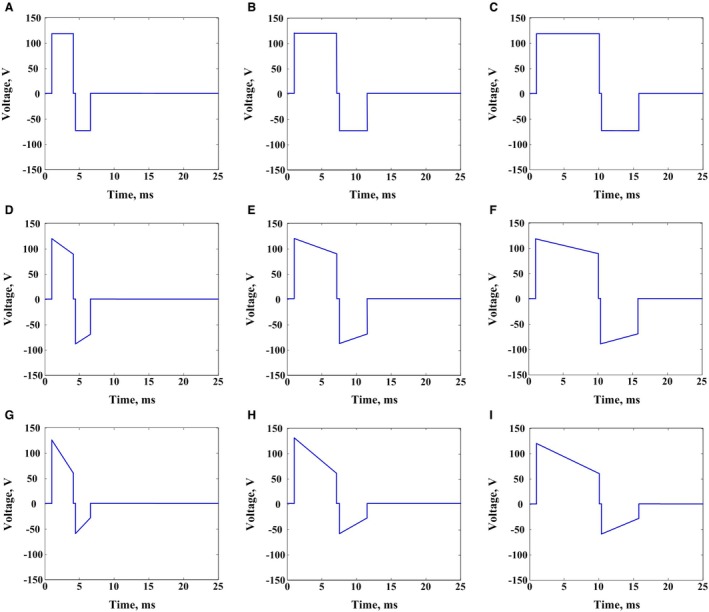
Methods: VF was electrically induced and left untreated for 30 to 180 seconds in 55 New Zealand rabbits. A defibrillatory shock was applied with 1 of 9 biphasic waveforms with different tilts and durations. A 4-step up-and-down protocol was used to maintain the success rate near 50% for each waveform. Ten features and 10 parameters were obtained from the recorded VF and defibrillation waveforms. Logistic regression and a convolutional neural network were used to combine VF features with defibrillation parameters.
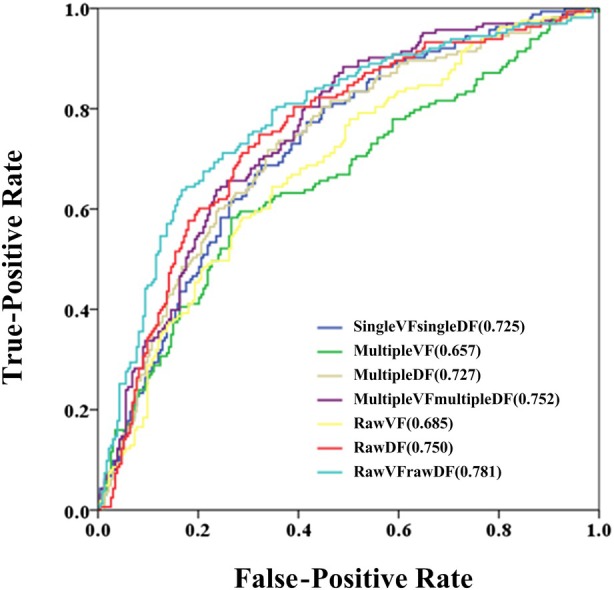
Results: The area under the curve value for the combination of a single VF feature and a single defibrillation parameter (0.725 [95% CI, 0.676-0.775] versus 0.644 [95% CI, 0.589-0.699]; P=0.002) was significantly greater than that for the optimal VF feature. The area under the curve value for the combination of multiple VF features and multiple defibrillation parameters (0.752 [95% CI, 0.704-0.800] versus 0.657 [95% CI, 0.602-0.712]; P<0.001) was significantly greater than that the combination of multiple VF features. The area under the curve for the combination of the raw VF waveform and raw defibrillation waveform (0.781 [95% CI, 0.734-0.828] versus 0.685 [95% CI, 0.632-0.738]; P=0.007) was significantly greater than that for the raw VF waveform.
Conclusions: In this animal model, combining VF features with defibrillation parameters greatly enhanced the ability of shock outcome prediction, whether it was based on extracted features/parameters or directly using raw waveforms with machine learning methods.
期刊介绍:
As an Open Access journal, JAHA - Journal of the American Heart Association is rapidly and freely available, accelerating the translation of strong science into effective practice.
JAHA is an authoritative, peer-reviewed Open Access journal focusing on cardiovascular and cerebrovascular disease. JAHA provides a global forum for basic and clinical research and timely reviews on cardiovascular disease and stroke. As an Open Access journal, its content is free on publication to read, download, and share, accelerating the translation of strong science into effective practice.




 京公网安备 11010802042870号
京ICP备2023020795号-1
京公网安备 11010802042870号
京ICP备2023020795号-1

 分享
分享
 求助内容:
求助内容: 应助结果提醒方式:
 扫码关注我们
