Xiangliang Huang, Hao Yan, Zhifei Xu, Bo Yang, Peihua Luo, Qiaojun He
{"title":"The inducible role of autophagy in cell death: emerging evidence and future perspectives.","authors":"Xiangliang Huang, Hao Yan, Zhifei Xu, Bo Yang, Peihua Luo, Qiaojun He","doi":"10.1186/s12964-025-02135-w","DOIUrl":null,"url":null,"abstract":"<p><strong>Background: </strong>Autophagy is a lysosome-dependent degradation pathway for recycling intracellular materials and removing damaged organelles, and it is usually considered a prosurvival process in response to stress stimuli. However, increasing evidence suggests that autophagy can also drive cell death in a context-dependent manner. The bulk degradation of cell contents and the accumulation of autophagosomes are recognized as the mechanisms of cell death induced by autophagy alone. However, autophagy can also drive other forms of regulated cell death (RCD) whose mechanisms are not related to excessive autophagic vacuolization. Notably, few reviews address studies on the transformation from autophagy to RCD, and the underlying molecular mechanisms are still vague.</p><p><strong>Aim of review: </strong>This review aims to summarize the existing studies on autophagy-mediated RCD, to elucidate the mechanism by which autophagy initiates RCD, and to comprehensively understand the role of autophagy in determining cell fate.</p><p><strong>Key scientific concepts of review: </strong>This review highlights the prodeath effect of autophagy, which is distinct from the generally perceived cytoprotective role, and its mechanisms are mainly associated with the selective degradation of proteins or organelles essential for cell survival and the direct involvement of the autophagy machinery in cell death. Additionally, this review highlights the need for better manipulation of autophagy activation or inhibition in different pathological contexts, depending on clinical purpose.</p>","PeriodicalId":55268,"journal":{"name":"Cell Communication and Signaling","volume":"23 1","pages":"151"},"PeriodicalIF":8.2000,"publicationDate":"2025-03-26","publicationTypes":"Journal Article","fieldsOfStudy":null,"isOpenAccess":false,"openAccessPdf":"https://www.ncbi.nlm.nih.gov/pmc/articles/PMC11948861/pdf/","citationCount":"0","resultStr":null,"platform":"Semanticscholar","paperid":null,"PeriodicalName":"Cell Communication and Signaling","FirstCategoryId":"99","ListUrlMain":"https://doi.org/10.1186/s12964-025-02135-w","RegionNum":2,"RegionCategory":"生物学","ArticlePicture":[],"TitleCN":null,"AbstractTextCN":null,"PMCID":null,"EPubDate":"","PubModel":"","JCR":"Q1","JCRName":"CELL BIOLOGY","Score":null,"Total":0}
引用次数: 0
Abstract
Background: Autophagy is a lysosome-dependent degradation pathway for recycling intracellular materials and removing damaged organelles, and it is usually considered a prosurvival process in response to stress stimuli. However, increasing evidence suggests that autophagy can also drive cell death in a context-dependent manner. The bulk degradation of cell contents and the accumulation of autophagosomes are recognized as the mechanisms of cell death induced by autophagy alone. However, autophagy can also drive other forms of regulated cell death (RCD) whose mechanisms are not related to excessive autophagic vacuolization. Notably, few reviews address studies on the transformation from autophagy to RCD, and the underlying molecular mechanisms are still vague.
Aim of review: This review aims to summarize the existing studies on autophagy-mediated RCD, to elucidate the mechanism by which autophagy initiates RCD, and to comprehensively understand the role of autophagy in determining cell fate.
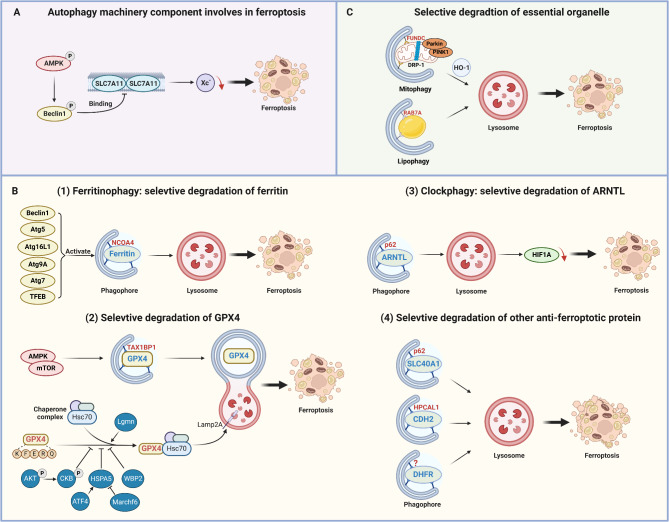
Key scientific concepts of review: This review highlights the prodeath effect of autophagy, which is distinct from the generally perceived cytoprotective role, and its mechanisms are mainly associated with the selective degradation of proteins or organelles essential for cell survival and the direct involvement of the autophagy machinery in cell death. Additionally, this review highlights the need for better manipulation of autophagy activation or inhibition in different pathological contexts, depending on clinical purpose.
期刊介绍:
Cell Communication and Signaling (CCS) is a peer-reviewed, open-access scientific journal that focuses on cellular signaling pathways in both normal and pathological conditions. It publishes original research, reviews, and commentaries, welcoming studies that utilize molecular, morphological, biochemical, structural, and cell biology approaches. CCS also encourages interdisciplinary work and innovative models, including in silico, in vitro, and in vivo approaches, to facilitate investigations of cell signaling pathways, networks, and behavior.
Starting from January 2019, CCS is proud to announce its affiliation with the International Cell Death Society. The journal now encourages submissions covering all aspects of cell death, including apoptotic and non-apoptotic mechanisms, cell death in model systems, autophagy, clearance of dying cells, and the immunological and pathological consequences of dying cells in the tissue microenvironment.





 京公网安备 11010802042870号
京ICP备2023020795号-1
京公网安备 11010802042870号
京ICP备2023020795号-1

 分享
分享
 求助内容:
求助内容: 应助结果提醒方式:
 扫码关注我们
