Sıdıka Gülkan Özkan, Ali Kimiaei, Seyedehtina Safaei, Mutlu Karkucak, Mustafa Nuri Yenerel, Aslı Yüksel Öztürkmen, Burak Alp, Hasan Atilla Özkan
{"title":"Therapeutic Challenges and Emerging Strategies for <i>T674I</i> and <i>PTPN11</i> Mutations in a <i>FIP1L1-PDGFRA</i>-Positive Myeloproliferative Neoplasm: A Case Report.","authors":"Sıdıka Gülkan Özkan, Ali Kimiaei, Seyedehtina Safaei, Mutlu Karkucak, Mustafa Nuri Yenerel, Aslı Yüksel Öztürkmen, Burak Alp, Hasan Atilla Özkan","doi":"10.3390/life15030505","DOIUrl":null,"url":null,"abstract":"<p><p>Myeloproliferative neoplasm (MPN) with eosinophilia associated with <i>FIP1L1-PDGFRA</i> is a rare eosinophilic disorder typically treated with imatinib. However, resistance due to the T674I mutation poses a significant challenge. This case presents the first reported instance of concurrent <i>FIP1L1-PDGFRA T674I</i> and <i>PTPN11</i> (p.E76D) mutations in a 38-year-old male patient with MPN and eosinophilia. The patient initially responded to imatinib but developed resistance after ten months, leading to severe spinal cord compression caused by granulocytic sarcoma. Despite undergoing radiotherapy, chemotherapy, and allogeneic hematopoietic stem cell transplantation (allo-HSCT), the disease progressed. Although full donor chimerism was achieved post-transplant, the patient relapsed shortly afterward with eosinophilia, splenomegaly, and constitutional symptoms. Further treatments, including sorafenib and decitabine, failed to control the disease, and the patient ultimately died from multiorgan failure. This case illustrates the therapeutic challenges associated with <i>FIP1L1-PDGFRA T674I</i>-positive eosinophilic disorder, especially when compounded by the <i>PTPN11</i> mutation. Resistance to standard treatments underscores the urgent need for novel therapies to manage this rare and aggressive disease.</p>","PeriodicalId":56144,"journal":{"name":"Life-Basel","volume":"15 3","pages":""},"PeriodicalIF":3.4000,"publicationDate":"2025-03-20","publicationTypes":"Journal Article","fieldsOfStudy":null,"isOpenAccess":false,"openAccessPdf":"https://www.ncbi.nlm.nih.gov/pmc/articles/PMC11944135/pdf/","citationCount":"0","resultStr":null,"platform":"Semanticscholar","paperid":null,"PeriodicalName":"Life-Basel","FirstCategoryId":"99","ListUrlMain":"https://doi.org/10.3390/life15030505","RegionNum":3,"RegionCategory":"生物学","ArticlePicture":[],"TitleCN":null,"AbstractTextCN":null,"PMCID":null,"EPubDate":"","PubModel":"","JCR":"Q1","JCRName":"BIOLOGY","Score":null,"Total":0}
引用次数: 0
Abstract
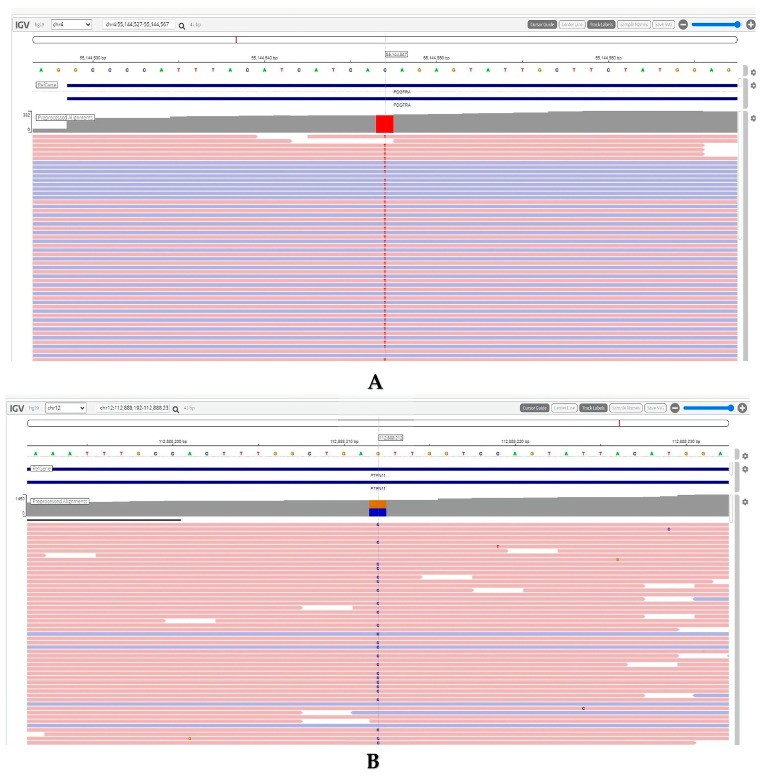
Myeloproliferative neoplasm (MPN) with eosinophilia associated with FIP1L1-PDGFRA is a rare eosinophilic disorder typically treated with imatinib. However, resistance due to the T674I mutation poses a significant challenge. This case presents the first reported instance of concurrent FIP1L1-PDGFRA T674I and PTPN11 (p.E76D) mutations in a 38-year-old male patient with MPN and eosinophilia. The patient initially responded to imatinib but developed resistance after ten months, leading to severe spinal cord compression caused by granulocytic sarcoma. Despite undergoing radiotherapy, chemotherapy, and allogeneic hematopoietic stem cell transplantation (allo-HSCT), the disease progressed. Although full donor chimerism was achieved post-transplant, the patient relapsed shortly afterward with eosinophilia, splenomegaly, and constitutional symptoms. Further treatments, including sorafenib and decitabine, failed to control the disease, and the patient ultimately died from multiorgan failure. This case illustrates the therapeutic challenges associated with FIP1L1-PDGFRA T674I-positive eosinophilic disorder, especially when compounded by the PTPN11 mutation. Resistance to standard treatments underscores the urgent need for novel therapies to manage this rare and aggressive disease.
Life-BaselBiochemistry, Genetics and Molecular Biology-General Biochemistry,Genetics and Molecular Biology
CiteScore
4.30
自引率
6.20%
发文量
1798
审稿时长
11 weeks
期刊介绍:
Life (ISSN 2075-1729) is an international, peer-reviewed open access journal of scientific studies related to fundamental themes in Life Sciences, especially those concerned with the origins of life and evolution of biosystems. Our aim is to encourage scientists to publish their experimental and theoretical results in as much detail as possible. There is no restriction on the length of the papers.





 京公网安备 11010802042870号
京ICP备2023020795号-1
京公网安备 11010802042870号
京ICP备2023020795号-1

 分享
分享
 求助内容:
求助内容: 应助结果提醒方式:
 扫码关注我们
