Comparison of clinic-based assistance versus a centralized call center on patient-reported social needs: findings from a randomized pilot social health integration program.
Ammarah Mahmud, Meagan C Brown, Edwin S Wong, India J Ornelas, Robert Wellman, Roy Pardee, Sophia Mun, Ariel Singer, Emily Westbrook, Kathleen Barnes, Heidi Den Haan, Cara C Lewis
{"title":"Comparison of clinic-based assistance versus a centralized call center on patient-reported social needs: findings from a randomized pilot social health integration program.","authors":"Ammarah Mahmud, Meagan C Brown, Edwin S Wong, India J Ornelas, Robert Wellman, Roy Pardee, Sophia Mun, Ariel Singer, Emily Westbrook, Kathleen Barnes, Heidi Den Haan, Cara C Lewis","doi":"10.1186/s12889-025-22334-x","DOIUrl":null,"url":null,"abstract":"<p><strong>Background: </strong>As social need screening and intervention activities increase, the long-term objective of our work is to inform how to implement social health into healthcare settings. The purpose of this study is to assess changes in social needs over time between two social health support programs as part of a social health integration effort in two primary care clinics within an integrated health system in Washington state.</p><p><strong>Methods: </strong>We used stratified randomization to assign 535 patients who self-reported social needs on a screener between October 2022-January 2023 to one of two social health support programs: local, clinic-based Community Resource Specialists (CRS) or a centralized Connections Call Center (CCC). Participants were assessed at 2- and 5-months post-randomization. We compared the count of social needs across programs at each timepoint using joint tests, and estimated differences between programs using generalized linear mixed effects models at each timepoint.</p><p><strong>Results: </strong>We randomized 535 participants, with 270 assigned to CCC and 272 to CRS. Of those randomized, 61% completed at least one follow-up survey (N = 329). This analytic sample consisted of 153 CCC participants and 176 participants under CRS. CRS participants reported 0.08 (95% CI: -0.710, 0.864) more needs at 2 months and 0.42 (CI: -0.288, 1.126) more needs at 5 months compared to CCC participants (p > 0.05). An exploratory as-treated analysis within the CRS group suggested that referral receipt was associated with fewer needs over time.</p><p><strong>Conclusions: </strong>There were no significant differences between CRS and CCC participants' social needs over time. However, receiving referrals to social services may lead to reduced social needs.</p>","PeriodicalId":9039,"journal":{"name":"BMC Public Health","volume":"25 1","pages":"1171"},"PeriodicalIF":3.6000,"publicationDate":"2025-03-28","publicationTypes":"Journal Article","fieldsOfStudy":null,"isOpenAccess":false,"openAccessPdf":"https://www.ncbi.nlm.nih.gov/pmc/articles/PMC11951525/pdf/","citationCount":"0","resultStr":null,"platform":"Semanticscholar","paperid":null,"PeriodicalName":"BMC Public Health","FirstCategoryId":"3","ListUrlMain":"https://doi.org/10.1186/s12889-025-22334-x","RegionNum":2,"RegionCategory":"医学","ArticlePicture":[],"TitleCN":null,"AbstractTextCN":null,"PMCID":null,"EPubDate":"","PubModel":"","JCR":"Q1","JCRName":"PUBLIC, ENVIRONMENTAL & OCCUPATIONAL HEALTH","Score":null,"Total":0}
引用次数: 0
Abstract
Background: As social need screening and intervention activities increase, the long-term objective of our work is to inform how to implement social health into healthcare settings. The purpose of this study is to assess changes in social needs over time between two social health support programs as part of a social health integration effort in two primary care clinics within an integrated health system in Washington state.
Methods: We used stratified randomization to assign 535 patients who self-reported social needs on a screener between October 2022-January 2023 to one of two social health support programs: local, clinic-based Community Resource Specialists (CRS) or a centralized Connections Call Center (CCC). Participants were assessed at 2- and 5-months post-randomization. We compared the count of social needs across programs at each timepoint using joint tests, and estimated differences between programs using generalized linear mixed effects models at each timepoint.
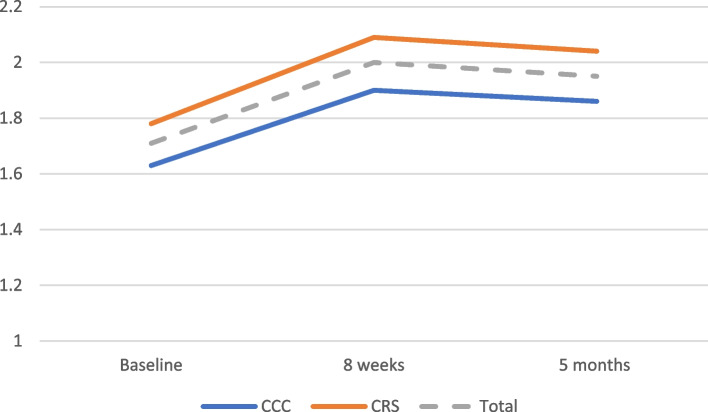
Results: We randomized 535 participants, with 270 assigned to CCC and 272 to CRS. Of those randomized, 61% completed at least one follow-up survey (N = 329). This analytic sample consisted of 153 CCC participants and 176 participants under CRS. CRS participants reported 0.08 (95% CI: -0.710, 0.864) more needs at 2 months and 0.42 (CI: -0.288, 1.126) more needs at 5 months compared to CCC participants (p > 0.05). An exploratory as-treated analysis within the CRS group suggested that referral receipt was associated with fewer needs over time.
Conclusions: There were no significant differences between CRS and CCC participants' social needs over time. However, receiving referrals to social services may lead to reduced social needs.
期刊介绍:
BMC Public Health is an open access, peer-reviewed journal that considers articles on the epidemiology of disease and the understanding of all aspects of public health. The journal has a special focus on the social determinants of health, the environmental, behavioral, and occupational correlates of health and disease, and the impact of health policies, practices and interventions on the community.




 京公网安备 11010802042870号
京ICP备2023020795号-1
京公网安备 11010802042870号
京ICP备2023020795号-1

 分享
分享
 求助内容:
求助内容: 应助结果提醒方式:
 扫码关注我们
