Physical Activity, Fitness, and Health-Related Quality of Life in Children and Adolescent Cancer Survivors: A Cross-Sectional Study (iBoneFIT Project).
Andrés Redondo-Tébar, Andrea Rodriguez-Solana, Luis Gracia-Marco, Andres Marmol-Perez, José J Gil-Cosano, Cristina Cadenas-Sánchez, Francisco J Llorente-Cantarero, Juan Francisco Pascual-Gázquez, María Herrada-Robles, Mairena Sánchez-López, Esther Ubago-Guisado
{"title":"Physical Activity, Fitness, and Health-Related Quality of Life in Children and Adolescent Cancer Survivors: A Cross-Sectional Study (iBoneFIT Project).","authors":"Andrés Redondo-Tébar, Andrea Rodriguez-Solana, Luis Gracia-Marco, Andres Marmol-Perez, José J Gil-Cosano, Cristina Cadenas-Sánchez, Francisco J Llorente-Cantarero, Juan Francisco Pascual-Gázquez, María Herrada-Robles, Mairena Sánchez-López, Esther Ubago-Guisado","doi":"10.3390/cancers17061030","DOIUrl":null,"url":null,"abstract":"<p><p><b>Background/Objectives</b>: This study aims to evaluate the health-related quality of life (HRQoL) of children and adolescent cancer survivors in relation to previously published normative values for typically developing children and adolescents, as well as to analyze the differences in HRQoL based on their levels of physical activity and fitness. <b>Methods</b>: Cross-sectional study with 116 cancer survivors (12.1 ± 3.3 years, 57.8% boys) from two pediatric oncology units in Andalusia (Spain). HRQoL was assessed using PedsQL 4.0 Generic Core Scales. Physical activity was measured with accelerometers, and fitness was evaluated using self-reported and objective tests for muscular fitness. Independent samples <i>t</i>-tests to compare HRQoL between our sample and the normative values published for typically developing children and adolescents of the same age and analysis of covariance (ANCOVA) were conducted to assess differences in HRQoL according to physical activity and fitness categories in our sample. <b>Results</b>: Children and adolescent cancer survivors had lower HRQoL scores compared to typically developing children's and adolescents' normative values, except for social functioning. Higher levels of moderate-to-vigorous physical activity were associated with better total, physical, and psychosocial HRQoL scores. Children and adolescent cancer survivors with better levels of cardiorespiratory fitness, motor fitness, and flexibility reported better HRQoL scores in total and psychosocial domains. However, muscular fitness (self-reported and objectively measured) did not show a significant difference in HRQoL. <b>Conclusions</b>: Children and adolescent cancer survivors experience lower HRQoL than their typically developing counterparts. Engaging in at least 30 min of moderate-to-vigorous physical activity per day is associated with fewer HRQoL impairments. Improved fitness, particularly cardiorespiratory fitness, motor fitness, and flexibility, are associated with better HRQoL outcomes. These findings highlight the association between physical activity, fitness levels, and HRQoL in children and adolescent cancer survivors, suggesting the potential benefits of promoting physical activity and enhancing fitness levels.</p>","PeriodicalId":9681,"journal":{"name":"Cancers","volume":"17 6","pages":""},"PeriodicalIF":4.4000,"publicationDate":"2025-03-19","publicationTypes":"Journal Article","fieldsOfStudy":null,"isOpenAccess":false,"openAccessPdf":"https://www.ncbi.nlm.nih.gov/pmc/articles/PMC11940595/pdf/","citationCount":"0","resultStr":null,"platform":"Semanticscholar","paperid":null,"PeriodicalName":"Cancers","FirstCategoryId":"3","ListUrlMain":"https://doi.org/10.3390/cancers17061030","RegionNum":2,"RegionCategory":"医学","ArticlePicture":[],"TitleCN":null,"AbstractTextCN":null,"PMCID":null,"EPubDate":"","PubModel":"","JCR":"Q1","JCRName":"ONCOLOGY","Score":null,"Total":0}
引用次数: 0
Abstract
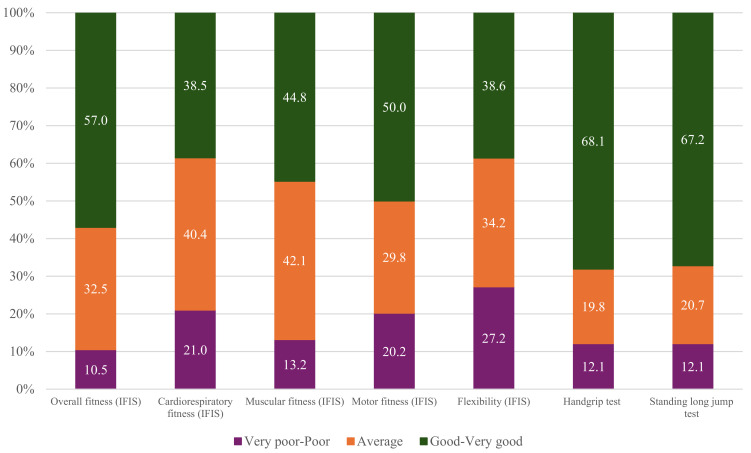
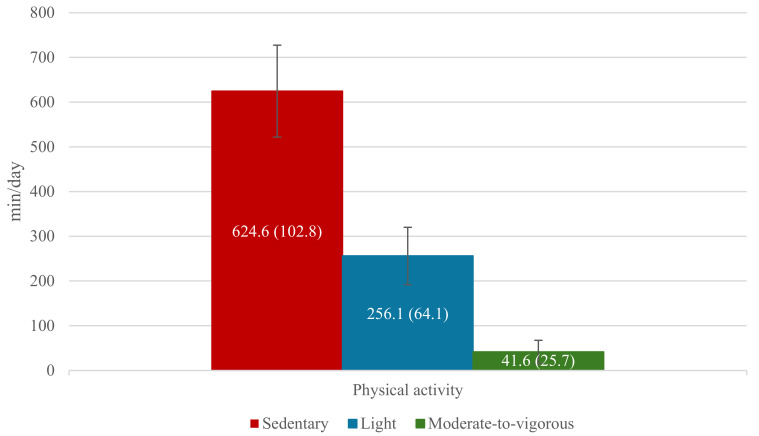
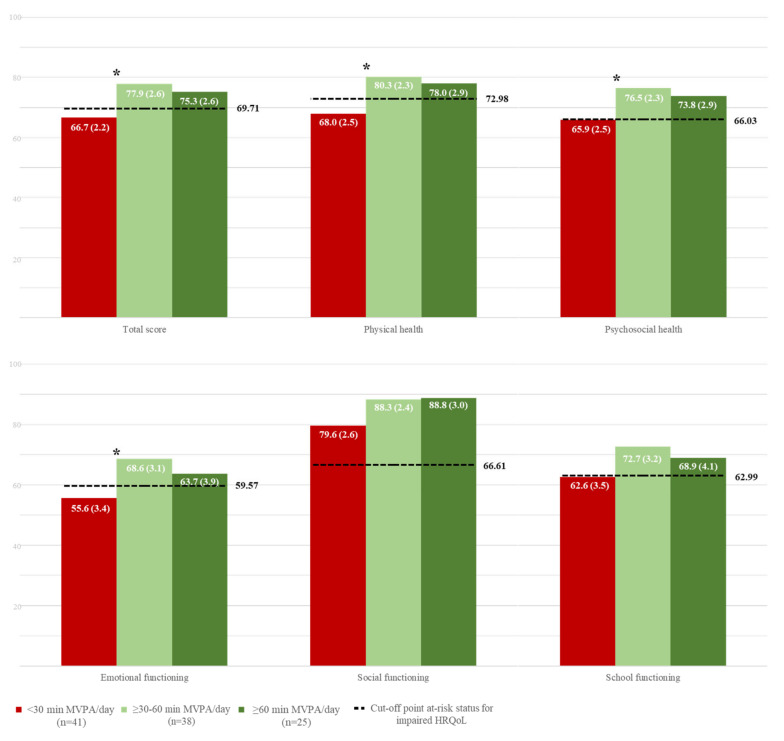
Background/Objectives: This study aims to evaluate the health-related quality of life (HRQoL) of children and adolescent cancer survivors in relation to previously published normative values for typically developing children and adolescents, as well as to analyze the differences in HRQoL based on their levels of physical activity and fitness. Methods: Cross-sectional study with 116 cancer survivors (12.1 ± 3.3 years, 57.8% boys) from two pediatric oncology units in Andalusia (Spain). HRQoL was assessed using PedsQL 4.0 Generic Core Scales. Physical activity was measured with accelerometers, and fitness was evaluated using self-reported and objective tests for muscular fitness. Independent samples t-tests to compare HRQoL between our sample and the normative values published for typically developing children and adolescents of the same age and analysis of covariance (ANCOVA) were conducted to assess differences in HRQoL according to physical activity and fitness categories in our sample. Results: Children and adolescent cancer survivors had lower HRQoL scores compared to typically developing children's and adolescents' normative values, except for social functioning. Higher levels of moderate-to-vigorous physical activity were associated with better total, physical, and psychosocial HRQoL scores. Children and adolescent cancer survivors with better levels of cardiorespiratory fitness, motor fitness, and flexibility reported better HRQoL scores in total and psychosocial domains. However, muscular fitness (self-reported and objectively measured) did not show a significant difference in HRQoL. Conclusions: Children and adolescent cancer survivors experience lower HRQoL than their typically developing counterparts. Engaging in at least 30 min of moderate-to-vigorous physical activity per day is associated with fewer HRQoL impairments. Improved fitness, particularly cardiorespiratory fitness, motor fitness, and flexibility, are associated with better HRQoL outcomes. These findings highlight the association between physical activity, fitness levels, and HRQoL in children and adolescent cancer survivors, suggesting the potential benefits of promoting physical activity and enhancing fitness levels.
期刊介绍:
Cancers (ISSN 2072-6694) is an international, peer-reviewed open access journal on oncology. It publishes reviews, regular research papers and short communications. Our aim is to encourage scientists to publish their experimental and theoretical results in as much detail as possible. There is no restriction on the length of the papers. The full experimental details must be provided so that the results can be reproduced.



 京公网安备 11010802042870号
京ICP备2023020795号-1
京公网安备 11010802042870号
京ICP备2023020795号-1

 分享
分享
 求助内容:
求助内容: 应助结果提醒方式:
 扫码关注我们
