Tatiana M Moreno, Jose L Nieto-Torres, Caroline Kumsta
{"title":"Monitoring Autophagy in Human Aging: Key Cell Models and Insights.","authors":"Tatiana M Moreno, Jose L Nieto-Torres, Caroline Kumsta","doi":"10.31083/FBL27091","DOIUrl":null,"url":null,"abstract":"<p><p>Autophagy, a key cellular degradation and recycling pathway, is critical for maintaining cellular homeostasis and responding to metabolic and environmental stress. Evidence for age-related autophagic dysfunction and its implications in chronic age-related diseases including neurodegeneration is accumulating. However, as a complex, multi-step process, autophagy can be challenging to measure, particularly in humans and human aging- and disease-relevant models. This review describes the links between macroautophagy, aging, and chronic age-related diseases. We present three novel human cell models, peripheral blood mononuclear cells (PBMCs), primary dermal fibroblasts (PDFs), and induced neurons (iNs), which serve as essential tools for studying autophagy flux and assessing its potential as a biomarker for aging. Unlike traditional models, these cell models retain age- and disease-associated molecular signatures, enhancing their relevance for human studies. The development of robust tools and methodologies for measuring autophagy flux in human cell models holds promise for advancing our understanding of autophagy's role in aging and age-related diseases, ultimately facilitating the discovery of therapies to enhance health outcomes.</p>","PeriodicalId":73069,"journal":{"name":"Frontiers in bioscience (Landmark edition)","volume":"30 3","pages":"27091"},"PeriodicalIF":3.1000,"publicationDate":"2025-03-20","publicationTypes":"Journal Article","fieldsOfStudy":null,"isOpenAccess":false,"openAccessPdf":"https://www.ncbi.nlm.nih.gov/pmc/articles/PMC12042822/pdf/","citationCount":"0","resultStr":null,"platform":"Semanticscholar","paperid":null,"PeriodicalName":"Frontiers in bioscience (Landmark edition)","FirstCategoryId":"1085","ListUrlMain":"https://doi.org/10.31083/FBL27091","RegionNum":0,"RegionCategory":null,"ArticlePicture":[],"TitleCN":null,"AbstractTextCN":null,"PMCID":null,"EPubDate":"","PubModel":"","JCR":"Q2","JCRName":"BIOCHEMISTRY & MOLECULAR BIOLOGY","Score":null,"Total":0}
引用次数: 0
Abstract
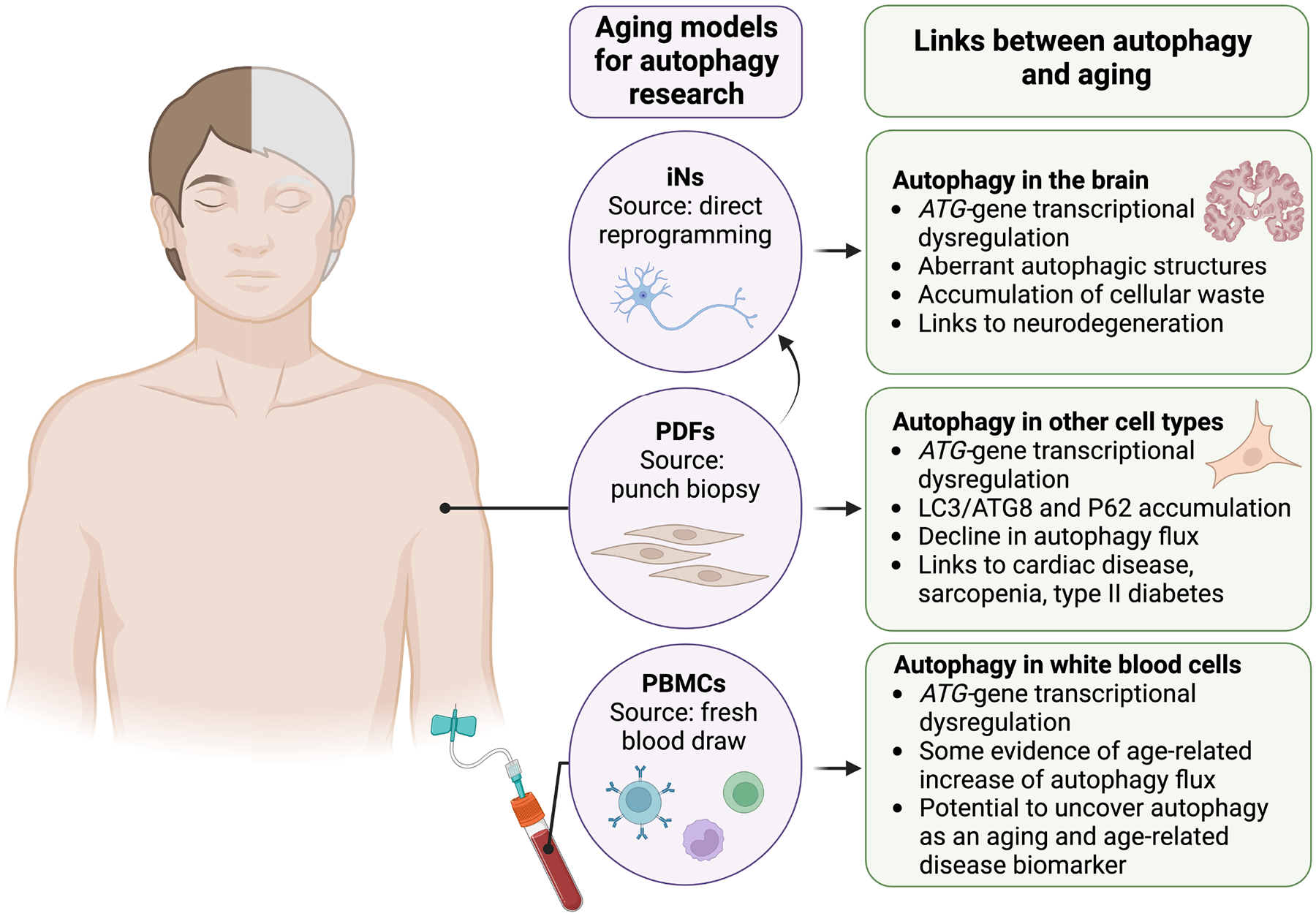
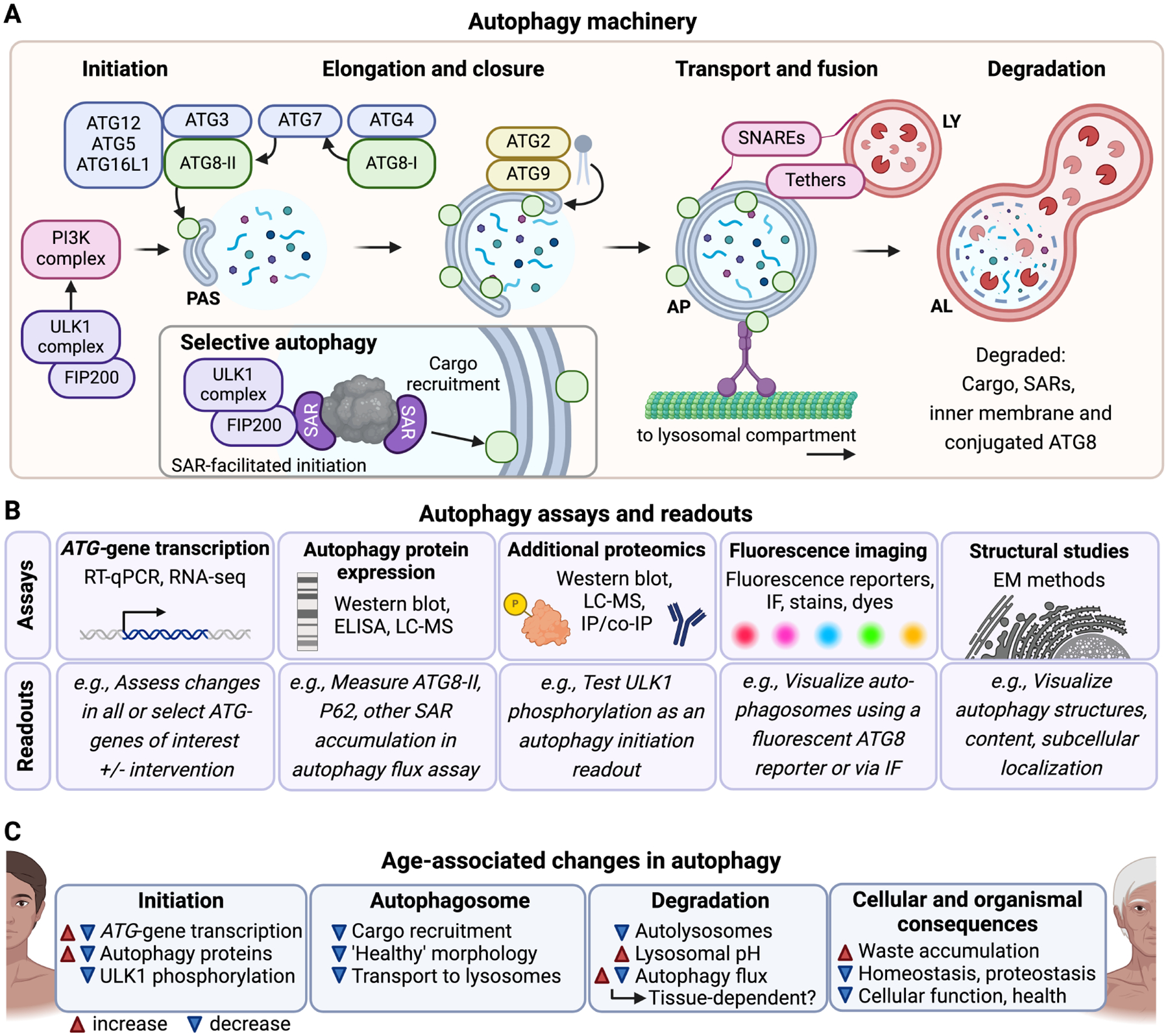
Autophagy, a key cellular degradation and recycling pathway, is critical for maintaining cellular homeostasis and responding to metabolic and environmental stress. Evidence for age-related autophagic dysfunction and its implications in chronic age-related diseases including neurodegeneration is accumulating. However, as a complex, multi-step process, autophagy can be challenging to measure, particularly in humans and human aging- and disease-relevant models. This review describes the links between macroautophagy, aging, and chronic age-related diseases. We present three novel human cell models, peripheral blood mononuclear cells (PBMCs), primary dermal fibroblasts (PDFs), and induced neurons (iNs), which serve as essential tools for studying autophagy flux and assessing its potential as a biomarker for aging. Unlike traditional models, these cell models retain age- and disease-associated molecular signatures, enhancing their relevance for human studies. The development of robust tools and methodologies for measuring autophagy flux in human cell models holds promise for advancing our understanding of autophagy's role in aging and age-related diseases, ultimately facilitating the discovery of therapies to enhance health outcomes.



 京公网安备 11010802042870号
京ICP备2023020795号-1
京公网安备 11010802042870号
京ICP备2023020795号-1

 分享
分享

 求助内容:
求助内容: 应助结果提醒方式:
 扫码关注我们
