Usability of an electronic health record 6 months post go-live and its association with burnout, insomnia and turnover intention: a cross-sectional study in a hospital setting.
{"title":"Usability of an electronic health record 6 months post go-live and its association with burnout, insomnia and turnover intention: a cross-sectional study in a hospital setting.","authors":"Signe Lohmann-Lafrenz, Sigmund Østgård Gismervik, Solveig Osborg Ose, Lene Aasdahl, Hilde Brun Lauritzen, Arild Faxvaag, Ellen Marie Bardal, Eivind Schjelderup Skarpsno","doi":"10.1136/bmjhci-2024-101200","DOIUrl":null,"url":null,"abstract":"<p><strong>Objective: </strong>The aim of this study was to assess how different groups of health professionals evaluated the usability of a new electronic health record (EHR) and to investigate the association between the usability and burnout, insomnia and turnover intention.</p><p><strong>Methods: </strong>This cross-sectional study included 1424 health professionals who worked at a Norwegian University Hospital. The usability was measured with the System Usability Scale (SUS) 6 months after the previous electronic record was replaced with a more comprehensive, sector-wide, patient-centred EHR in 2022.</p><p><strong>Results: </strong>The median SUS score was 25 (IQR 12.5-37.5) out of 100 and ranged from 15 (IQR 7.5-25.0) among medical doctors to 40 (IQR 27.6-55.0) among laboratory technicians. Nurses reported a score of 25 (IQR 12.5-40.0). In clinical contexts, the median SUS score ranged from 15 (IQR 10.0-30.0) within radiology to 27.5 (IQR 15.0-42.5) within internal medicine, whereas laboratory medicine reported a score of 37.5 (IQR 27.5-55.0). In multivariable analyses using health professionals in the highest quarter of the SUS as the reference, those in the lowest quarter were more likely to report burnout (OR 3.05, 95% CI 1.86 to 5.00), insomnia (OR 1.72, 95% CI 1.18 to 2.50) and turnover intention (OR 2.35, 95% CI 1.53 to 3.64).</p><p><strong>Conclusion: </strong>Most health professionals across all occupational groups and clinical contexts reported low usability of a new EHR 6 months after go-live. Those who reported the lowest usability were more likely to report burnout, insomnia and turnover intention.</p>","PeriodicalId":9050,"journal":{"name":"BMJ Health & Care Informatics","volume":"32 1","pages":""},"PeriodicalIF":4.4000,"publicationDate":"2025-03-28","publicationTypes":"Journal Article","fieldsOfStudy":null,"isOpenAccess":false,"openAccessPdf":"https://www.ncbi.nlm.nih.gov/pmc/articles/PMC11956351/pdf/","citationCount":"0","resultStr":null,"platform":"Semanticscholar","paperid":null,"PeriodicalName":"BMJ Health & Care Informatics","FirstCategoryId":"1085","ListUrlMain":"https://doi.org/10.1136/bmjhci-2024-101200","RegionNum":0,"RegionCategory":null,"ArticlePicture":[],"TitleCN":null,"AbstractTextCN":null,"PMCID":null,"EPubDate":"","PubModel":"","JCR":"Q1","JCRName":"HEALTH CARE SCIENCES & SERVICES","Score":null,"Total":0}
引用次数: 0
Abstract
Objective: The aim of this study was to assess how different groups of health professionals evaluated the usability of a new electronic health record (EHR) and to investigate the association between the usability and burnout, insomnia and turnover intention.
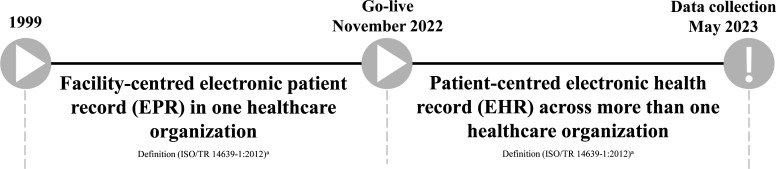
Methods: This cross-sectional study included 1424 health professionals who worked at a Norwegian University Hospital. The usability was measured with the System Usability Scale (SUS) 6 months after the previous electronic record was replaced with a more comprehensive, sector-wide, patient-centred EHR in 2022.
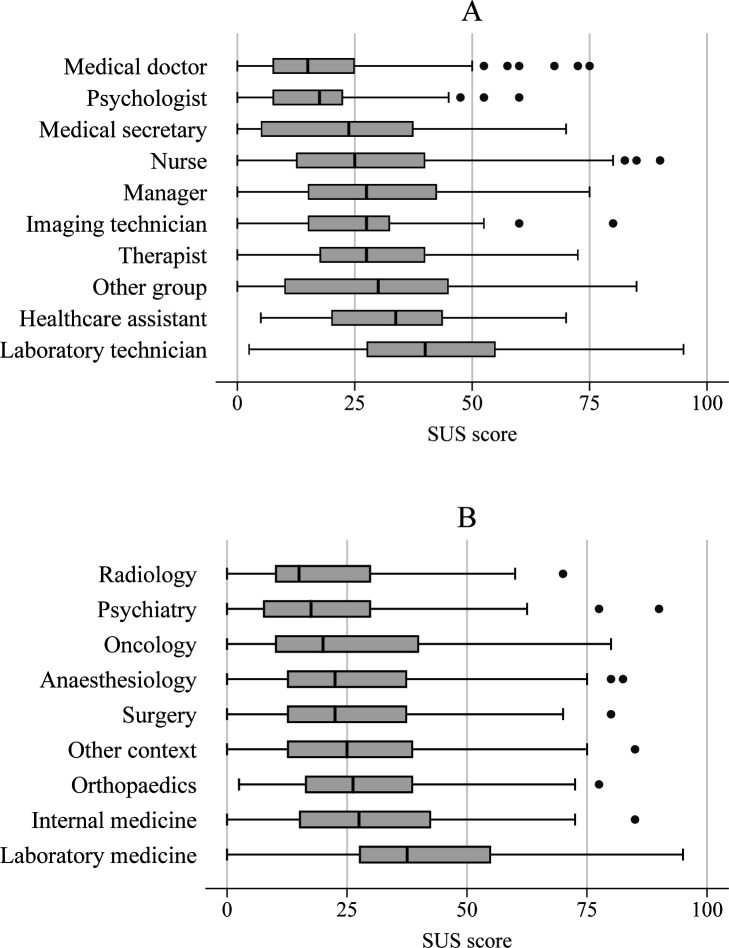
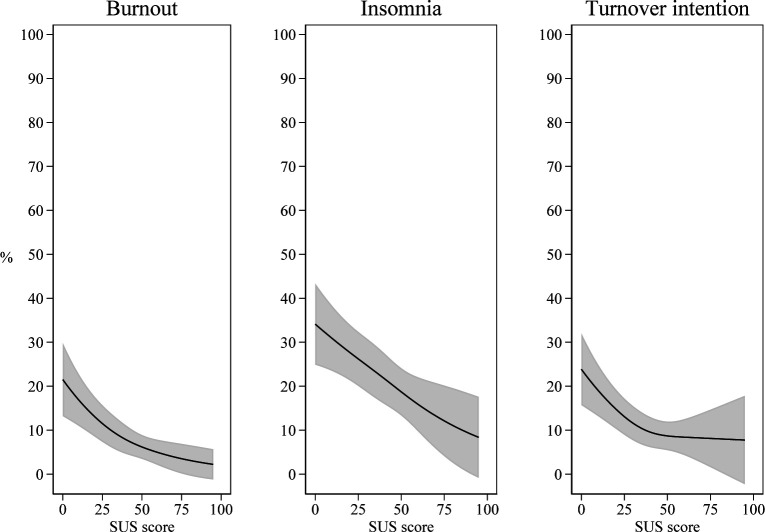
Results: The median SUS score was 25 (IQR 12.5-37.5) out of 100 and ranged from 15 (IQR 7.5-25.0) among medical doctors to 40 (IQR 27.6-55.0) among laboratory technicians. Nurses reported a score of 25 (IQR 12.5-40.0). In clinical contexts, the median SUS score ranged from 15 (IQR 10.0-30.0) within radiology to 27.5 (IQR 15.0-42.5) within internal medicine, whereas laboratory medicine reported a score of 37.5 (IQR 27.5-55.0). In multivariable analyses using health professionals in the highest quarter of the SUS as the reference, those in the lowest quarter were more likely to report burnout (OR 3.05, 95% CI 1.86 to 5.00), insomnia (OR 1.72, 95% CI 1.18 to 2.50) and turnover intention (OR 2.35, 95% CI 1.53 to 3.64).
Conclusion: Most health professionals across all occupational groups and clinical contexts reported low usability of a new EHR 6 months after go-live. Those who reported the lowest usability were more likely to report burnout, insomnia and turnover intention.




 京公网安备 11010802042870号
京ICP备2023020795号-1
京公网安备 11010802042870号
京ICP备2023020795号-1

 分享
分享
 求助内容:
求助内容: 应助结果提醒方式:
 扫码关注我们
