{"title":"Machine learning in lymphocyte and immune biomarker analysis for childhood thyroid diseases in China.","authors":"Ruizhe Yang, Wei Li, Qing Niu, WenTao Yang, Wei Gu, Xu Wang","doi":"10.1186/s12887-024-05368-9","DOIUrl":null,"url":null,"abstract":"<p><strong>Objective: </strong>This study aims to characterize and analyze the expression of representative biomarkers like lymphocytes and immune subsets in children with thyroid disorders. It also intends to develop and evaluate a machine learning model to predict if patients have thyroid disorders based on their clinical characteristics, ultimately providing insights to enhance the clinical guidelines for the pathogenesis of childhood thyroid disorders.</p><p><strong>Method: </strong>This cross-sectional study conducted in China examined diagnosed cases to describe the characteristics and expression of lymphocyte and immune subsets as predicted by the model. The study included two groups of children: 139 who were hospitalized in the Department of Endocrinology and a control group consisting of 283 children who underwent routine health checks at the Department of Children Healthcare. Cases were classified into three groups based on diagnoses: Graves' disease (GD), Hashimoto's thyroiditis (HT), and hypothyroidism. By employing 11 readily obtainable serum biochemical indicators within three days of admission, the median concentrations and percentages of subset measurements were analyzed. Additionally, nine machine learning (ML) algorithms were utilized to construct prediction models. Various evaluation metrics, including the area under the receiver operating characteristic curve (AUC), were employed to compare predictive performance.</p><p><strong>Results: </strong>GD cases had increased levels of CD3-CD19 + and CD3 + CD4 + T lymphocytes, and a higher CD4+/CD8 + ratio. In both GD and HT, the levels of complement C3c, IgA, and IgG were higher than those in the control group. HT cases also had an increasing percentage of CD3-CD16 + 56 + T lymphocytes. Most immune markers increased in hypothyroidism, except for some T lymphocyte percentages and the CD4+/CD8 + ratio. To reduce age-related bias, propensity score matching was used, yielding consistent results. Among the nine machine learning models evaluated, logistic regression showed the best performance, being useful in clinical practice.</p><p><strong>Conclusions: </strong>Specific lymphocytes with different biomarkers are positively correlated with autoimmune thyroid disease (AITD) in children. Complement proteins C3c and C4, along with IgG, IgA, IgM, and T/B cells, are significant in childhood thyroid diseases. Our best model can effectively distinguish these conditions, but to enhance accuracy, more detailed information such as clinical images might be needed.</p>","PeriodicalId":9144,"journal":{"name":"BMC Pediatrics","volume":"25 1","pages":"249"},"PeriodicalIF":2.0000,"publicationDate":"2025-03-28","publicationTypes":"Journal Article","fieldsOfStudy":null,"isOpenAccess":false,"openAccessPdf":"https://www.ncbi.nlm.nih.gov/pmc/articles/PMC11951590/pdf/","citationCount":"0","resultStr":null,"platform":"Semanticscholar","paperid":null,"PeriodicalName":"BMC Pediatrics","FirstCategoryId":"3","ListUrlMain":"https://doi.org/10.1186/s12887-024-05368-9","RegionNum":3,"RegionCategory":"医学","ArticlePicture":[],"TitleCN":null,"AbstractTextCN":null,"PMCID":null,"EPubDate":"","PubModel":"","JCR":"Q2","JCRName":"PEDIATRICS","Score":null,"Total":0}
引用次数: 0
Abstract
Objective: This study aims to characterize and analyze the expression of representative biomarkers like lymphocytes and immune subsets in children with thyroid disorders. It also intends to develop and evaluate a machine learning model to predict if patients have thyroid disorders based on their clinical characteristics, ultimately providing insights to enhance the clinical guidelines for the pathogenesis of childhood thyroid disorders.
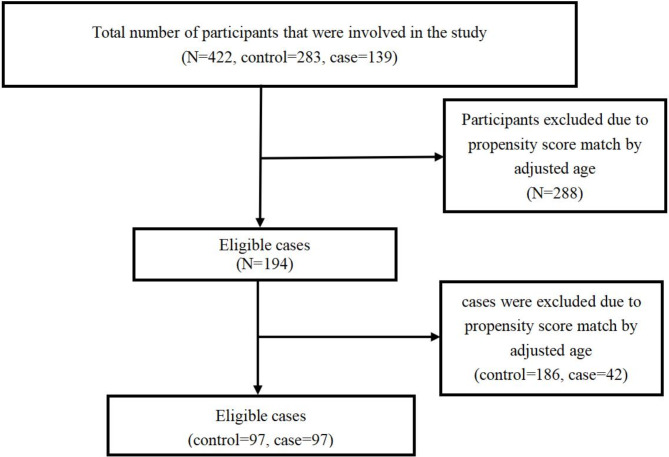
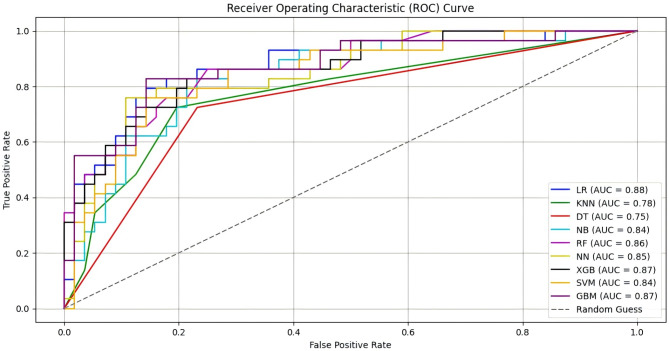
Method: This cross-sectional study conducted in China examined diagnosed cases to describe the characteristics and expression of lymphocyte and immune subsets as predicted by the model. The study included two groups of children: 139 who were hospitalized in the Department of Endocrinology and a control group consisting of 283 children who underwent routine health checks at the Department of Children Healthcare. Cases were classified into three groups based on diagnoses: Graves' disease (GD), Hashimoto's thyroiditis (HT), and hypothyroidism. By employing 11 readily obtainable serum biochemical indicators within three days of admission, the median concentrations and percentages of subset measurements were analyzed. Additionally, nine machine learning (ML) algorithms were utilized to construct prediction models. Various evaluation metrics, including the area under the receiver operating characteristic curve (AUC), were employed to compare predictive performance.
Results: GD cases had increased levels of CD3-CD19 + and CD3 + CD4 + T lymphocytes, and a higher CD4+/CD8 + ratio. In both GD and HT, the levels of complement C3c, IgA, and IgG were higher than those in the control group. HT cases also had an increasing percentage of CD3-CD16 + 56 + T lymphocytes. Most immune markers increased in hypothyroidism, except for some T lymphocyte percentages and the CD4+/CD8 + ratio. To reduce age-related bias, propensity score matching was used, yielding consistent results. Among the nine machine learning models evaluated, logistic regression showed the best performance, being useful in clinical practice.
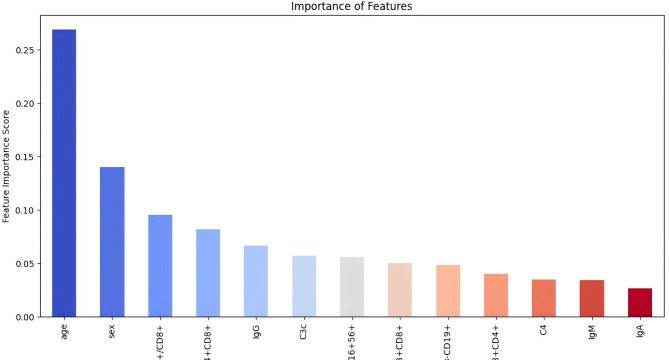
Conclusions: Specific lymphocytes with different biomarkers are positively correlated with autoimmune thyroid disease (AITD) in children. Complement proteins C3c and C4, along with IgG, IgA, IgM, and T/B cells, are significant in childhood thyroid diseases. Our best model can effectively distinguish these conditions, but to enhance accuracy, more detailed information such as clinical images might be needed.
期刊介绍:
BMC Pediatrics is an open access journal publishing peer-reviewed research articles in all aspects of health care in neonates, children and adolescents, as well as related molecular genetics, pathophysiology, and epidemiology.



 京公网安备 11010802042870号
京ICP备2023020795号-1
京公网安备 11010802042870号
京ICP备2023020795号-1

 分享
分享
 求助内容:
求助内容: 应助结果提醒方式:
 扫码关注我们
