Mohammed B. Alshammari, Akil Ahmad, Mohamad Nasir Mohamad Ibrahim, Nur Faezah Binti Rosli
{"title":"Degradation of resorcinol and oxidation of pineapple waste to improve the energy potential through microbial fuel cells","authors":"Mohammed B. Alshammari, Akil Ahmad, Mohamad Nasir Mohamad Ibrahim, Nur Faezah Binti Rosli","doi":"10.1007/s11356-025-36300-y","DOIUrl":null,"url":null,"abstract":"<div><p>Microbial fuel cells (MFCs) offer a promising approach to remediate organic pollutants while generating energy. Despite significant advancements, generating electrons remains a major challenge for MFCs. This study addresses the electron production challenges in MFCs using pineapple waste as an organic substrate and resorcinol as a pollutant and carbon source. At a constant 1000 Ω external resistance, the maximum power density (PD) achieved was 2.69 mW/m<sup>2</sup>. Electrochemical studies, including cyclic voltammetry (CV), indicated efficient oxidation and reduction of the substrate, with a specific capacitance of 1.36 × 10⁻⁷ F/g, suggesting gradual biofilm formation. The electrochemical impedance spectroscopy (EIS) findings confirmed efficient electron transport and resorcinol biodegradation reached 84.66%. Bacterial identification revealed that <i>Proteus vulgaris</i>, <i>Hafnia alvei</i>, and <i>Yersinia enterocolitica</i> significantly contributed to resorcinol degradation and energy generation. Optimal MFC operation was observed at pH 7 and temperatures of 25–30 °C. Overall, pineapple substrates, with their polysaccharide composition, maintained stability for 40 days. The study concludes by highlighting future challenges and potential improvements.</p></div>","PeriodicalId":545,"journal":{"name":"Environmental Science and Pollution Research","volume":"32 15","pages":"9926 - 9944"},"PeriodicalIF":5.8000,"publicationDate":"2025-03-31","publicationTypes":"Journal Article","fieldsOfStudy":null,"isOpenAccess":false,"openAccessPdf":"","citationCount":"0","resultStr":null,"platform":"Semanticscholar","paperid":null,"PeriodicalName":"Environmental Science and Pollution Research","FirstCategoryId":"93","ListUrlMain":"https://link.springer.com/article/10.1007/s11356-025-36300-y","RegionNum":3,"RegionCategory":"环境科学与生态学","ArticlePicture":[],"TitleCN":null,"AbstractTextCN":null,"PMCID":null,"EPubDate":"","PubModel":"","JCR":"0","JCRName":"ENVIRONMENTAL SCIENCES","Score":null,"Total":0}
引用次数: 0
Abstract
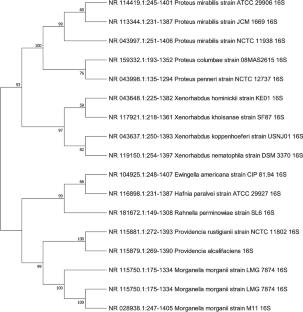
Microbial fuel cells (MFCs) offer a promising approach to remediate organic pollutants while generating energy. Despite significant advancements, generating electrons remains a major challenge for MFCs. This study addresses the electron production challenges in MFCs using pineapple waste as an organic substrate and resorcinol as a pollutant and carbon source. At a constant 1000 Ω external resistance, the maximum power density (PD) achieved was 2.69 mW/m2. Electrochemical studies, including cyclic voltammetry (CV), indicated efficient oxidation and reduction of the substrate, with a specific capacitance of 1.36 × 10⁻⁷ F/g, suggesting gradual biofilm formation. The electrochemical impedance spectroscopy (EIS) findings confirmed efficient electron transport and resorcinol biodegradation reached 84.66%. Bacterial identification revealed that Proteus vulgaris, Hafnia alvei, and Yersinia enterocolitica significantly contributed to resorcinol degradation and energy generation. Optimal MFC operation was observed at pH 7 and temperatures of 25–30 °C. Overall, pineapple substrates, with their polysaccharide composition, maintained stability for 40 days. The study concludes by highlighting future challenges and potential improvements.
期刊介绍:
Environmental Science and Pollution Research (ESPR) serves the international community in all areas of Environmental Science and related subjects with emphasis on chemical compounds. This includes:
- Terrestrial Biology and Ecology
- Aquatic Biology and Ecology
- Atmospheric Chemistry
- Environmental Microbiology/Biobased Energy Sources
- Phytoremediation and Ecosystem Restoration
- Environmental Analyses and Monitoring
- Assessment of Risks and Interactions of Pollutants in the Environment
- Conservation Biology and Sustainable Agriculture
- Impact of Chemicals/Pollutants on Human and Animal Health
It reports from a broad interdisciplinary outlook.



 京公网安备 11010802042870号
京ICP备2023020795号-1
京公网安备 11010802042870号
京ICP备2023020795号-1

 分享
分享
 求助内容:
求助内容: 应助结果提醒方式:
 扫码关注我们
