Ching-Chung Liang, Steven W Shaw, Wu-Chiao Hsieh, Yung-Hsin Huang, Chu-Ya Liang, Tsong-Hai Lee
{"title":"Bladder dysfunction in hypoestrogenic rats with metabolic syndrome can be ameliorated after amniotic fluid stem cell treatment.","authors":"Ching-Chung Liang, Steven W Shaw, Wu-Chiao Hsieh, Yung-Hsin Huang, Chu-Ya Liang, Tsong-Hai Lee","doi":"10.1093/stcltm/szae100","DOIUrl":null,"url":null,"abstract":"<p><strong>Background: </strong>Bladder dysfunction may occur with high frequency in postmenopausal women with metabolic syndrome (MetS). This study evaluated the therapeutic effects of human amniotic fluid stem cells (hAFSCs) on bladder dysfunction in ovariectomized rats with MetS.</p><p><strong>Materials and methods: </strong>Forty-eight female rats were divided into 4 groups: normal control, ovariectomy (OVX), and OVX and MetS without (OVX + MetS) and with hAFSCs treatment (OVX + MetS + hAFSCs). We assessed cystometric parameters, serum biochemistry parameters, wall thickness of iliac artery, apoptotic cells and collagen volume in bladder tissues, and the expressions of purinergic and muscarinic receptors, apoptosis-associated mitochondrial proteins, and markers of inflammation, fibrosis, and oxidative stress at posttreatment 1 and 3 months.</p><p><strong>Results: </strong>OVX + MetS rats showed significant dysfunction of bladder storage, including reduced intercontraction intervals and bladder capacity, along with increased residual urine volume and nonvoiding contractions. There was a significant increase in iliac artery wall thickness, bladder collagen volume, and number of apoptotic cells. Also, there were elevated expressions of P2X3 purinergic and M2/M3 muscarinic receptors, pro-apoptotic proteins, and markers of inflammation, fibrosis, and oxidative stress, with a concurrent decrease in anti-apoptotic protein, Bcl-2. Treatment with hAFSCs helped restoring bladder function, ameliorating histological abnormalities, and reducing pathological markers at 1 and/or 3 months.</p><p><strong>Conclusion: </strong>These findings suggest that hAFSCs can effectively mitigate bladder dysfunction in rats with ovarian hormone deficiency and MetS by modulating oxidative stress and mitochondrial apoptotic pathways.</p>","PeriodicalId":21986,"journal":{"name":"Stem Cells Translational Medicine","volume":"14 3","pages":""},"PeriodicalIF":4.9000,"publicationDate":"2025-03-18","publicationTypes":"Journal Article","fieldsOfStudy":null,"isOpenAccess":false,"openAccessPdf":"https://www.ncbi.nlm.nih.gov/pmc/articles/PMC11959541/pdf/","citationCount":"0","resultStr":null,"platform":"Semanticscholar","paperid":null,"PeriodicalName":"Stem Cells Translational Medicine","FirstCategoryId":"3","ListUrlMain":"https://doi.org/10.1093/stcltm/szae100","RegionNum":2,"RegionCategory":"医学","ArticlePicture":[],"TitleCN":null,"AbstractTextCN":null,"PMCID":null,"EPubDate":"","PubModel":"","JCR":"Q1","JCRName":"CELL & TISSUE ENGINEERING","Score":null,"Total":0}
引用次数: 0
Abstract
Background: Bladder dysfunction may occur with high frequency in postmenopausal women with metabolic syndrome (MetS). This study evaluated the therapeutic effects of human amniotic fluid stem cells (hAFSCs) on bladder dysfunction in ovariectomized rats with MetS.
Materials and methods: Forty-eight female rats were divided into 4 groups: normal control, ovariectomy (OVX), and OVX and MetS without (OVX + MetS) and with hAFSCs treatment (OVX + MetS + hAFSCs). We assessed cystometric parameters, serum biochemistry parameters, wall thickness of iliac artery, apoptotic cells and collagen volume in bladder tissues, and the expressions of purinergic and muscarinic receptors, apoptosis-associated mitochondrial proteins, and markers of inflammation, fibrosis, and oxidative stress at posttreatment 1 and 3 months.
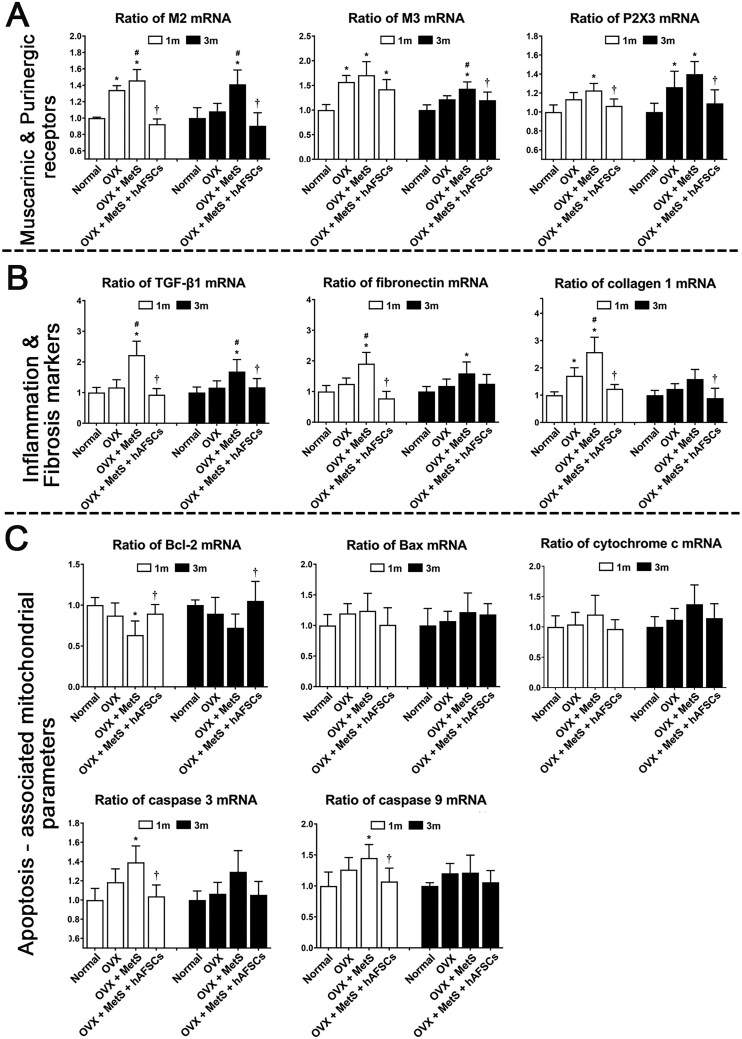
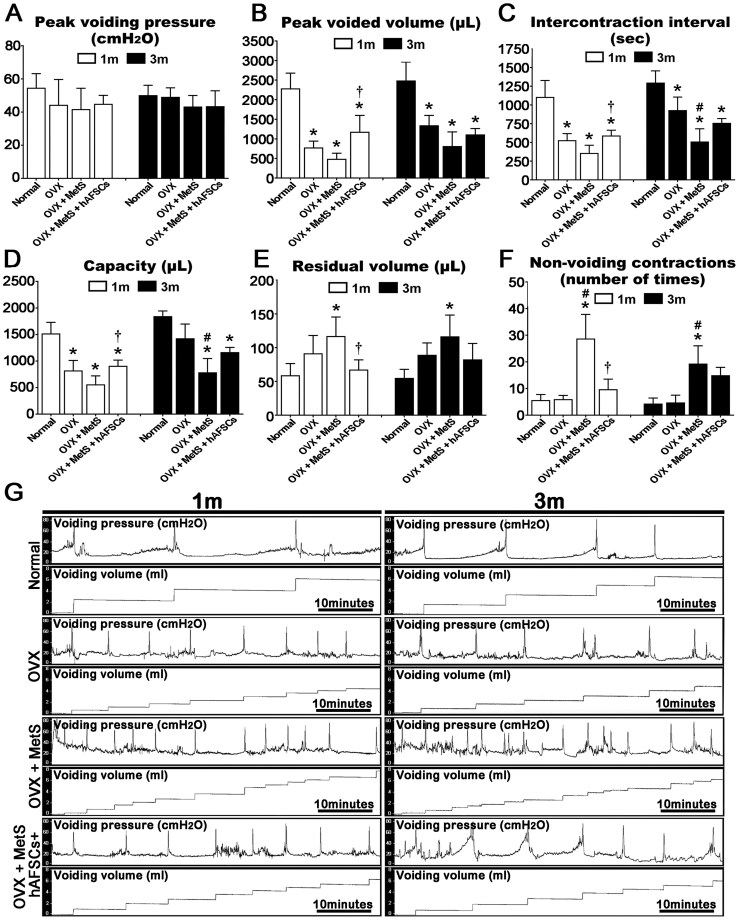
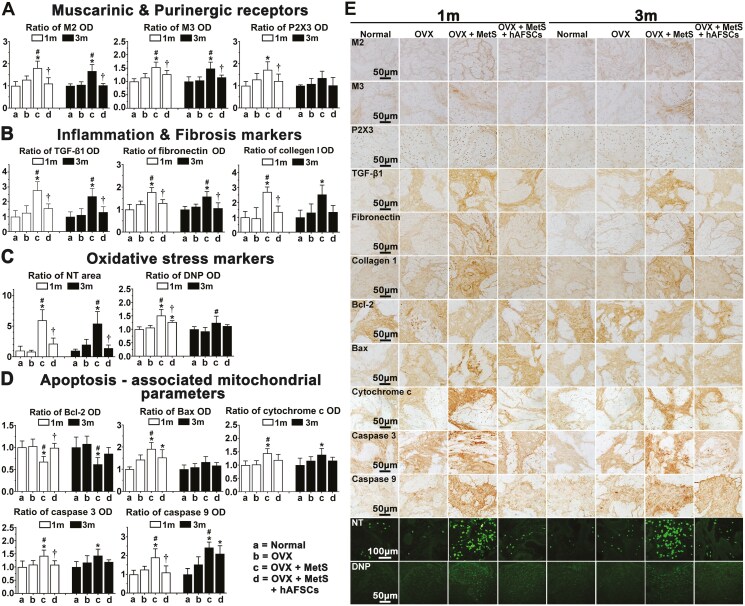
Results: OVX + MetS rats showed significant dysfunction of bladder storage, including reduced intercontraction intervals and bladder capacity, along with increased residual urine volume and nonvoiding contractions. There was a significant increase in iliac artery wall thickness, bladder collagen volume, and number of apoptotic cells. Also, there were elevated expressions of P2X3 purinergic and M2/M3 muscarinic receptors, pro-apoptotic proteins, and markers of inflammation, fibrosis, and oxidative stress, with a concurrent decrease in anti-apoptotic protein, Bcl-2. Treatment with hAFSCs helped restoring bladder function, ameliorating histological abnormalities, and reducing pathological markers at 1 and/or 3 months.
Conclusion: These findings suggest that hAFSCs can effectively mitigate bladder dysfunction in rats with ovarian hormone deficiency and MetS by modulating oxidative stress and mitochondrial apoptotic pathways.
期刊介绍:
STEM CELLS Translational Medicine is a monthly, peer-reviewed, largely online, open access journal.
STEM CELLS Translational Medicine works to advance the utilization of cells for clinical therapy. By bridging stem cell molecular and biological research and helping speed translations of emerging lab discoveries into clinical trials, STEM CELLS Translational Medicine will help move applications of these critical investigations closer to accepted best patient practices and ultimately improve outcomes.
The journal encourages original research articles and concise reviews describing laboratory investigations of stem cells, including their characterization and manipulation, and the translation of their clinical aspects of from the bench to patient care. STEM CELLS Translational Medicine covers all aspects of translational cell studies, including bench research, first-in-human case studies, and relevant clinical trials.



 京公网安备 11010802042870号
京ICP备2023020795号-1
京公网安备 11010802042870号
京ICP备2023020795号-1

 分享
分享
 求助内容:
求助内容: 应助结果提醒方式:
 扫码关注我们
