Effects of FABP5 Expression on Clinicopathological and Survival Characteristics in Digestive System Malignancies: A Systematic Review and Meta-Analysis
Miaoqing Li, Xiaoxia Wang, Jia Guo, Junchen Qu, Yu Cao, Qingkun Song, Jun Lu
{"title":"Effects of FABP5 Expression on Clinicopathological and Survival Characteristics in Digestive System Malignancies: A Systematic Review and Meta-Analysis","authors":"Miaoqing Li, Xiaoxia Wang, Jia Guo, Junchen Qu, Yu Cao, Qingkun Song, Jun Lu","doi":"10.1002/cam4.70794","DOIUrl":null,"url":null,"abstract":"<div>\n \n \n <section>\n \n <h3> Background</h3>\n \n <p>Digestive system malignancies are a major global health burden, and the role of fatty acid binding protein 5 (FABP5) in these tumors remains controversial.</p>\n </section>\n \n <section>\n \n <h3> Aims</h3>\n \n <p>This meta-analysis aimed to evaluate the correlation between FABP5 expression and clinicopathological features, as well as survival outcomes in digestive system malignancies.</p>\n </section>\n \n <section>\n \n <h3> Materials and Methods</h3>\n \n <p>Data from 11 studies (1207 patients) retrieved from PubMed, Embase, Cochrane Library, CNKI, and WanFang were analyzed.</p>\n </section>\n \n <section>\n \n <h3> Results</h3>\n \n <p>FABP5 overexpression was associated with poorer overall survival (OS), larger tumor size, advanced UICC stage, and increased risk of vascular invasion and lymph node metastasis. Notably, FABP5 overexpression is particularly associated with poorer OS in the subgroup of digestive tract malignancies and larger tumor sizes in the subgroup of Chinese patients.</p>\n </section>\n \n <section>\n \n <h3> Discussion</h3>\n \n <p>Cellular experiments demonstrated that FABP5 overexpression enhances proliferation, migration, and invasion in hepatocellular carcinoma (Huh7) and gastric cancer (HGC-27) cell lines, while FABP5 knockdown reduces these effects. Mechanistically, FABP5 may drive tumor progression through PPARβ/δ signaling, epithelial-mesenchymal transition induction, angiogenesis regulation, and potential effects on fatty acid metabolism and hypoxia-related pathways.</p>\n </section>\n \n <section>\n \n <h3> Conclusion</h3>\n \n <p>FABP5 overexpression correlates with adverse clinicopathological features and prognosis in digestive system malignancies, suggesting its potential as a biomarker for these tumors. Further research is warranted.</p>\n </section>\n </div>","PeriodicalId":139,"journal":{"name":"Cancer Medicine","volume":"14 7","pages":""},"PeriodicalIF":3.1000,"publicationDate":"2025-04-03","publicationTypes":"Journal Article","fieldsOfStudy":null,"isOpenAccess":false,"openAccessPdf":"https://onlinelibrary.wiley.com/doi/epdf/10.1002/cam4.70794","citationCount":"0","resultStr":null,"platform":"Semanticscholar","paperid":null,"PeriodicalName":"Cancer Medicine","FirstCategoryId":"3","ListUrlMain":"https://onlinelibrary.wiley.com/doi/10.1002/cam4.70794","RegionNum":2,"RegionCategory":"医学","ArticlePicture":[],"TitleCN":null,"AbstractTextCN":null,"PMCID":null,"EPubDate":"","PubModel":"","JCR":"Q2","JCRName":"ONCOLOGY","Score":null,"Total":0}
引用次数: 0
Abstract
Background
Digestive system malignancies are a major global health burden, and the role of fatty acid binding protein 5 (FABP5) in these tumors remains controversial.
Aims
This meta-analysis aimed to evaluate the correlation between FABP5 expression and clinicopathological features, as well as survival outcomes in digestive system malignancies.
Materials and Methods
Data from 11 studies (1207 patients) retrieved from PubMed, Embase, Cochrane Library, CNKI, and WanFang were analyzed.
Results
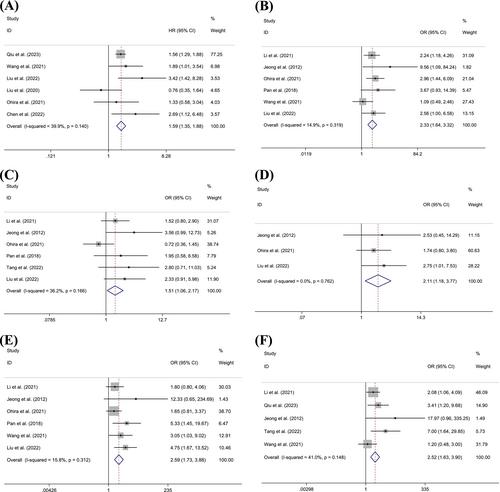
FABP5 overexpression was associated with poorer overall survival (OS), larger tumor size, advanced UICC stage, and increased risk of vascular invasion and lymph node metastasis. Notably, FABP5 overexpression is particularly associated with poorer OS in the subgroup of digestive tract malignancies and larger tumor sizes in the subgroup of Chinese patients.
Discussion
Cellular experiments demonstrated that FABP5 overexpression enhances proliferation, migration, and invasion in hepatocellular carcinoma (Huh7) and gastric cancer (HGC-27) cell lines, while FABP5 knockdown reduces these effects. Mechanistically, FABP5 may drive tumor progression through PPARβ/δ signaling, epithelial-mesenchymal transition induction, angiogenesis regulation, and potential effects on fatty acid metabolism and hypoxia-related pathways.
Conclusion
FABP5 overexpression correlates with adverse clinicopathological features and prognosis in digestive system malignancies, suggesting its potential as a biomarker for these tumors. Further research is warranted.
期刊介绍:
Cancer Medicine is a peer-reviewed, open access, interdisciplinary journal providing rapid publication of research from global biomedical researchers across the cancer sciences. The journal will consider submissions from all oncologic specialties, including, but not limited to, the following areas:
Clinical Cancer Research
Translational research ∙ clinical trials ∙ chemotherapy ∙ radiation therapy ∙ surgical therapy ∙ clinical observations ∙ clinical guidelines ∙ genetic consultation ∙ ethical considerations
Cancer Biology:
Molecular biology ∙ cellular biology ∙ molecular genetics ∙ genomics ∙ immunology ∙ epigenetics ∙ metabolic studies ∙ proteomics ∙ cytopathology ∙ carcinogenesis ∙ drug discovery and delivery.
Cancer Prevention:
Behavioral science ∙ psychosocial studies ∙ screening ∙ nutrition ∙ epidemiology and prevention ∙ community outreach.
Bioinformatics:
Gene expressions profiles ∙ gene regulation networks ∙ genome bioinformatics ∙ pathwayanalysis ∙ prognostic biomarkers.
Cancer Medicine publishes original research articles, systematic reviews, meta-analyses, and research methods papers, along with invited editorials and commentaries. Original research papers must report well-conducted research with conclusions supported by the data presented in the paper.



 京公网安备 11010802042870号
京ICP备2023020795号-1
京公网安备 11010802042870号
京ICP备2023020795号-1

 分享
分享
 求助内容:
求助内容: 应助结果提醒方式:
 扫码关注我们
