Isabelle Heker, Nadia A Samak, Yachao Kong, Rainer U Meckenstock
{"title":"Anaerobic degradation of polycyclic aromatic hydrocarbons.","authors":"Isabelle Heker, Nadia A Samak, Yachao Kong, Rainer U Meckenstock","doi":"10.1128/aem.02268-24","DOIUrl":null,"url":null,"abstract":"<p><p>Polycyclic aromatic hydrocarbons (PAHs) are ubiquitous and toxic pollutants in the environment that are mostly introduced through anthropogenic activities. They are very stable with low bioavailability and, because aerobic degradation is mostly limited in aquifers and sediments, often persist in anoxic systems. In this review, we elucidate the recent advances in PAH degradation by anaerobic, mostly sulfate-reducing cultures. The best-studied compound is naphthalene, the smallest and simplest PAH, which often serves as a model compound for anaerobic PAH degradation. In recent years, three-ring PAHs have also shifted into focus, using phenanthrene as a representative compound. Anaerobic degradation of PAHs has to overcome several biochemical problems. First, non-substituted PAHs have to be activated by carboxylation, which is chemically challenging and proposed to involve a 1,3-cycloaddition with a UbiD-like carboxylase and a prenylated flavin cofactor. The second key reaction is to overcome the resonance energy of the ring system, which is performed by consecutive two-electron reduction steps involving novel type III aryl-CoA reductases belonging to the old-yellow enzyme family. In naphthalene degradation, a type I aryl-CoA reductase is also involved in reducing a benzene ring structure. The third key reaction is the ring cleavage, involving β-oxidation-like reactions in cleaving ring I of naphthalene. Ring II, however, is opened by a novel lyase reaction at a tertiary, hydroxylated carbon atom. These principles are explained using examples of anaerobic naphthalene and phenanthrene degradation to give an overview of recent advances, from the initial activation of the molecules to the complete degradation to CO<sub>2</sub>.</p>","PeriodicalId":8002,"journal":{"name":"Applied and Environmental Microbiology","volume":" ","pages":"e0226824"},"PeriodicalIF":3.7000,"publicationDate":"2025-04-23","publicationTypes":"Journal Article","fieldsOfStudy":null,"isOpenAccess":false,"openAccessPdf":"https://www.ncbi.nlm.nih.gov/pmc/articles/PMC12016498/pdf/","citationCount":"0","resultStr":null,"platform":"Semanticscholar","paperid":null,"PeriodicalName":"Applied and Environmental Microbiology","FirstCategoryId":"99","ListUrlMain":"https://doi.org/10.1128/aem.02268-24","RegionNum":2,"RegionCategory":"生物学","ArticlePicture":[],"TitleCN":null,"AbstractTextCN":null,"PMCID":null,"EPubDate":"2025/4/2 0:00:00","PubModel":"Epub","JCR":"Q2","JCRName":"BIOTECHNOLOGY & APPLIED MICROBIOLOGY","Score":null,"Total":0}
引用次数: 0
Abstract
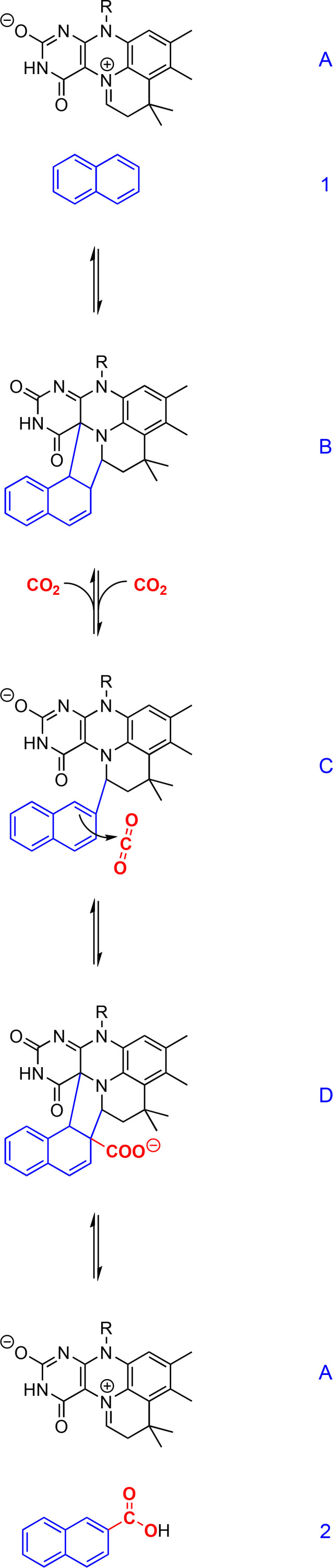
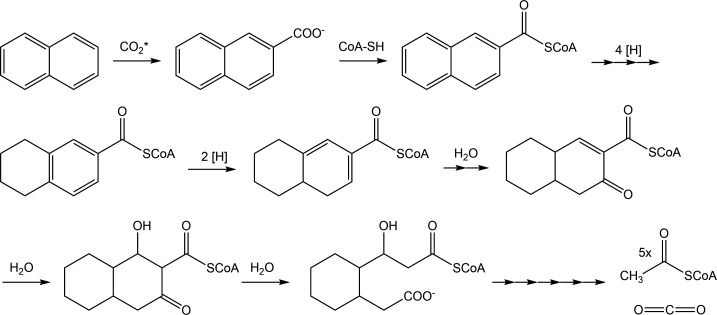
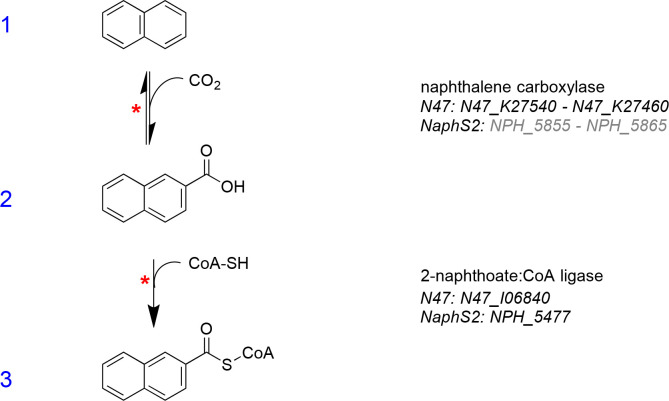
Polycyclic aromatic hydrocarbons (PAHs) are ubiquitous and toxic pollutants in the environment that are mostly introduced through anthropogenic activities. They are very stable with low bioavailability and, because aerobic degradation is mostly limited in aquifers and sediments, often persist in anoxic systems. In this review, we elucidate the recent advances in PAH degradation by anaerobic, mostly sulfate-reducing cultures. The best-studied compound is naphthalene, the smallest and simplest PAH, which often serves as a model compound for anaerobic PAH degradation. In recent years, three-ring PAHs have also shifted into focus, using phenanthrene as a representative compound. Anaerobic degradation of PAHs has to overcome several biochemical problems. First, non-substituted PAHs have to be activated by carboxylation, which is chemically challenging and proposed to involve a 1,3-cycloaddition with a UbiD-like carboxylase and a prenylated flavin cofactor. The second key reaction is to overcome the resonance energy of the ring system, which is performed by consecutive two-electron reduction steps involving novel type III aryl-CoA reductases belonging to the old-yellow enzyme family. In naphthalene degradation, a type I aryl-CoA reductase is also involved in reducing a benzene ring structure. The third key reaction is the ring cleavage, involving β-oxidation-like reactions in cleaving ring I of naphthalene. Ring II, however, is opened by a novel lyase reaction at a tertiary, hydroxylated carbon atom. These principles are explained using examples of anaerobic naphthalene and phenanthrene degradation to give an overview of recent advances, from the initial activation of the molecules to the complete degradation to CO2.
期刊介绍:
Applied and Environmental Microbiology (AEM) publishes papers that make significant contributions to (a) applied microbiology, including biotechnology, protein engineering, bioremediation, and food microbiology, (b) microbial ecology, including environmental, organismic, and genomic microbiology, and (c) interdisciplinary microbiology, including invertebrate microbiology, plant microbiology, aquatic microbiology, and geomicrobiology.



 京公网安备 11010802042870号
京ICP备2023020795号-1
京公网安备 11010802042870号
京ICP备2023020795号-1

 分享
分享
 求助内容:
求助内容: 应助结果提醒方式:
 扫码关注我们
