Stefano Rousset, Elena Strippoli, Carlo Senore, Teresa Spadea, Marco Calcagno, Nicolás Zengarini, Gianluigi Ferrante
{"title":"The impact of individual and contextual socioeconomic factors on colorectal cancer screening adherence in Turin, Italy: a multilevel analysis.","authors":"Stefano Rousset, Elena Strippoli, Carlo Senore, Teresa Spadea, Marco Calcagno, Nicolás Zengarini, Gianluigi Ferrante","doi":"10.1186/s12889-025-22396-x","DOIUrl":null,"url":null,"abstract":"<p><strong>Background: </strong>Screening participation can be influenced by both individual socioeconomic position and contextual factors. In Italy, disparities exist regarding screening adherence, but it is important to understand the specific factors driving these disparities in specific locations according to different screening protocols. The aim of this study is to identify the impact of individual and contextual socio-economic factors on adherence to the organized colorectal cancer screening in the city of Turin, Italy.</p><p><strong>Methods: </strong>Retrospective observational study on the population of assisted residents in Turin, eligible for colorectal screening from January 2010- June 2019. Colorectal screening in Piedmont involved inviting 58-year-old individuals to undergo a flexible sigmoidoscopy (FS) or, in case of non-adherence, a faecal immunochemical test (FIT). The program also included another protocol based directly on FIT as the first test. Adherence to the two screening protocols according to demographic/socioeconomic characteristics and contextual factors was evaluated with multilevel Poisson models.</p><p><strong>Results: </strong>90,227 eligible subjects (53% females) were analysed exploring adherence to FS/FIT. Lower likelihood of participation was found among males from High-Migratory-Pressure-Countries (HMPC), subjects with the lowest educational level, unemployed individuals, subjects living in rented houses, living alone/cohabiting and single parents. Among males, retirees and subjects living in more deprived areas participated more. 36,674 subjects (53% females) were analysed exploring adherence to the first FIT invitation. Adherence rate was higher among women (40% vs. 36%). Lower likelihood of participation was found among HMPC immigrants, males with the lowest educational level, people living in rented accommodation, living alone/cohabiting and single parents. Higher participation was found in retirees. In males, no differences were found between subjects living in more and less deprived areas, but a different likelihood of participation was observed across different areas of the city.</p><p><strong>Conclusions: </strong>Socioeconomic and demographic characteristics influence access to organized colorectal screening in Turin. Immigrant status, low level of education, poor housing conditions and lack of social support, with some differences according to gender, emerged as the most significant barriers that should be tackled in order to increase screening participation and reduce inequalities. Contextual factors play a role only among male subjects.</p>","PeriodicalId":9039,"journal":{"name":"BMC Public Health","volume":"25 1","pages":"1235"},"PeriodicalIF":3.6000,"publicationDate":"2025-04-01","publicationTypes":"Journal Article","fieldsOfStudy":null,"isOpenAccess":false,"openAccessPdf":"https://www.ncbi.nlm.nih.gov/pmc/articles/PMC11963395/pdf/","citationCount":"0","resultStr":null,"platform":"Semanticscholar","paperid":null,"PeriodicalName":"BMC Public Health","FirstCategoryId":"3","ListUrlMain":"https://doi.org/10.1186/s12889-025-22396-x","RegionNum":2,"RegionCategory":"医学","ArticlePicture":[],"TitleCN":null,"AbstractTextCN":null,"PMCID":null,"EPubDate":"","PubModel":"","JCR":"Q1","JCRName":"PUBLIC, ENVIRONMENTAL & OCCUPATIONAL HEALTH","Score":null,"Total":0}
引用次数: 0
Abstract
Background: Screening participation can be influenced by both individual socioeconomic position and contextual factors. In Italy, disparities exist regarding screening adherence, but it is important to understand the specific factors driving these disparities in specific locations according to different screening protocols. The aim of this study is to identify the impact of individual and contextual socio-economic factors on adherence to the organized colorectal cancer screening in the city of Turin, Italy.
Methods: Retrospective observational study on the population of assisted residents in Turin, eligible for colorectal screening from January 2010- June 2019. Colorectal screening in Piedmont involved inviting 58-year-old individuals to undergo a flexible sigmoidoscopy (FS) or, in case of non-adherence, a faecal immunochemical test (FIT). The program also included another protocol based directly on FIT as the first test. Adherence to the two screening protocols according to demographic/socioeconomic characteristics and contextual factors was evaluated with multilevel Poisson models.
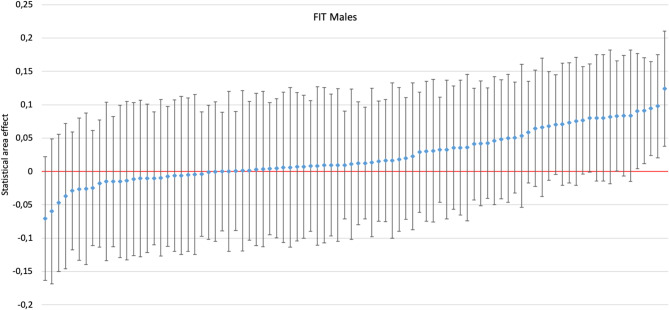
Results: 90,227 eligible subjects (53% females) were analysed exploring adherence to FS/FIT. Lower likelihood of participation was found among males from High-Migratory-Pressure-Countries (HMPC), subjects with the lowest educational level, unemployed individuals, subjects living in rented houses, living alone/cohabiting and single parents. Among males, retirees and subjects living in more deprived areas participated more. 36,674 subjects (53% females) were analysed exploring adherence to the first FIT invitation. Adherence rate was higher among women (40% vs. 36%). Lower likelihood of participation was found among HMPC immigrants, males with the lowest educational level, people living in rented accommodation, living alone/cohabiting and single parents. Higher participation was found in retirees. In males, no differences were found between subjects living in more and less deprived areas, but a different likelihood of participation was observed across different areas of the city.
Conclusions: Socioeconomic and demographic characteristics influence access to organized colorectal screening in Turin. Immigrant status, low level of education, poor housing conditions and lack of social support, with some differences according to gender, emerged as the most significant barriers that should be tackled in order to increase screening participation and reduce inequalities. Contextual factors play a role only among male subjects.
期刊介绍:
BMC Public Health is an open access, peer-reviewed journal that considers articles on the epidemiology of disease and the understanding of all aspects of public health. The journal has a special focus on the social determinants of health, the environmental, behavioral, and occupational correlates of health and disease, and the impact of health policies, practices and interventions on the community.




 京公网安备 11010802042870号
京ICP备2023020795号-1
京公网安备 11010802042870号
京ICP备2023020795号-1

 分享
分享
 求助内容:
求助内容: 应助结果提醒方式:
 扫码关注我们
