{"title":"Prognostic Nutritional Index as a Predictor of Recurrence in Patients Undergoing Pericardiocentesis: A Retrospective Analysis.","authors":"Ahmet Anıl Başkurt, Yusuf Demir, Oktay Şenöz","doi":"10.1155/crp/5598299","DOIUrl":null,"url":null,"abstract":"<p><p><b>Objective:</b> Recurrence of pericardial effusion is possible despite the successful completion of pericardiocentesis and initiation of treatment. Predicting recurrence is important for determining treatment strategies. This study aimed to examine the factors that influence the recurrence of effusion in patients who had undergone pericardiocentesis. <b>Method:</b> A total of 113 patients with the evidence of tamponade or pericardial effusion over 10 mm were included in the study. The mean follow-up period was 49 months. Patients with and without recurrent effusion were divided into two groups. PNI calculation (PNI = 10 × serum albumin (g/dL) + 0.005 × total lymphocyte count (mm<sup>3</sup>) formula was used. <b>Results:</b> Recurrent pericardial effusion was observed in 30 patients during the follow-up period. There was no difference in age, gender, hypertension, LVEF%, hypertension, and appearance of fluid when the two groups were compared. There was a difference in PNI score and presence of malignancy between the two groups (<i>p</i>: 0.031 and 0.042, respectively). Multivariate logistic regression showed that malignancy and PNI score were independent predictors of recurrence in patients undergoing pericardiocentesis (<i>p</i>: 0.015 and <i>p</i>: 0.014, respectively). In the ROC analysis, PNI < 40.75 predicts recurrent pericardial effusion with 75% sensitivity and 58% specificity (AUC: 0.626, 95% CI: 0.509-0.742, and <i>p</i>=0.042). <b>Conclusion:</b> Predictors of recurrence in patients undergoing pericardiocentesis are important for patient follow-up. PNI is a simple and useful score that can be used to predict recurrent pericardial effusion.</p>","PeriodicalId":9494,"journal":{"name":"Cardiology Research and Practice","volume":"2025 ","pages":"5598299"},"PeriodicalIF":1.8000,"publicationDate":"2025-02-24","publicationTypes":"Journal Article","fieldsOfStudy":null,"isOpenAccess":false,"openAccessPdf":"https://www.ncbi.nlm.nih.gov/pmc/articles/PMC11961291/pdf/","citationCount":"0","resultStr":null,"platform":"Semanticscholar","paperid":null,"PeriodicalName":"Cardiology Research and Practice","FirstCategoryId":"3","ListUrlMain":"https://doi.org/10.1155/crp/5598299","RegionNum":4,"RegionCategory":"医学","ArticlePicture":[],"TitleCN":null,"AbstractTextCN":null,"PMCID":null,"EPubDate":"2025/1/1 0:00:00","PubModel":"eCollection","JCR":"Q3","JCRName":"CARDIAC & CARDIOVASCULAR SYSTEMS","Score":null,"Total":0}
引用次数: 0
Abstract
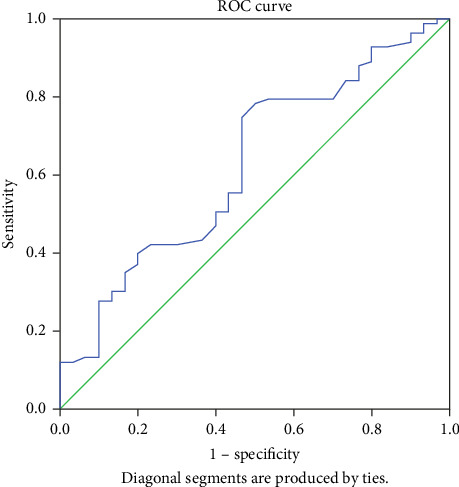
Objective: Recurrence of pericardial effusion is possible despite the successful completion of pericardiocentesis and initiation of treatment. Predicting recurrence is important for determining treatment strategies. This study aimed to examine the factors that influence the recurrence of effusion in patients who had undergone pericardiocentesis. Method: A total of 113 patients with the evidence of tamponade or pericardial effusion over 10 mm were included in the study. The mean follow-up period was 49 months. Patients with and without recurrent effusion were divided into two groups. PNI calculation (PNI = 10 × serum albumin (g/dL) + 0.005 × total lymphocyte count (mm3) formula was used. Results: Recurrent pericardial effusion was observed in 30 patients during the follow-up period. There was no difference in age, gender, hypertension, LVEF%, hypertension, and appearance of fluid when the two groups were compared. There was a difference in PNI score and presence of malignancy between the two groups (p: 0.031 and 0.042, respectively). Multivariate logistic regression showed that malignancy and PNI score were independent predictors of recurrence in patients undergoing pericardiocentesis (p: 0.015 and p: 0.014, respectively). In the ROC analysis, PNI < 40.75 predicts recurrent pericardial effusion with 75% sensitivity and 58% specificity (AUC: 0.626, 95% CI: 0.509-0.742, and p=0.042). Conclusion: Predictors of recurrence in patients undergoing pericardiocentesis are important for patient follow-up. PNI is a simple and useful score that can be used to predict recurrent pericardial effusion.
期刊介绍:
Cardiology Research and Practice is a peer-reviewed, Open Access journal that publishes original research articles, review articles, and clinical studies that focus on the diagnosis and treatment of cardiovascular disease. The journal welcomes submissions related to systemic hypertension, arrhythmia, congestive heart failure, valvular heart disease, vascular disease, congenital heart disease, and cardiomyopathy.



 京公网安备 11010802042870号
京ICP备2023020795号-1
京公网安备 11010802042870号
京ICP备2023020795号-1

 分享
分享
 求助内容:
求助内容: 应助结果提醒方式:
 扫码关注我们
