{"title":"[Artificial intelligence-enhanced physics-based computational modeling technologies for proteins].","authors":"Baoyan Liu, Shuai Li, Hao Su, Xiang Sheng","doi":"10.13345/j.cjb.240604","DOIUrl":null,"url":null,"abstract":"<p><p>Computational modeling is an invaluable tool for mechanism analysis, directed engineering, and rational design of biological parts, metabolic networks, and even cellular systems. It can provide new technological solutions to address biological challenges at different levels and has become a central focus of research in biomanufacturing. In the computational modeling of proteins, which are the key parts in biological systems, the traditional physics-based methods (computer software and mathematical model) have been widely used to study the physical and chemical processes in the functioning of proteins, and have thus been recognized as a powerful tool for understanding complex biological systems and guiding experimental designs. As the scale of computational modeling continues to expand, traditional modeling techniques face difficulties in balancing computational accuracy and speed. In recent years, the explosive growth of biological data has made it possible to construct high-performance artificial intelligence (AI) models, which brings new opportunities to the computational modeling of proteins, and the AI-enhanced physics-based computational modeling technologies have emerged. This combined strategy not only incorporates the chemical knowledge and established physical principles but also is powerful in data processing and pattern recognition, which greatly improves the computational efficiency and prediction accuracy, as well as possesses stronger interpretation ability, transferability, and robustness. The AI-enhanced physics-based computational modeling technologies have already shown great potential and value in biocatalysis, paving a new way for the future development of biomanufacturing.</p>","PeriodicalId":21778,"journal":{"name":"Sheng wu gong cheng xue bao = Chinese journal of biotechnology","volume":"41 3","pages":"917-933"},"PeriodicalIF":0.0000,"publicationDate":"2025-03-25","publicationTypes":"Journal Article","fieldsOfStudy":null,"isOpenAccess":false,"openAccessPdf":"","citationCount":"0","resultStr":null,"platform":"Semanticscholar","paperid":null,"PeriodicalName":"Sheng wu gong cheng xue bao = Chinese journal of biotechnology","FirstCategoryId":"1085","ListUrlMain":"https://doi.org/10.13345/j.cjb.240604","RegionNum":0,"RegionCategory":null,"ArticlePicture":[],"TitleCN":null,"AbstractTextCN":null,"PMCID":null,"EPubDate":"","PubModel":"","JCR":"Q4","JCRName":"Biochemistry, Genetics and Molecular Biology","Score":null,"Total":0}
引用次数: 0
Abstract
Computational modeling is an invaluable tool for mechanism analysis, directed engineering, and rational design of biological parts, metabolic networks, and even cellular systems. It can provide new technological solutions to address biological challenges at different levels and has become a central focus of research in biomanufacturing. In the computational modeling of proteins, which are the key parts in biological systems, the traditional physics-based methods (computer software and mathematical model) have been widely used to study the physical and chemical processes in the functioning of proteins, and have thus been recognized as a powerful tool for understanding complex biological systems and guiding experimental designs. As the scale of computational modeling continues to expand, traditional modeling techniques face difficulties in balancing computational accuracy and speed. In recent years, the explosive growth of biological data has made it possible to construct high-performance artificial intelligence (AI) models, which brings new opportunities to the computational modeling of proteins, and the AI-enhanced physics-based computational modeling technologies have emerged. This combined strategy not only incorporates the chemical knowledge and established physical principles but also is powerful in data processing and pattern recognition, which greatly improves the computational efficiency and prediction accuracy, as well as possesses stronger interpretation ability, transferability, and robustness. The AI-enhanced physics-based computational modeling technologies have already shown great potential and value in biocatalysis, paving a new way for the future development of biomanufacturing.
期刊介绍:
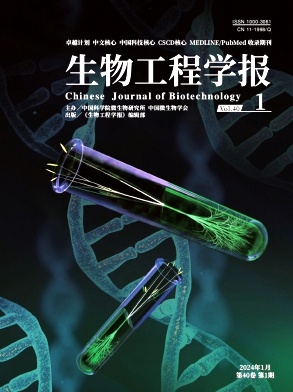
Chinese Journal of Biotechnology (Chinese edition) , sponsored by the Institute of Microbiology, Chinese Academy of Sciences and the Chinese Society for Microbiology, is a peer-reviewed international journal. The journal is cited by many scientific databases , such as Chemical Abstract (CA), Biology Abstract (BA), MEDLINE, Russian Digest , Chinese Scientific Citation Index (CSCI), Chinese Journal Citation Report (CJCR), and Chinese Academic Journal (CD version). The Journal publishes new discoveries, techniques and developments in genetic engineering, cell engineering, enzyme engineering, biochemical engineering, tissue engineering, bioinformatics, biochips and other fields of biotechnology.



 京公网安备 11010802042870号
京ICP备2023020795号-1
京公网安备 11010802042870号
京ICP备2023020795号-1

 分享
分享
 求助内容:
求助内容: 应助结果提醒方式:
 扫码关注我们
