{"title":"Outcomes of Tibiotalocalcaneal Arthrodesis in Hindfoot Charcot Neuroarthropathy According to Coronal-Plane Deformity and Talar Osteolysis.","authors":"Sunghoo Kim, Ho-Seong Lee, Youngrak Choi","doi":"10.4055/cios24319","DOIUrl":null,"url":null,"abstract":"<p><strong>Background: </strong>Patients with severe hindfoot Charcot neuroarthropathy may experience various complications following tibiotalocalcaneal arthrodesis. Therefore, it is crucial to establish appropriate treatment plans to prevent potential complications and predict prognosis before surgery. This study aimed to investigate the impact of the degree of preoperative deformity in hindfoot Charcot neuroarthropathy on the outcomes of tibiotalocalcaneal arthrodesis.</p><p><strong>Methods: </strong>Twenty patients who underwent tibiotalocalcaneal arthrodesis for hindfoot Charcot neuroarthropathy were grouped by the severity of their deformities into a mild deformity group (tibiotalar angle between 80° and 100° with minimal or no talar osteolysis) and a severe deformity group (tibiotalar angle < 80° or > 100°, or severe talar osteolysis precluding tibiotalocalcaneal arthrodesis and necessitating tibiocalcaneal arthrodesis). Their demographics, comorbidities, and various surgical outcomes were compared between the 2 groups. Additional analyses were conducted to determine the factors associated with poor clinical outcome, defined as the inability to achieve independent ambulation or the need for below-knee amputation.</p><p><strong>Results: </strong>There were no significant differences in demographics and comorbidities between the 2 groups. Postoperative clinical outcomes, including the rate of postoperative infection and poor clinical outcome (inability to walk independently or having undergone below-knee amputation), showed no significant differences between the 2 groups. In terms of radiological outcomes, the bony union rates were 66.7% in the mild deformity group and 54.5% in the severe deformity group, with no significant difference. Similarly, other radiological outcomes, such as postoperative malalignment and time to union, did not vary significantly between the 2 groups. Factors associated with poor clinical outcome were the presence of preoperative infected wound and postoperative infection.</p><p><strong>Conclusions: </strong>The severity of preoperative coronal deformity or talar osteolysis was not associated with clinical or radiological outcomes of tibiotalocalcaneal arthrodesis for hindfoot Charcot neuroarthropathy. However, preoperative infected wound and postoperative infection were associated with poor clinical outcomes. Therefore, instead of early amputation in cases of severe coronal deformity or insufficient talar bone stock, limb salvage with tibiotalocalcaneal arthrodesis may be a viable alternative, with particular attention to patients with preoperative infected wound and postoperative infection.</p>","PeriodicalId":47648,"journal":{"name":"Clinics in Orthopedic Surgery","volume":"17 2","pages":"331-339"},"PeriodicalIF":2.0000,"publicationDate":"2025-04-01","publicationTypes":"Journal Article","fieldsOfStudy":null,"isOpenAccess":false,"openAccessPdf":"https://www.ncbi.nlm.nih.gov/pmc/articles/PMC11957827/pdf/","citationCount":"0","resultStr":null,"platform":"Semanticscholar","paperid":null,"PeriodicalName":"Clinics in Orthopedic Surgery","FirstCategoryId":"3","ListUrlMain":"https://doi.org/10.4055/cios24319","RegionNum":2,"RegionCategory":"医学","ArticlePicture":[],"TitleCN":null,"AbstractTextCN":null,"PMCID":null,"EPubDate":"2025/3/14 0:00:00","PubModel":"Epub","JCR":"Q2","JCRName":"ORTHOPEDICS","Score":null,"Total":0}
引用次数: 0
Abstract
Background: Patients with severe hindfoot Charcot neuroarthropathy may experience various complications following tibiotalocalcaneal arthrodesis. Therefore, it is crucial to establish appropriate treatment plans to prevent potential complications and predict prognosis before surgery. This study aimed to investigate the impact of the degree of preoperative deformity in hindfoot Charcot neuroarthropathy on the outcomes of tibiotalocalcaneal arthrodesis.
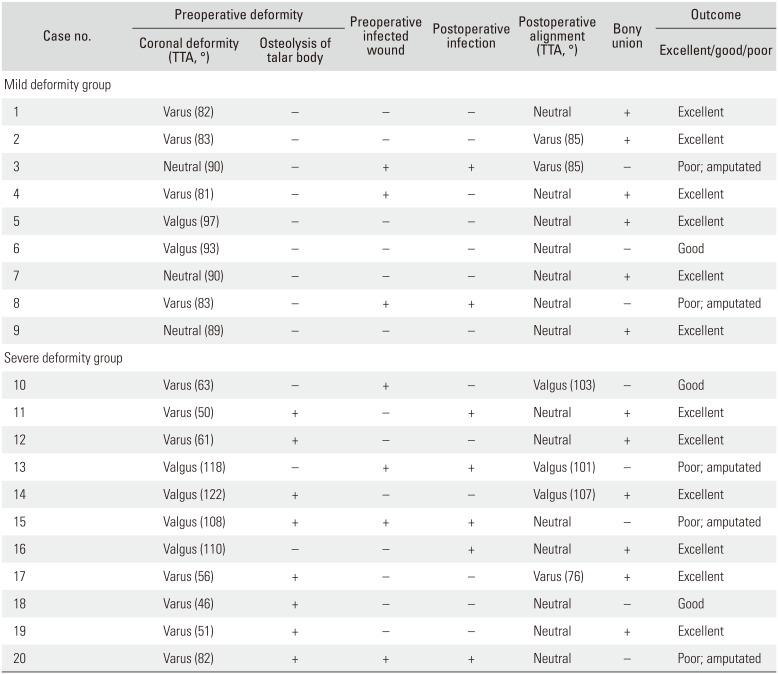
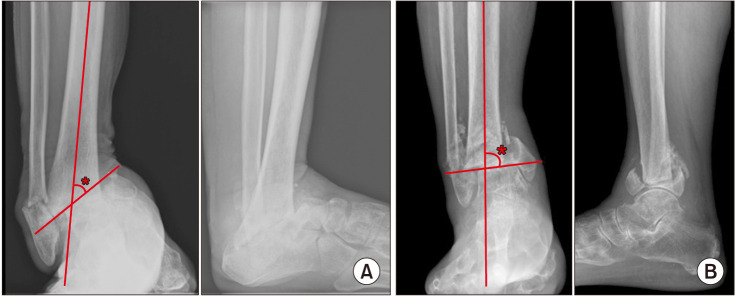
Methods: Twenty patients who underwent tibiotalocalcaneal arthrodesis for hindfoot Charcot neuroarthropathy were grouped by the severity of their deformities into a mild deformity group (tibiotalar angle between 80° and 100° with minimal or no talar osteolysis) and a severe deformity group (tibiotalar angle < 80° or > 100°, or severe talar osteolysis precluding tibiotalocalcaneal arthrodesis and necessitating tibiocalcaneal arthrodesis). Their demographics, comorbidities, and various surgical outcomes were compared between the 2 groups. Additional analyses were conducted to determine the factors associated with poor clinical outcome, defined as the inability to achieve independent ambulation or the need for below-knee amputation.
Results: There were no significant differences in demographics and comorbidities between the 2 groups. Postoperative clinical outcomes, including the rate of postoperative infection and poor clinical outcome (inability to walk independently or having undergone below-knee amputation), showed no significant differences between the 2 groups. In terms of radiological outcomes, the bony union rates were 66.7% in the mild deformity group and 54.5% in the severe deformity group, with no significant difference. Similarly, other radiological outcomes, such as postoperative malalignment and time to union, did not vary significantly between the 2 groups. Factors associated with poor clinical outcome were the presence of preoperative infected wound and postoperative infection.
Conclusions: The severity of preoperative coronal deformity or talar osteolysis was not associated with clinical or radiological outcomes of tibiotalocalcaneal arthrodesis for hindfoot Charcot neuroarthropathy. However, preoperative infected wound and postoperative infection were associated with poor clinical outcomes. Therefore, instead of early amputation in cases of severe coronal deformity or insufficient talar bone stock, limb salvage with tibiotalocalcaneal arthrodesis may be a viable alternative, with particular attention to patients with preoperative infected wound and postoperative infection.




 京公网安备 11010802042870号
京ICP备2023020795号-1
京公网安备 11010802042870号
京ICP备2023020795号-1

 分享
分享
 求助内容:
求助内容: 应助结果提醒方式:
 扫码关注我们
